What Kind of Water for Betta Fish?
As an Amazon Associate we earn from qualifying purchases.
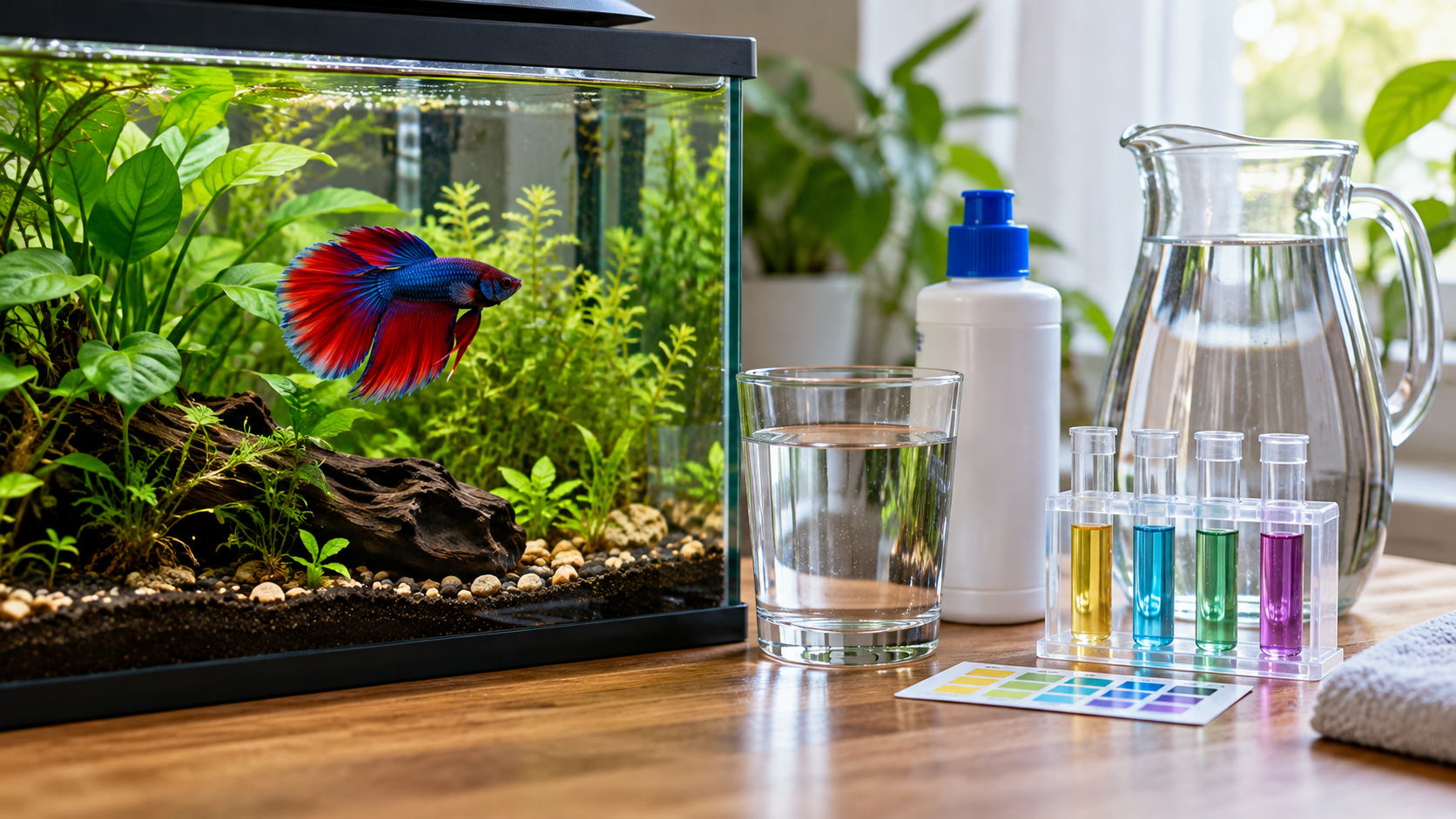
What kind of water for betta fish? For most betta fish, the right water is ordinary tap water that has been treated and then kept clean. The Merck Veterinary Manual says “An aquarium can be filled with tap water, filtered water, or reverse-osmosis water,” and adds that “tap water is the most convenient, the least expensive, and generally acceptable to use.” The part that matters is the treatment. Most city water contains chlorine or chloramine, and both must be removed before a betta goes in. Beyond that, the sources focus less on a special type of water and more on keeping ammonia and nitrite low through regular water changes and a working filter.
Quick answer
- Tap water is acceptable for a betta tank, according to the Merck Veterinary Manual, once it is treated.
- Add a dechlorinator every time you add new water, because city water is often treated with chlorine or chloramine, which the Merck page calls “toxic to fish.”
- Ammonia and nitrite are the water problems that matter most. The UF/IFAS publication says nitrite is “toxic to fish at levels as low as 0.10 mg/L.”
- Water changes should be regular. The sources do not give one schedule for every tank, so check the water rather than guessing.
Tap water, filtered water and reverse osmosis
The Merck page on providing a home for fish compares the three common sources. Tap water is the easiest choice. Filtered water “has generally been passed through media to remove particulate matter, over activated carbon to remove chlorine and other chemicals and minerals.” Reverse-osmosis water is processed in a similar way, but “the water is under pressure and forced through an extremely fine membrane.” For a betta, filtered or reverse-osmosis water removes more of what the tap contains, but it also removes the minerals that give tap water its buffering. The sources do not recommend a specific mineral content for bettas, so there is no sourced reason to prefer one over the other for a betta.
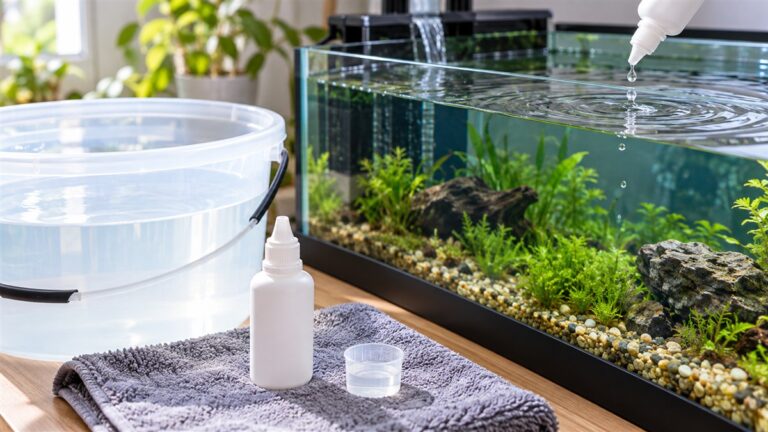
Tap water needs one more step. The Merck page says most city water “is treated with chlorine or a combination of chlorine and ammonia (known as chloramine), both of which are toxic to fish and to the necessary bacteria that grow in your aquarium.” Its advice is direct: “Additives (dechlorinators) are available to remove both chlorine and chloramine from the water and should be used to treat any new water that goes in the aquarium.” A dechlorinator that is labelled for both chlorine and chloramine covers both cases. Check the label of the product you own, because the sources do not say which brands do this.
pH and why it changes with the source
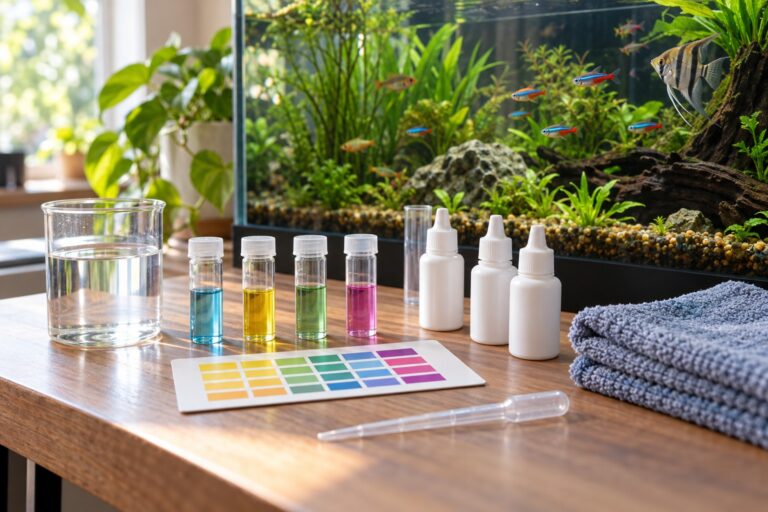
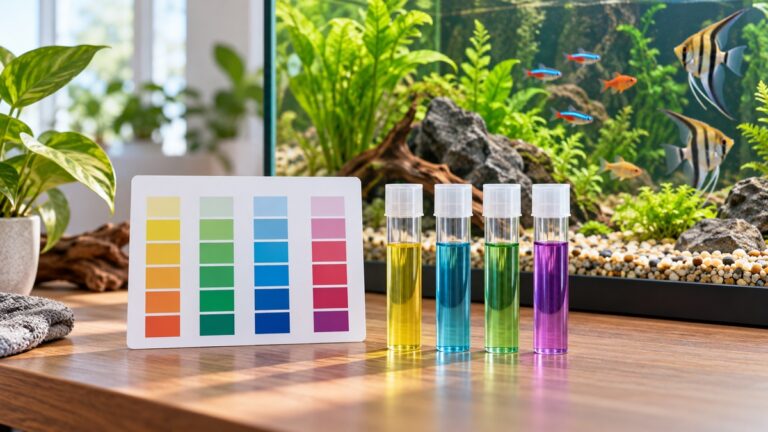
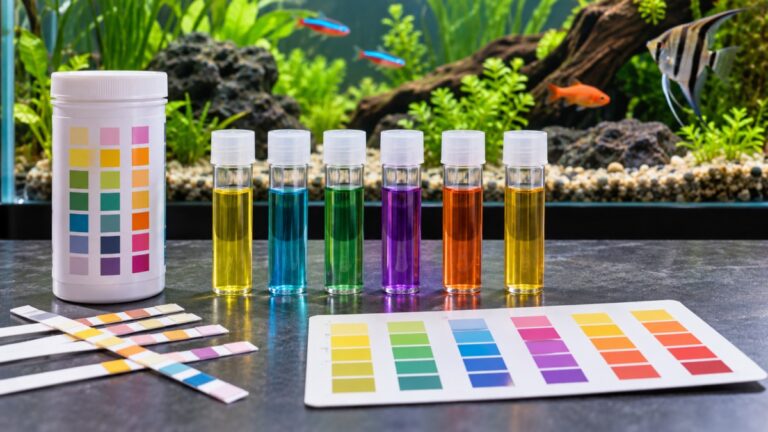
The pH of tap water is not the same everywhere. The Merck page notes that “the pH level (the level of acid) of tap water varies greatly from well to well or city to city.” That means a betta kept in one town’s tap water may see a different pH from one kept in another town. The page recommends checking with a home test kit, or taking a sample to a veterinarian or pet store for analysis.
pH also changes how dangerous ammonia is. The UF/IFAS ammonia publication, FA031, says “the portion of un-ionized ammonia increases with increasing pH and/or temperature.” It also explains that un-ionized ammonia is “approximately 100 times more toxic to fish than the ionized (NH4+) form.” Because pH is part of the calculation, a pH reading helps interpret an ammonia reading. The guide on how to keep betta water warm covers the temperature side of the same effect.
Ammonia, nitrite and the filter
Ammonia comes from the fish itself and from uneaten food. FA031 explains that “Ammonia is colorless and, even at levels toxic to fish, odorless.” The only reliable way to know ammonia is present is to test the water. The publication says ammonia-oxidizing bacteria convert ammonia to nitrite, and other bacteria convert nitrite to nitrate. Nitrite is harmful at low levels. The publication states that “Nitrite is toxic to fish at levels as low as 0.10 mg/L.”
A new tank takes time to build the bacteria that handle this cycle. FA031 says “A new biofilter requires six to eight weeks to build up sufficient bacteria to effectively reduce ammonia and nitrite levels.” This is why a betta bought for a freshly set-up tank can be at risk even when the water looks clear. The publication also notes that “At a total alkalinity less than 20 milligrams per liter (mg/L), common species of nitrifying bacteria do not function effectively.” Alkalinity is the buffer that keeps pH from crashing as the bacteria work.
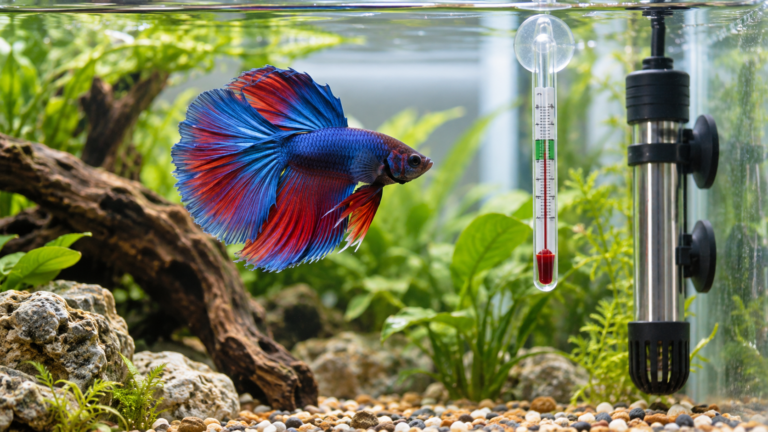
The filter question is different for bettas. The UF/IFAS betta publication, FA212, says “Bettas prefer calm water as shown by research using flow as a stressor, so heavy filtration may actually be harmful to a betta’s health and welfare.” So a filter is useful for keeping the bacteria alive, but it should not create a strong current. Gentle flow is the sourced requirement; the sources do not say which filter models meet it.
Water changes
The UF/IFAS publication makes a point that many beginners miss: “water quality is not dependent on the size of the container, but rather on management and husbandry.” A small tank can be clean, and a large tank can be dirty. The publication says that for tanks “of limited volume and reduced filtration,” the answer is “frequent water changes so that uneaten feed as well as ammonia and other dissolved wastes are not allowed to reach harmful levels.”
The Merck page gives a number for small tanks: small aquariums, such as “goldfish bowls and betta tanks,” need “more frequent water changes,” with “perhaps as much as 50% per week.” The page presents that as an upper figure for small systems, not a fixed rule. The safer approach is to test ammonia and nitrite and let the readings decide how often to change the water. The UF/IFAS publication recommends testing ammonia “once a week” in production systems, and says it should be tested “immediately any time fish appearance or behavior changes.”
When you do a water change, match the temperature and treat the new water before it goes in. The Merck page’s advice on dechlorinators applies to every addition. For a guide to temperature when adding water, see what temperature do betta fish like, and for how to set up the tank before the first fish, see the best way to set up a betta tank.
How we chose
This guide relies on three sources: the Merck Veterinary Manual page on providing a home for fish, the UF/IFAS publication on ammonia in aquatic systems (FA031), and the UF/IFAS publication on betta evolution and care (FA212). They are a veterinary reference and two university extension publications. We did not use product pages, retailer copy or blog posts for any factual claim. Where the sources do not give a figure, we say so and do not supply one.
What we could not verify
The sources explain the chemistry of tap water, ammonia and nitrite in general terms. They do not recommend a specific water hardness or pH for bettas, and they do not say which dechlorinator product works best. They also do not give a single water-change schedule that fits every betta tank. Those points are left open here rather than filled in with a number that is not in the sources.
What the sources do not say
The sources do not state a target pH or hardness range for betta water. They do not say whether bettas tolerate a specific local tap water better than another. They do not give the exact amount of dechlorinator to add, which varies by product, so follow the label. They also do not describe a home-aquarium test kit by brand.
Frequently asked questions
Can a betta live in tap water?
Yes, according to the Merck Veterinary Manual, tap water is generally acceptable to use once it is treated. The key step is removing chlorine or chloramine with a dechlorinator, because the Merck page says both are toxic to fish.
Is bottled water better for bettas?
The sources do not say bottled water is better for bettas. The Merck page lists filtered and reverse-osmosis water as options, but it also says tap water is the most convenient choice. Whatever source you use, the water still needs to be treated and checked.
What ammonia and nitrite levels are dangerous?
The UF/IFAS publication gives one clear figure: nitrite is “toxic to fish at levels as low as 0.10 mg/L.” For ammonia, the publication says the toxic un-ionized share depends on pH and temperature, so a single number is not enough. Test both and act on any reading above zero.
How often should betta tank water be changed?
The sources do not give one schedule. The Merck page describes small tanks as needing “more frequent water changes,” perhaps as much as 50% per week. The best guide is your own water test readings over time.
Does a betta need a filter?
The sources say bettas prefer calm water, and that heavy filtration may be harmful. A filter that keeps the bacteria working without a strong current is the sourced goal. The sources do not name filter models.
Sources
- Merck Veterinary Manual: Providing a Home for Fish (opened 2026-10-24)
- UF/IFAS EDIS FA031: Ammonia in Aquatic Systems (opened 2026-10-24)
- UF/IFAS EDIS FA212: Evolution, Culture, and Care for Betta splendens (opened 2026-10-24)