How to Cycle a New Planted Aquarium Step by Step
As an Amazon Associate we earn from qualifying purchases.
Cycling a new planted aquarium means building up the helpful bacteria that process fish waste before any fish go in. The idea is the same as for a bare tank, with live plants added to the mix. This guide explains the nitrogen cycle, how fishless cycling works, what the sources say about timing and bacteria boosters, and where plants fit. Where the sources we opened do not give a number, we say so instead of making one up.
Quick answer
- Cycling grows nitrifying bacteria that turn ammonia into nitrite, then nitrite into nitrate.
- Fishless cycling uses a non-fish ammonia source, such as pure ammonia or fish food, so no fish are exposed to spikes. A reference article says pure ammonia is superior.
- Timing varies: the same source says it can be instant or take up to six months in some reported cases.
- Too much ammonium can kill the nitrifiers, so dose with care and ask an aquarium specialist for amounts.
What the nitrogen cycle is
Fish waste and decaying food release ammonia, which is highly toxic to fish. Two groups of bacteria deal with it. According to a general reference on the nitrogen cycle, Nitrosomonas oxidize ammonium to nitrite, and Nitrobacter oxidize nitrite to nitrate. Nitrate is less acutely toxic and is not directly toxic to fish in the way ammonia is, though it can still cause problems in other settings.
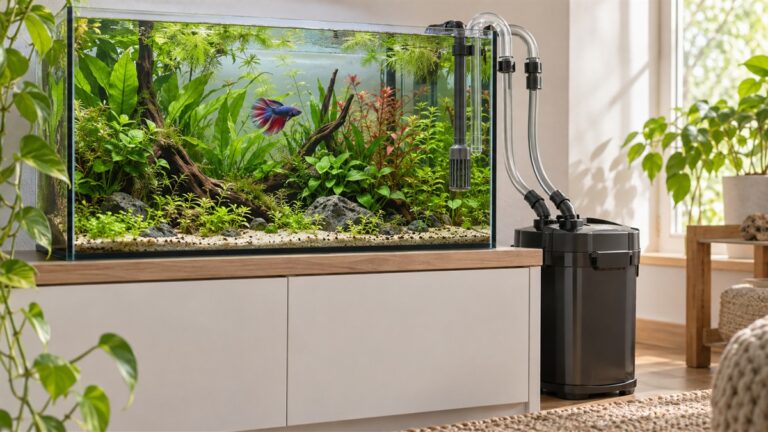
In an aquarium these bacteria live on surfaces, especially where there is high water flow and plenty of surface area, such as inside the filter. That is why a filter with media is central to cycling. A cycled tank is one where the bacteria colony is large enough to handle the ammonia that arrives.
Fishless cycling in plain steps
Fishless cycling establishes the colony before fish are added, using an ammonia source that is not a fish. The reference article describes the approach and its trade-offs but gives no exact dosing numbers, so the steps below are the shape of the process, not a recipe.
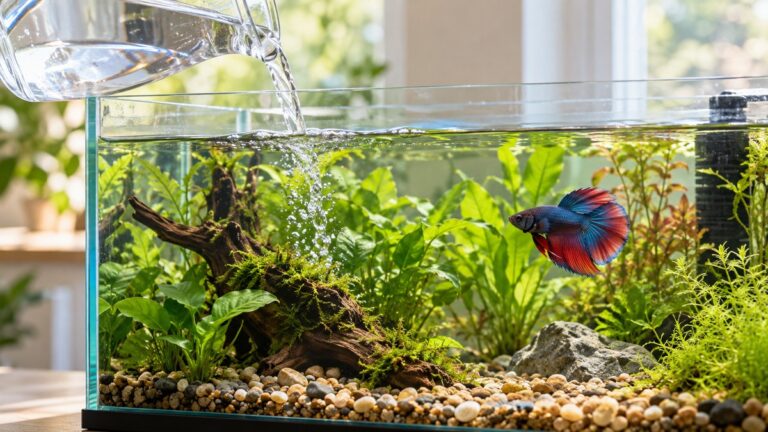
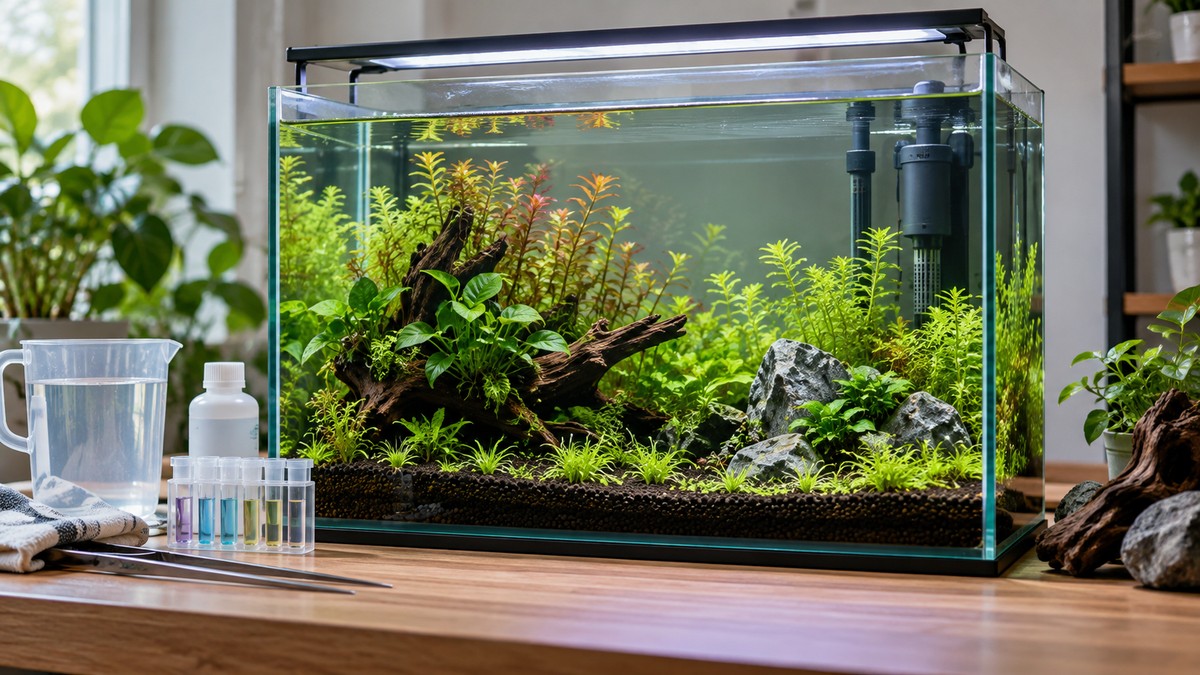
- Set up the tank fully. Fill it, run the filter and install the hardscape and plants, so the bacteria grow on the same surfaces they will live on.
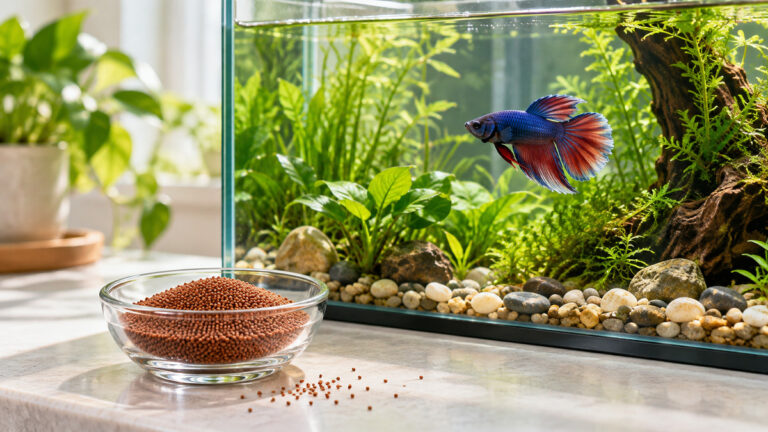
- Add an ammonia source. The source says the ammonia can come from pure ammonia or from fish food, and that pure ammonia is superior. Fish food decaying can leave phosphates behind.
- Be careful with the dose. The source warns that too high an ammonium concentration can kill nitrifiers. Ask the seller of your test kit or ammonia product for its directions.
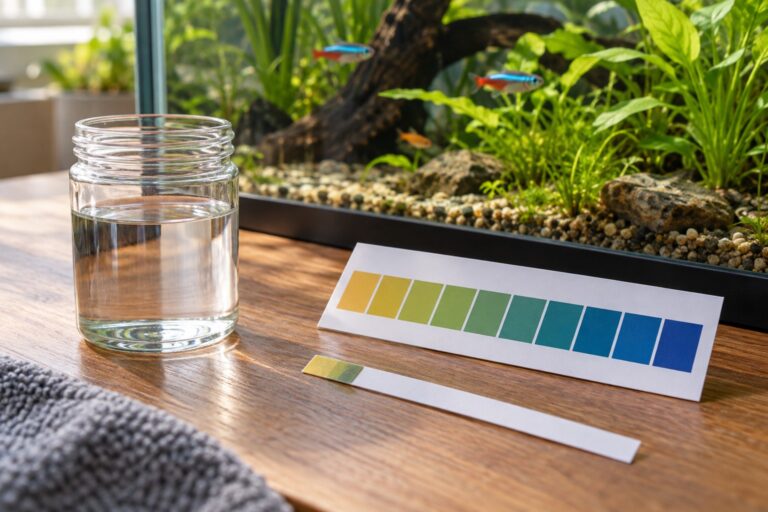
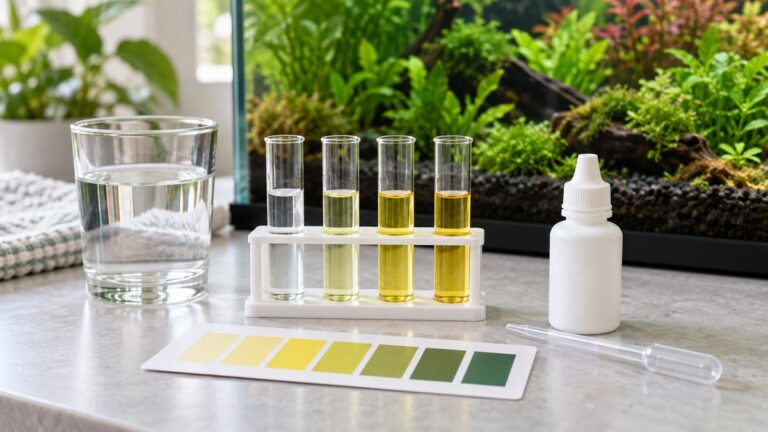
- Test regularly. You are watching for ammonia to be processed into nitrite and then into nitrate. A test kit is therefore part of the cost, and the source lists test kits and pure ammonia among reasons fishless cycling can cost more.
- Wait until the tank handles the ammonia. The source says that if the tank can handle the ammonia, it can be fully stocked immediately. The waiting time is a disadvantage, but it avoids fish loss from ammonia and nitrite spikes.
Where live plants fit
The sources we opened for this guide do not describe how plants change the cycling process, and we do not want to promise that they speed it up or replace testing. What is supported from a general reference on freshwater aquariums is that live plants are recommended for planted tanks and that plants consume nutrients, which matters later for keeping algae in check. Plants are a good reason to plan the tank carefully before you start, but they do not remove the need to build bacteria and to test.
It is wise to set up the lighting and plants before adding fish. Our guide on picking a planted aquarium light covers lighting choices from product listings, and the page on a background for a planted tank helps with the visual side.
Speeding things up: do boosters work?
The reference article says seeding with nitrifiers from established biomedia, or using a bioaugmentation product, can help, but not all products work. It describes a study in which Tetra SafeStart accelerated cycling, while Seachem Stability, API QuickStart, Imagitarium Biological Booster and Fluval Cycle performed no better than no product over the first 14 days. It also says raising pH and temperature is common advice, but does not always help, because some nitrifiers prefer lower values; one freshwater Nitrotoga species has an optimum of pH 6.8 and 22 degrees Celsius.
The takeaway: do not assume a bottle makes the process faster. If you want to use one, read the independent evidence, and ask a specialist for guidance. Another source of bacteria is media taken from an established tank, if you have a friend who keeps fish and can share it safely.
How long does it take?
The only timing the source gives is a wide range: the process can be instant or take a long time, up to six months in some reported cases. That is too wide to plan a calendar around, so treat test results, not the date, as your signal. Do not add fish just because a week has passed.
Why not cycle with fish?
The reference lists the advantages of fishless cycling: reduced fish loss from ammonia and nitrite spikes, and avoiding the disease and parasite risks of cycling with feeder fish. The disadvantages are cost, decaying food leaving phosphates, and having to wait before stocking. If you plan to add a sensitive fish such as a betta, the fishless approach spares it the spikes.
Mistakes to avoid
- Adding fish too early. Wait until your testing shows the tank can handle ammonia.
- Dosing ammonia too heavily. The source says too much can kill the nitrifiers.
- Trusting a booster blindly. The study mentioned shows some products did no better than none.
- Cleaning the filter media with tap water or replacing all of it at once. The bacteria live on media; ask the filter maker how to rinse it.
- Skipping tests. The date is not a reliable signal.
FAQ
What does cycling a new planted aquarium mean?
It means growing the bacteria that convert ammonia to nitrite and then nitrate, so the tank can safely hold fish. Plants are part of the tank, but they do not replace the bacteria.
Can I cycle with fish food?
The reference says the ammonia source can be fish food or pure ammonia, with pure ammonia described as superior. Decaying food can leave phosphates.
How many weeks will it take?
The source says anywhere from instant to up to six months in some reported cases. Use test results.
Do bacteria additives work?
Some may. The study described found that one product accelerated cycling and four others did no better than none in the first 14 days.
Should I acclimate fish after cycling?
Yes, new fish should be introduced gently. See our guide on how to acclimate new aquarium fish or how to introduce a betta fish to a new tank.
Is a heater needed?
The sources we opened do not say. For a betta, see our page on the Hagen Marina betta heater.
Bottom line
Treat cycling as a testing task, not a calendar task. Set up the tank with its plants and filter, add an ammonia source carefully, test until the tank processes it, and only then add fish. If you are unsure about doses or about the health of any animal, ask an aquarium specialist or a vet.