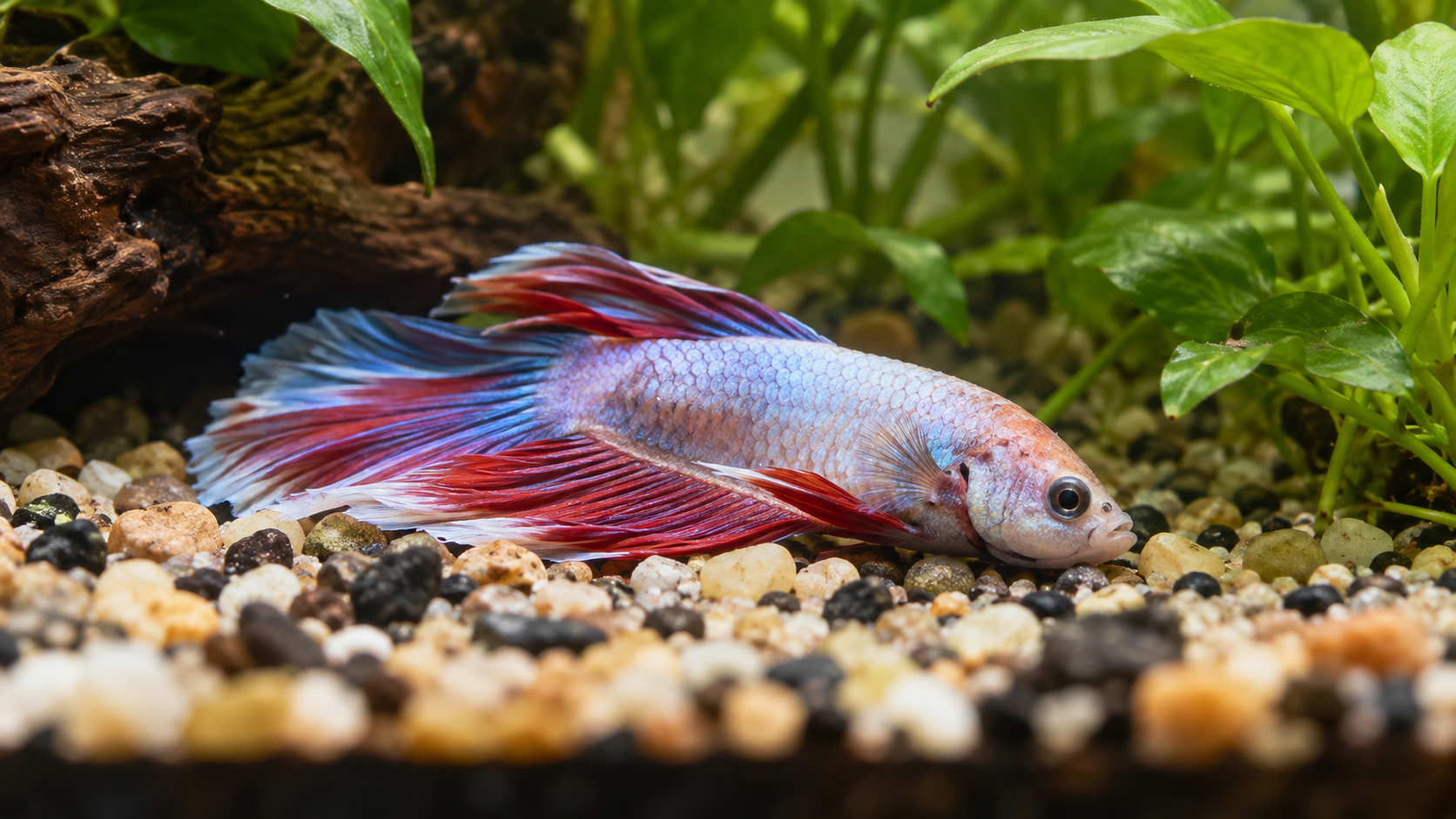
Why Is My Betta Laying on His Side?
As an Amazon Associate we earn from qualifying purchases.
Why is my betta laying on his side? A betta resting on its side or floating at an odd angle needs prompt attention, and the sources we opened do not name a single cause for it. They do list “Floating, drifting, or swimming erratically in unusual positions” as a sign of illness in fish. The sources also say that water testing and a fish veterinarian are the right next steps. This guide explains what the sources cover, what to check today, and what they leave unanswered.
Quick answer
- The sources we opened do not describe a betta lying on its side. They do list unusual swimming positions as a sign of illness in fish.
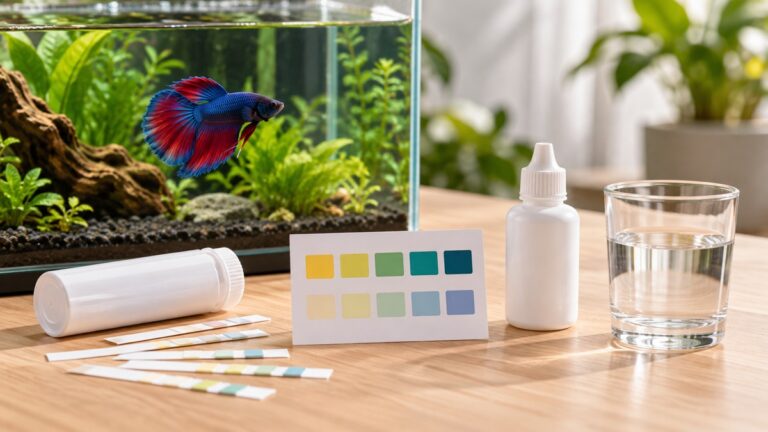
- Test the water now, including ammonia and nitrite, and note any recent change in feeding, temperature, or maintenance.
- Check the water temperature. The UF/IFAS betta publication says bettas “do not do well in cold water.”
- Contact an aquatic vet or an experienced fish keeper quickly. Do not start a medication on your own.
What the sources say about unusual positions
The Merck Veterinary Manual gives a list of common signs of illness in fish. The list includes “Lethargy,” “Not eating,” “Slow or rapid breathing,” and “Floating, drifting, or swimming erratically in unusual positions.” In its introduction to signs of illness, the manual says that “Some general signs of illness include changes in swimming behavior and noticeable changes in the color or condition of the body and fins.”
A fish on its side is an unusual position, so the sources treat it as a reason to act. They do not connect side-lying to one specific condition. The manual describes several disorders in fish, but none of the sources we opened says that a betta lying on its side has a particular cause. Any named diagnosis you read online for this sign is outside what this guide can support.
Check the water first
The UF/IFAS ammonia publication (FA031) explains why water testing comes first. It says that “Ammonia is colorless and, even at levels toxic to fish, odorless. Therefore, the only way for a producer or aquarist to know if ammonia is present is to test the water.” A tank can look clear and still hold ammonia.
The same publication says that ammonia “should also be tested immediately any time fish appearance or behavior changes (including reduced feeding).” A betta that is on its side is a change in behavior, so the sources support testing right away. Ammonia is not the only test. The publication also warns that “Nitrite is toxic to fish at levels as low as 0.10 mg/L.”
The publication describes the effects of long exposure too: “Fish exposed to low levels of ammonia over time are more susceptible to bacterial infections, have poor growth, and will not tolerate routine handling as well as they otherwise would.” That is one reason to handle a sick betta as little as possible until a vet or an experienced keeper has advised you.
Feeding is part of the picture. The same publication states that “Overfeeding is a major cause of high ammonia concentrations.” If the betta has been fed heavily or uneaten food has been sitting in the tank, note it when you test. The publication also says, “The first thing to do when ammonia is present in a pond or tank is to reduce or stop feeding.” That is the source’s advice for ponds and tanks in ammonia trouble, and it is worth raising with a vet before you change the feeding routine for a sick fish.
Temperature matters for bettas
The UF/IFAS betta publication (FA212) states that “As mentioned, bettas thrive in warmer water and do not do well in cold water.” It adds a specific number for one case: “If they are kept in an unfiltered, unheated container, the air temperature of the room should be maintained at no less than 22°C (71.6°F).” That figure applies to unfiltered, unheated containers. It is not a set-point for every tank, but it shows that the source treats cold conditions as a welfare concern.
Check the thermometer and the heater before you do anything else. A heater that is off, a tank that has been moved to a cold room, or a water change with much colder water can all lower the temperature. For heater options, see Do Betta Fish Need a Heater? and Best Aquarium Heater for Betta Fish. The sources do not give a temperature range for a sick betta, so ask the vet what range to aim for.
Why a vet is the next step
The UF/IFAS betta publication says that “Different possible causes of a disease outbreak (water quality, nutrition, infections) should be verified or ruled out to ensure more effective treatments.” That is the reason to bring in a professional. Water quality, feeding, and infection are all possible, and the sources say they should be checked, not guessed.
The UF/IFAS publication also says “Proper diagnostics will be facilitated by working with a fish veterinarian.” To find one, the publication suggests contacting your local veterinarian, who may work with fish or may know a colleague who does. It also says that “Many drugs and chemicals can do more harm than good if they are used inappropriately.” For that reason, this guide does not give medication doses or treatment steps.
The Merck manual notes that a veterinarian may need to administer some treatments and that “Some of these (such as injections or surgery) need to be performed by your veterinarian, whereas others can be done at home.” Whatever the vet recommends is the step to follow, and the sources do not replace that advice.
Handling and the tank in the meantime
The sources give general reasons to limit handling. The FA031 publication says that fish with long-term ammonia exposure “will not tolerate routine handling as well as they otherwise would.” Until a vet has seen the fish, keep handling and disturbance to what is needed to test the water and check the heater. These steps are general guidance; the sources do not give a full home-care protocol for a sick betta.
How we chose
The sources were chosen by subject. They are university extension material on betta care and ammonia, and a veterinary reference on fish health and disorders. Retail pages were not used to support any statement in this guide, and no product is recommended. Each quotation was checked against the page text on the date the page was opened. Where a source discusses fish in general rather than bettas, this guide says so.
What we could not verify
The sources we opened do not explain why a betta lies on its side. They list the sign and the steps to check, but they do not say which cause is most likely in a given tank.
What the sources do not say
- What causes a betta to lie on its side, or whether one cause is more common than others.
- Whether side-lying can recover without treatment.
- How long a betta can survive in this state.
- Which medication, if any, is appropriate for a betta with this sign.
Frequently asked questions
Is a betta lying on its side always sick?
The sources we opened treat an unusual swimming position as a sign of illness. They do not say that every case is serious, and they do not say that every case is the same. Treat it as a reason to test the water and contact a fish vet or an experienced fish keeper promptly.
Can bad water make a betta lie on its side?
The sources say that poor water quality can cause stress and damage. The UF/IFAS ammonia publication says that “At low concentrations, ammonia causes stress and damages gills and other tissues.” They do not say that poor water causes side-lying specifically, so the water test is a check, not a diagnosis.
Can a cold tank cause this?
The UF/IFAS betta publication says bettas “do not do well in cold water.” It does not link cold water to side-lying in particular. Check the temperature and the heater, and report what you find to the vet.
Should I stop feeding my betta?
Feeding is a question for the vet or an experienced fish keeper. The UF/IFAS ammonia publication says that reducing or stopping feed is the first step during ammonia stress. It also says that “Overfeeding is a major cause of high ammonia concentrations.” Do not change feeding on your own without advice that fits your fish.
When do I need to see a vet about side-lying?
Contact an aquatic vet or an experienced fish keeper as soon as you notice the sign. The Merck list includes “Floating, drifting, or swimming erratically in unusual positions” and “Lethargy” among common signs of illness. The UF/IFAS publication says that proper diagnostics require “working with a fish veterinarian.”
Sources
- University of Florida IFAS Extension, “FA212: Evolution, Culture, and Care for Betta splendens”, https://edis.ifas.ufl.edu/publication/FA212 (opened 2026-10-24)
- University of Florida IFAS Extension, “FA031: Ammonia in Aquatic Systems”, https://edis.ifas.ufl.edu/publication/FA031 (opened 2026-10-24)
- Merck Veterinary Manual, “Routine Health Care of Fish”, https://www.merckvetmanual.com/all-other-pets/fish/routine-health-care-of-fish (opened 2026-10-24)
- Merck Veterinary Manual, “Disorders and Diseases of Fish”, https://www.merckvetmanual.com/all-other-pets/fish/disorders-and-diseases-of-fish (opened 2026-10-24)