Do Betta Fish Grow? What Sources Say About Size
As an Amazon Associate we earn from qualifying purchases.
Do betta fish grow? Yes. A betta goes through a young stage in which it grows and changes, and its diet and care needs shift as it gets older. The University of Florida betta fact sheet describes the growth stages used in fish farming, including how long young bettas stay in group tanks before they are separated. However, the sources we opened do not give an adult body length for a pet betta kept at home, and they do not state how fast a home betta grows. This guide explains what the sources do say, how that applies to a home tank, and where the information stops.
Quick answer
- Yes, bettas grow. The University of Florida source describes young bettas being fed different foods as they get older, and moved to separate containers at a stage it gives as three to four months.
- Diet changes with age. Growing fish need more protein than maintenance fish, according to the University of Florida nutrition publication.
- The sources do not give an adult size, lifespan, or home growth rate for a betta. Do not rely on a size claim from a product page.
- Choose a tank for the adult fish, not the juvenile. Our guide on how big of a tank do betta fish need covers tank size in more detail.
How the sources describe betta growth
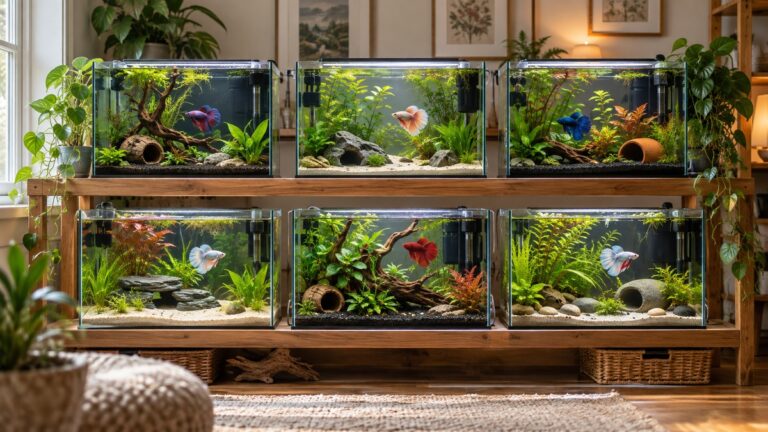
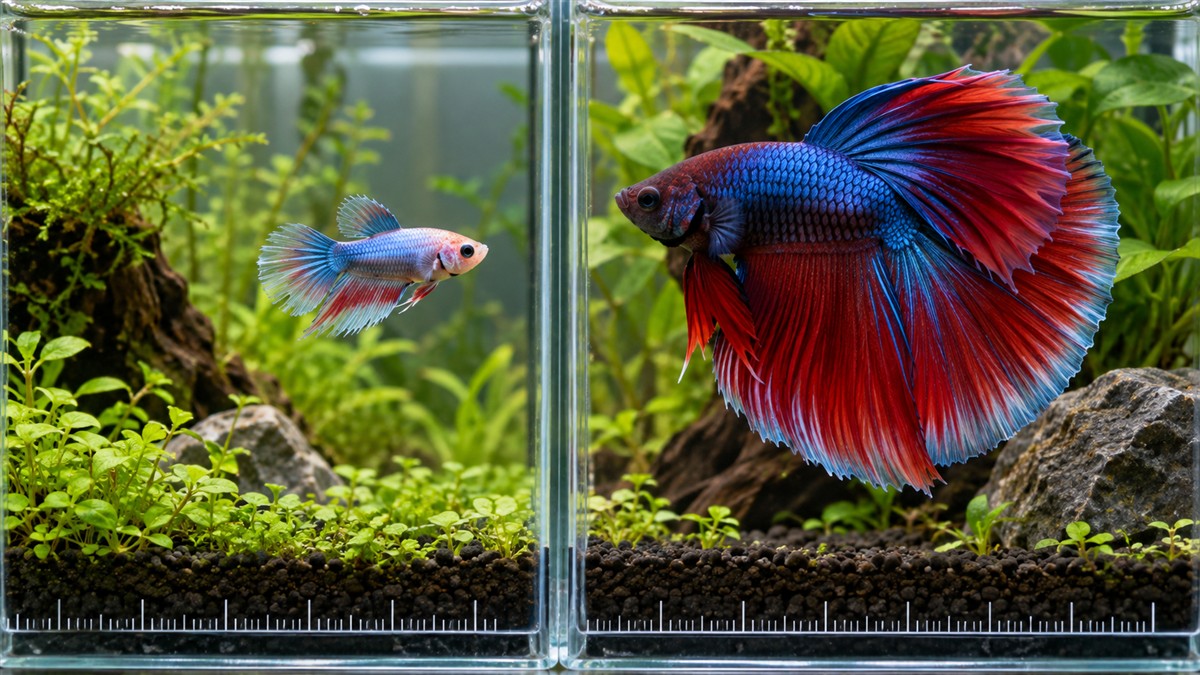
The most detailed growth account in the sources is the University of Florida publication on betta fish, which describes commercial production. Larval fish, which are newly hatched, absorb their yolk sac in about three days. They are moved to grow-out tanks and fed live food first, such as very small aquatic organisms and brine shrimp nauplii. As they grow, they move to commercially available flake or pelleted feeds. The publication states that bettas are reared together as a group until they reach three to four months old. At that point, males become distinguishable from females and must be separated to avoid damage from aggression.
The same source describes how male bettas are grown in commercial settings. It says males are grown for eight to twelve weeks, depending on attributes such as size and finnage desired by hobbyists. That is a production timeline for farm conditions, not a growth rate for a fish in a home aquarium. A farm can select for size and fin shape, so the timeline cannot be used to predict how big a pet betta will become.
The sources also show that the three-to-four-month age is about sex differences, not about reaching an adult size. The University of Florida publication does not say whether or when growth stops after that point, so this article does not state an adult age.
How diet changes as a betta grows
The University of Florida fish nutrition publication, titled “Fish Nutrition” (FA096), explains that protein levels in fish diets change with age. It says that as growth rate decreases and fish age, protein levels in diets are reduced accordingly. It gives approximate figures for grow-out diets, which often reach or exceed 40 percent crude protein, and for maintenance diets, which may contain as little as 25 to 35 percent. These are general figures for fish, not betta-specific feeding instructions.
Merck Veterinary Manual gives feeding rates for the two stages. For maintenance diets, it lists 1 to 2 percent of body weight per day. For growth diets, it lists 3 to 5 percent of body weight per day. Both figures depend on species, age, system, and water temperature, as Merck notes, so they are a starting point, not a set schedule. A young betta that is still growing may need a growth-stage food, while an adult may need less. Check the label on the food you buy and watch the fish after each meal.
Diet also affects the water. The University of Florida source on betta fish says that uneaten feed must not be allowed to reach harmful levels. Because the right amount depends on the fish’s size and age, a portion that suited a young betta may need to change as the fish grows. For feeding amounts and warning signs, see our guide on how many pellets to feed a betta.
Why tank size still matters
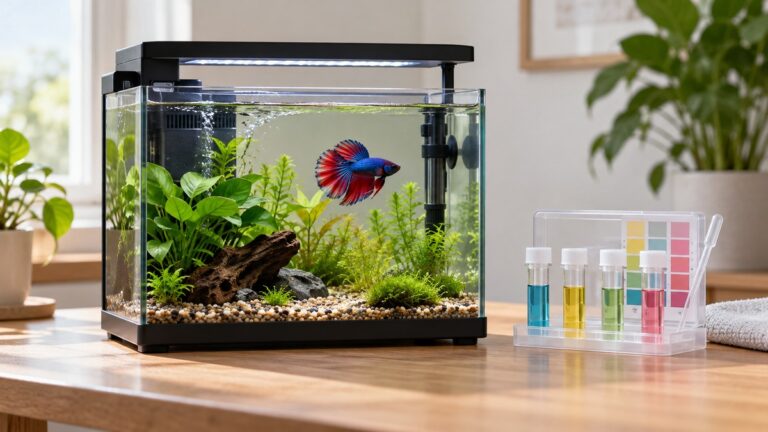
A young betta does not need a large tank to start, but the adult fish will. The sources we opened do not give a minimum tank size for an adult betta at home. They do give useful points about the environment. The University of Florida betta publication states that water quality depends on management and husbandry more than on the size of the container. It also says bettas prefer calm water, and that heavy filtration may be harmful to their welfare. Water quality still depends on how the tank is managed, and heavy filtration is not automatically better.
The same publication describes small individual containers in commercial grow-out and shipping. That is a production setting, not a recommendation for a home. Merck states that a heater is necessary for tropical fish. The University of Florida source also says bettas do not do well in cold water. This site does not recommend bowls, vases, or very small containers as a home. For a home setup, a heated, filtered tank of at least 5 gallons is a common recommendation in hobby guidance. The sources we opened do not state that figure, so treat it as general guidance rather than a sourced number.
How we chose
This guide answers one question: whether betta fish grow, and what the research-based sources say about that growth. We selected university extension publications and a veterinary reference because they discuss betta biology and feeding with a stated basis. We did not use retail pages or hobby blogs as sources, and we did not treat any size claim as fact unless a source we opened supports it. Where a source describes commercial production rather than home aquariums, the text says so.
What we could not verify
The sources we opened cover betta biology, commercial production, and general fish nutrition. They do not describe the body length of an adult pet betta, the lifespan of a home betta, or the growth rate of a betta in a home tank. We could not verify a size chart, a growth percentage per month, or the effect of a specific food on growth. Claims about fast growth or large adult size on product pages are not sourced here and are not treated as facts in this guide.
What the sources do not say
The sources do not give an adult length in inches or centimeters. They do not say how long a home betta takes to reach adult size, when growth slows or stops, or whether tank size changes final size. They also do not compare fin growth or body growth across different diets. Those are open questions that need either a breeder’s records or a fish-keeping reference that is not included here.
Frequently asked questions
Do betta fish keep growing after they are adults?
The sources we opened do not say. The University of Florida publication describes growth in young fish during commercial production, and gives the three-to-four-month age when males are separated by sex. It does not state when growth ends for a betta kept at home.
How big do betta fish get?
The sources we opened do not give an adult size for a pet betta. Product listings or hobby sites may give a figure, but those are not sourced here. Use the tank size guidance from a source you can check, and see our guide on how big can a betta fish get for related information.
Does diet affect how fast a betta grows?
Diet matters for growing fish. The University of Florida nutrition publication says protein levels are reduced as growth slows and fish age, and Merck gives different feeding rates for growth and maintenance diets. The sources do not measure the growth of bettas on specific foods, so the effect on any one fish is not known.
Do bettas grow faster in a bigger tank?
The sources we opened do not say this. The University of Florida betta publication states that water quality depends on management more than container size. It does not claim a bigger tank makes a betta grow faster.
Can a betta be too small for its tank?
The sources do not describe a size mismatch in those words. They do say that water quality can decline when waste builds up, and that frequent water changes help in small or lightly filtered tanks. For a home setup, choose a tank that can be kept stable, and avoid bowls or vases, which this site does not recommend.
Sources
- University of Florida IFAS Extension, “Evolution, Culture, and Care for Betta splendens” (FA212), https://edis.ifas.ufl.edu/publication/FA212, opened 2026-10-24.
- University of Florida IFAS Extension, “Fish Nutrition” (FA096), https://edis.ifas.ufl.edu/publication/FA096, opened 2026-10-24.
- Merck Veterinary Manual, “Providing a Home for Fish,” https://www.merckvetmanual.com/all-other-pets/fish/providing-a-home-for-fish, opened 2026-10-24.