Betta Fish Light Timer: Day and Night Setup
As an Amazon Associate we earn from qualifying purchases.
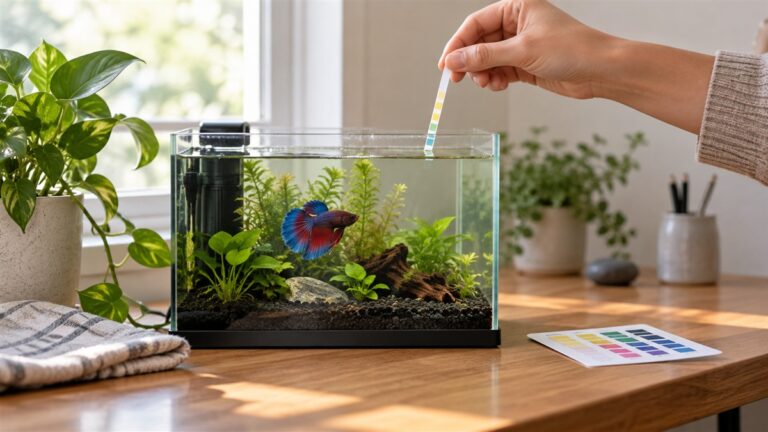
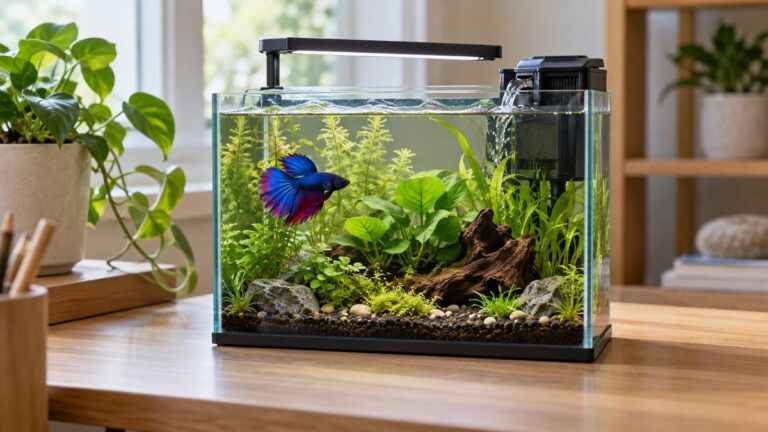
A betta fish light timer should give the tank a regular day and night cycle. The Merck Veterinary Manual states that “Fish need a day/night cycle for optimal health,” and it warns that leaving the lights on around the clock is a stressor. The sources opened for this guide do not give a number of light hours for a betta, so the timer schedule below is a set of sourced rules, not a single recommended time.
Quick answer
- Use the timer to create a day and night cycle, because Merck says fish need one for optimal health.
- Do not leave the lights on 24 hours a day, which Merck says stresses fish and makes them more susceptible to disease.
- Keep the tank out of direct sunlight, which helps limit algae and stops the water from warming.
- The sources do not give timer hours, so this guide does not give a schedule.
Why a day and night cycle matters
The Merck page on providing a home for fish is direct on this point. It says: “Fish need a day/night cycle for optimal health. Leaving the lights on 24 hours a day, 7 days a week stresses fish, leaving them more susceptible to disease.” The sentence does two jobs. It sets the goal, which is a cycle with a dark period, and it names the failure to avoid, which is constant light.
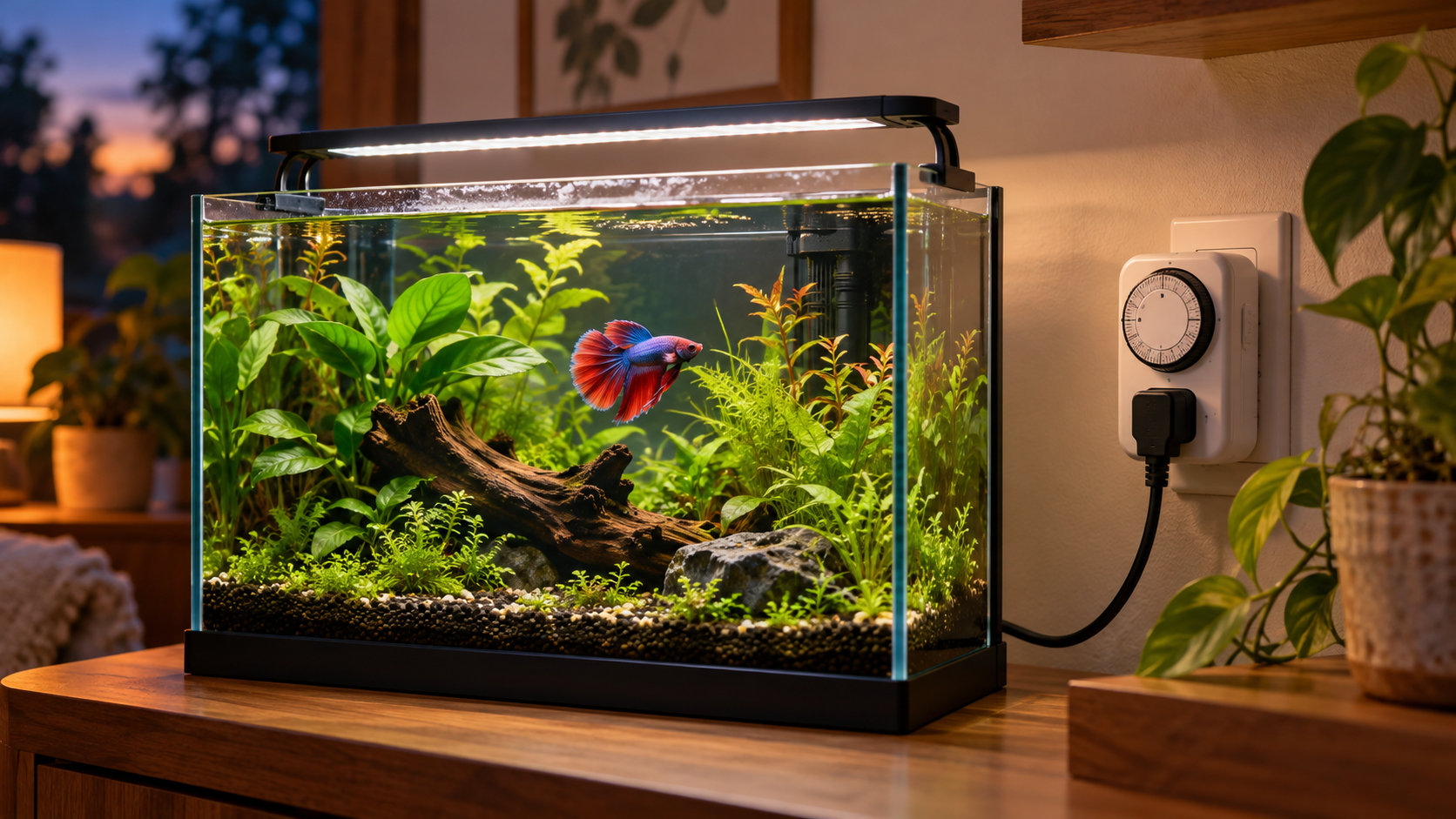
A timer is the simplest way to meet that goal without relying on memory. Plug the tank light into the timer, set an on time and an off time, and keep the schedule the same from day to day. Consistency is general guidance, not a sourced rule, but it is the practical reason people use timers at all.
Light and the dark period
The same Merck page describes what fish do when the lights go out. In a discussion of releasing new fish, it says that “When the tank light and the room lights are turned off, most fish will go into a “rest” mode within a few minutes.” That is a useful description of the dark period: the fish settle, and the tank is quieter. The page is describing a method for new fish, but it confirms that darkness is a normal resting state for most fish.
The sources do not say how long the dark period should be, or whether bettas differ from the general pattern described. The timer should therefore be set to a schedule that gives a clear dark period, and the fish’s behavior can show whether the schedule suits it.
Keep the tank out of direct sunlight
A timer controls artificial light, but natural sunlight also matters. Merck advises that “The tank should be located out of direct sunlight. This helps limit the growth of algae in the tank.” Sunlight can also warm the water: “Direct sunlight can also cause the water temperature in the tank to rise.” The page adds the reason temperature matters: “The warmer the water becomes, the less oxygen it will hold. If the water gets too warm, the fish can suffocate and die.”
A tank that sits in direct sun gets light and heat outside the timer’s control. Move the tank, or close a blind, before setting a light schedule. The guide on blue light for betta fish covers lighting products, but the placement rule here applies to any light.
Electrical safety for a timer
A timer adds another plug to the setup, so the sources’ electrical advice applies. Merck says “Filters, pumps, heaters, and lights should not be turned on until after the tank is filled with water.” That means the timer’s outlet should not switch on the light before the tank has water in it. Set up the tank, fill it, and then connect the timer.
The Merck page also asks practical questions about outlets: “Another consideration in selecting a location is access to electrical outlets for the lights, filters, and pumps.” It asks whether the outlet is grounded, whether it has a GFI (ground-fault interrupter), and whether there are enough outlets close by. It concludes: “In any case, you should consider a surge protector.” A surge protector is a sensible place to start for a timer and tank in the same outlet area.
- Fill the tank before the timer or any other electronics are plugged in.
- Check that the outlet is grounded, and consider a GFI outlet and a surge protector, as the Merck page suggests.
- Keep cords away from splashes. This is general guidance, not from the sources.
Heater, light and the rest of the setup
A timer controls only the light. The heater, filter and pump need their own power. The Merck providing-a-home page says that “A heater is necessary for both freshwater and saltwater tropical fish.” The light is about the day and night pattern. The heater keeps the water within the range the fish needs, so the two have different jobs.
The guide to the best betta heater for a 1 gallon tank covers that equipment. A light timer is not a substitute for checking the water temperature with a separate thermometer, which Merck also recommends in its heater section.
Signs that the schedule may be wrong
The sources do not describe a specific betta reaction to lighting. Merck does list general signs of illness, including “Lethargy” and “Not eating.” A betta that stays inactive or refuses food under a light schedule should be checked for water quality and other causes before the light is blamed, and a vet should see a fish that stays unwell.
The Merck routine care page says “Some general signs of illness include changes in swimming behavior and noticeable changes in the color or condition of the body and fins.” Changes in swimming and color can prompt a check of the setup, but they do not identify the cause.
How we chose
This guide uses only pages opened with curl on 2026-10-24. It relies on the Merck Veterinary Manual because it is one of the few general fish-care sources that addresses day and night cycles, sunlight and electrical setup in one place. Retail pages and product listings were not used for facts, and no product is recommended. Quotations were checked against the downloaded page text before use.
What we could not verify
The sources opened cover the principle of a day and night cycle, but they stop short of the details a timer user needs. Those details are left open here rather than filled with guesses.
What the sources do not say
- How many hours of light a betta should get per day.
- What on and off times to set, or whether the times should follow the seasons.
- Whether bettas need a particular light intensity, color or spectrum.
- Whether a timer should run a planted tank differently from a bare tank.
Frequently asked questions
How many hours should a betta fish light timer run?
The sources opened do not give hours. Merck says fish need a day and night cycle and that leaving the lights on 24 hours a day stresses fish. Choose a steady schedule that gives a clear dark period, and watch the fish’s behavior.
Is a light timer better than turning the light on by hand?
The sources do not compare the two methods directly. A timer makes a consistent cycle easier to keep, and that consistency is the sourced goal. The Merck page describes the day and night cycle as necessary, not the method.
Can a light timer go on the same outlet as the filter?
The Merck page asks about the outlets for lights, filters and pumps, and suggests a surge protector. It does not say a timer should not share an outlet with a filter. Check the outlet is grounded, and do not turn any equipment on before the tank is full.
Does a light timer replace a heater?
No. Merck states that “A heater is necessary for both freshwater and saltwater tropical fish.” A light timer controls light only.
Should the light be off when I first bring a betta home?
The Merck page describes releasing new fish in the dark to reduce aggression from current residents of the tank. It does not give a general rule for every new betta. Use the dark release method only if it fits the tank, and keep the usual day and night schedule afterward.
Sources
- Merck Veterinary Manual, “Providing a Home for Fish,” https://www.merckvetmanual.com/all-other-pets/fish/providing-a-home-for-fish, opened 2026-10-24.
- Merck Veterinary Manual, “Routine Health Care of Fish,” https://www.merckvetmanual.com/all-other-pets/fish/routine-health-care-of-fish, opened 2026-10-24.