Molly Fish Swimming Sideways: Causes and Checks
As an Amazon Associate, this site earns from qualifying purchases. This guide contains no product links.
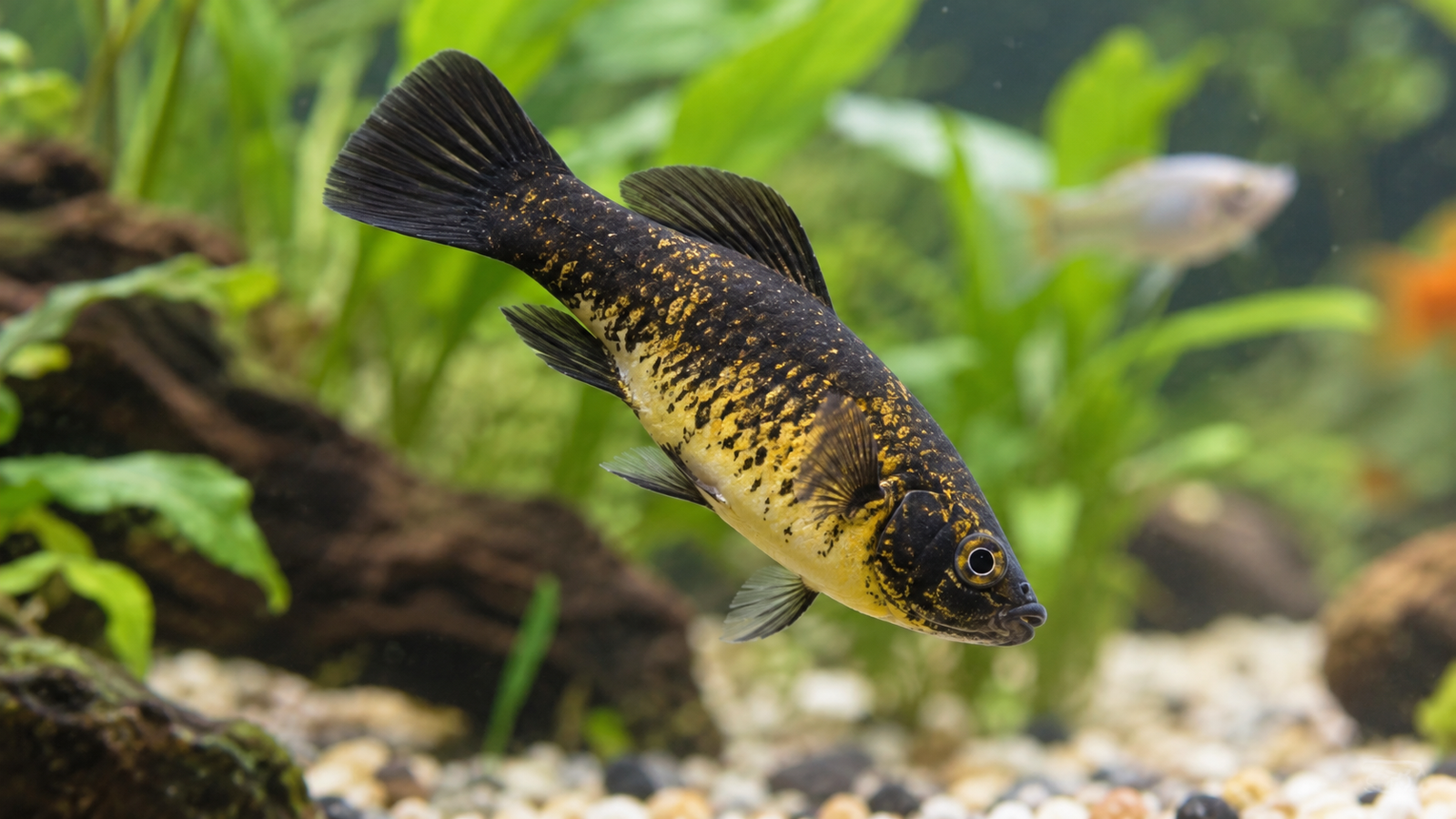
The person typing “molly fish swimming sideways” wants to know whether the fish is sick, what could cause the tilt, and what to check first. A molly that lies on one side or swims at a steep tilt is showing an abnormal body position. The sources checked for this guide list floating, drifting, or swimming erratically in unusual positions as a general sign of illness in fish. A sideways swimmer needs a same-day look at the water and the fish, not a wait-and-see approach.
Quick answer
- A molly swimming sideways is showing an unusual position, which the Merck Veterinary Manual lists among general signs of illness in fish.
- Check the water first. The UF/IFAS fish health publication says “If you suspect that fish are getting sick, the first thing to do is check the water quality.”
- The swim bladder controls buoyancy. Merck describes it as an organ that “helps fish move up or down in the water,” so a balance problem can point to that organ or to disease.
- If the fish cannot stay upright, or other fish in the tank are affected, contact a vet who treats fish or an experienced aquatic specialist.
What a sideways molly may be showing
A fish stays level with the help of its fins and its swim bladder. The Merck chapter on fish description says that “A fish’s fins are used for balance and to help propel and steer through the water.” The same chapter explains that the swim bladder lets a fish “adjust the depth at which they float without continuously having to swim.” When a molly leans to one side and stays there, either the fins are not working normally, the swim bladder is not working normally, or the nervous system or the body is affected by illness.
The sources do not give one cause for a molly that swims sideways. They describe the pattern, not the diagnosis. A useful way to read the sign is to ask three questions. Does the fish right itself when it rests? Does it still eat? Are the fins and skin normal? The answers help a vet narrow the list.
Some diseases in the Merck list affect floating directly. In the entry on edwardsiellosis, the chapter says “Affected fish cannot swim normally because the gas-filled lesions affect their floating ability.” That is one example of a bacterial disease changing buoyancy. It is not a diagnosis for a molly. It shows why a fish that cannot hold its normal position should be treated as a health problem.
Check the water before the fish
Water is the first place to look. The Merck home-setup chapter says “Poor water quality is the most common cause of environmental-related diseases in fish.” The UF/IFAS publication on fish health management says that “Low oxygen is a frequent cause of fish mortality in ponds” and that “High levels of ammonia are also commonly associated with disease outbreaks when fish are crowded in vats or tanks.” Those examples come from commercial and pond settings, but the same chemistry applies to a home tank.
Temperature matters too. The Merck description chapter explains that “Fish are cold-blooded, which means their body temperature is close to and fluctuates with the temperature of their environment.” A large or sudden temperature change can stress a fish. The sources checked do not give a safe range for mollies, so this guide does not give one.
Gas is another check. The Merck disorders chapter says “Gas bubble disease has been linked to faulty pumps.” It also lists “Tiny gas bubbles in the cornea” and “tiny bubbles in the fins or gills” as signs. A pump that is drawing air, or a leak in the intake, can be a cause worth ruling out. Look closely at the fins and eyes in good light.
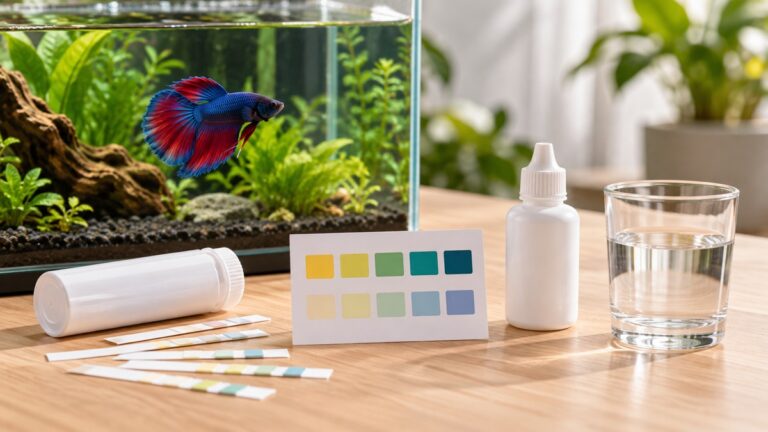
For general guidance outside the sources, a home test kit for ammonia, nitrite, and pH is the usual first step in a home tank. The sources checked here do not name a test list, so treat that as general practice. A comparison of test options is in the water quality test strips guide.
| Check | What to look for | What the sources say |
|---|---|---|
| Water quality | Ammonia, nitrite, pH, and a recent change in any of them | Merck: poor water quality is the most common cause of environmental disease |
| Temperature | Sudden swings, or a heater that does not hold steady | Merck: body temperature fluctuates with the environment |
| Gas | Tiny bubbles in fins or gills, a leaking intake, or a faulty pump | Merck: gas bubble disease has been linked to faulty pumps |
| Feeding | Uneaten food in the tank, or a fish that looks bloated | Merck: overfeeding can lead to health problems and a dirty tank |
| Physical signs | Ragged fins, sores, swelling, or pale gills | UF/IFAS and Merck both list these as signs that need a closer exam |
Feeding and the tank
Feeding is a common hidden cause of trouble. The Merck chapter on providing a home says “Overfeeding can lead to health problems as well as a dirty tank.” Uneaten food rots and adds waste to the water, which pushes the water quality down. The same chapter gives a general guide for maintenance feeding: “In general, maintenance diets are fed at a rate of 1% to 2% of body weight per day.” That is a general figure for fish, not a molly-specific one, and it should be read as a ceiling for a healthy fish rather than a daily target.
Mollies are livebearers. The UF/IFAS publication on freshwater ornamental fish says that “Poeciliids feed on algae, insects, and crustaceans.” The sources checked do not say which commercial food suits mollies best, so read the food label and watch what the fish actually eats.
Look at the tank as a whole. The Merck home chapter notes that “Decorative objects are not only aesthetically pleasing but also help ‘divide’ the aquarium and allow fish to have their own territory.” Decorations with sharp edges can injure fins, and a fish that bumps into them may swim oddly for a time. Remove anything rough before deciding that a disease is the cause.
What to do this week
Start with a calm observation. Note whether the molly rests on its side, whether it can rise when it wants to, and whether it eats. The Merck selection chapter describes healthy fish as having “smooth, unblemished scales, fins, and skin surfaces,” and says “Diseased fish often swim erratically (circling or drifting around the tank) or appear listless.” If the fish looks like that, the problem is more than a quirk.
Next, test the water and correct any clear problem you find. The sources do not say which correction fits which reading, so match the fix to the test result and the advice of a fish professional. Avoid adding medicines on a guess. Merck notes that many fish diseases need a diagnosis first, and the UF/IFAS guide says that “Successful fish health management begins with prevention of disease rather than treatment.”
For a routine that covers water changes, the water conditioner timing guide is a general fish tank post. Separate the fish only if a vet or aquatic specialist advises it. Moving a sick fish into a hospital tank is common hobby practice, but the sources checked do not describe it, so this guide does not give steps for it.
Call a vet or an aquatic specialist if the molly cannot stay upright, if it stops eating, if its belly swells, if its fins are ragged, or if other fish show the same signs. The Merck list of signs includes “Swelling or bloating,” and bloating together with a tilt is a combination that should be seen soon.
How we chose
The sources in this guide were chosen because they are veterinary and university references, not sellers. They were opened with curl on 2026-10-24 and read as text. The question has no product angle, so no product is recommended. The checks above follow the order the sources give them: the water, then the temperature and gas, then feeding, then the fish’s physical signs.
What we could not verify
A molly owner would like a single cause and a single fix. The sources checked do not provide either. The gaps are listed below so that nobody reads more into this guide than it contains.
What the sources do not say
- The sources do not give one cause for a molly that swims sideways.
- They do not give a molly-specific temperature or water-parameter range.
- They do not describe a home treatment for buoyancy trouble, so this guide does not give one.
- They do not say how long a sideways molly can go without a vet visit.
Frequently asked questions
Is a molly swimming sideways always sick?
Not always, but the Merck list of general illness signs includes “Floating, drifting, or swimming erratically in unusual positions.” Treat the sign as a reason to check the water and the fish closely, and to speak with a vet if it continues.
Can poor water cause a molly to swim sideways?
Poor water is a common cause of environmental disease in fish, according to Merck. The sources checked do not name water quality as the cause of sideways swimming in mollies, so the link is a reasonable check, not a confirmed one.
Should a sideways molly be fed less?
Overfeeding is a known health risk in the Merck chapter. Feeding small amounts and removing uneaten food is a general practice. Ask a vet before changing the diet of a sick fish.
Does a bubbler or stronger filter fix a sideways molly?
The sources do not say that aeration or filtration fixes a buoyancy problem. Merck links gas bubble disease to faulty pumps, so a pump that is drawing air deserves a check, but more flow is not a cure on its own.
When should a molly with a tilt see a vet?
See a vet or aquatic specialist when the fish cannot stay upright, stops eating, or shows swelling, sores, or ragged fins. The sources checked support a prompt exam, because many fish disease signs are not specific to one cause.
Sources
- Merck Veterinary Manual, “Routine Health Care of Fish,” https://www.merckvetmanual.com/all-other-pets/fish/routine-health-care-of-fish (opened 2026-10-24)
- Merck Veterinary Manual, “Disorders and Diseases of Fish,” https://www.merckvetmanual.com/all-other-pets/fish/disorders-and-diseases-of-fish (opened 2026-10-24)
- Merck Veterinary Manual, “Description and Physical Characteristics of Fish,” https://www.merckvetmanual.com/all-other-pets/fish/description-and-physical-characteristics-of-fish (opened 2026-10-24)
- Merck Veterinary Manual, “Providing a Home for Fish,” https://www.merckvetmanual.com/all-other-pets/fish/providing-a-home-for-fish (opened 2026-10-24)
- UF/IFAS Extension, “Introduction to Fish Health Management,” https://edis.ifas.ufl.edu/publication/fa004 (opened 2026-10-24)
- UF/IFAS Extension, “Freshwater Ornamental Fish Commonly Cultured in Florida,” https://edis.ifas.ufl.edu/publication/FA054 (opened 2026-10-24)