Will Platy Fry Survive in a Community Tank?
As an Amazon Associate we earn from qualifying purchases.
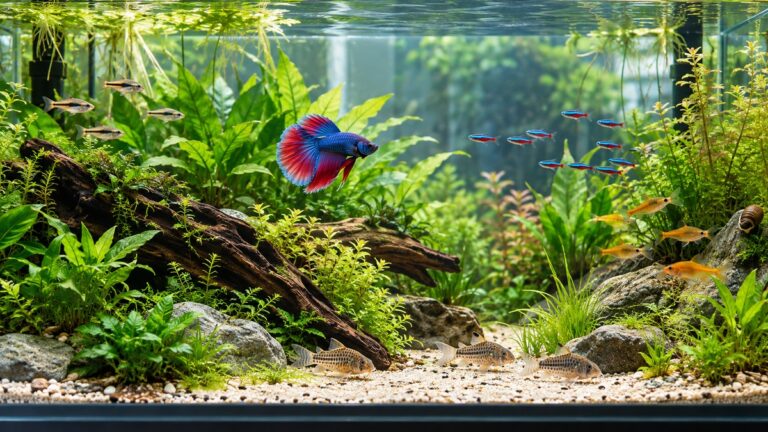
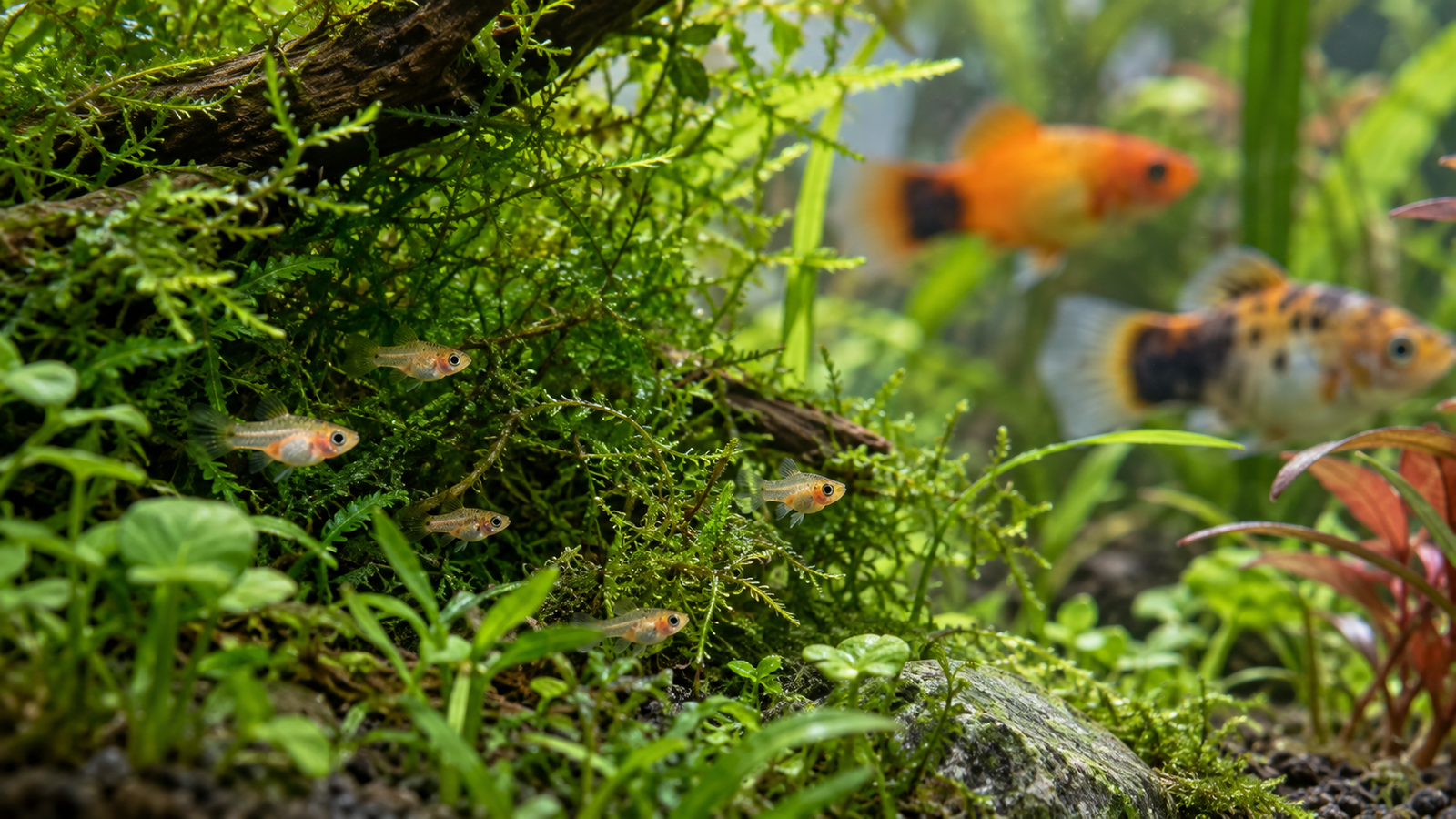
Will platy fry survive in community tank setups? They can, but survival depends mostly on whether adult fish can reach them. Newborn fry are small enough to be eaten, and the sources checked for this guide say that some species are more aggressive than others. A fry-friendly tank usually means dense cover, stable water and small, frequent meals. The sources do not study platy fry by name, so the specific advice below is general guidance drawn from broader fish-health and husbandry material.
Quick answer
- Platy fry can live in a community tank when the adults cannot easily reach them. The main risk named in the sources is other fish that attack or eat smaller fish.
- Dense plants, floating cover or a separate breeder container give fry places to hide. No source opened for this guide gives a survival rate for platy fry.
- Small meals and clean water matter more for young fish than for adults. Overfeeding is named as a common problem.
- If fry are gasping, floating oddly or dying, speak with an experienced fish keeper or an aquatic veterinarian before changing medications or water.
Why adult fish are the main risk
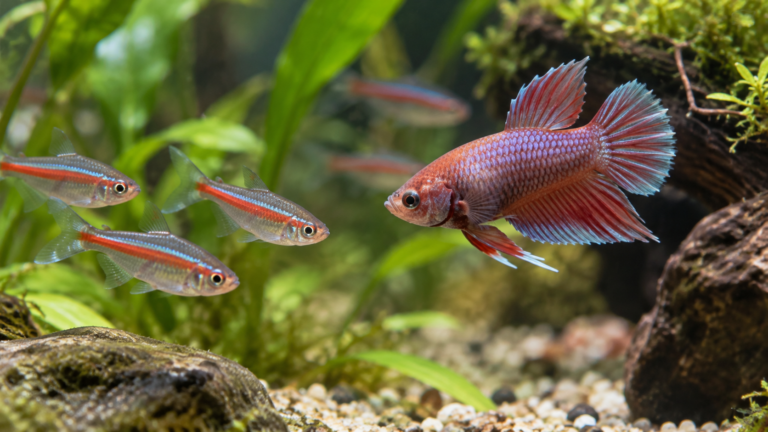
A community tank holds more than one species, and the species do not always get along. The Merck Veterinary Manual introduction to fish puts it plainly: “different species may have requirements that differ greatly, and therefore they cannot be kept together.” It adds a warning about predation: “Also, more aggressive species might attack or eat other fish in the tank.” For fry, that second sentence is the one that matters most, because a small fish has little protection from a larger one.
The same chapter’s guidance on new arrivals is also useful. The Merck section on providing a home for fish notes that “when new fish are added to the aquarium, the current residents sometimes respond aggressively, chasing or attacking the new fish.” Fry are new arrivals in the tank too, even when they were born there. A tank where the adults are already territorial or crowded gives the fry less room to escape.
Adult platies are not the only concern. Other fish in the tank can be more aggressive toward any smaller fish, so the mix of species matters as much as the number of fish. If you are unsure how the adults will behave, a separate container is the safer choice. For broader ideas on which community fish are small and colorful, see small colorful freshwater aquarium fish.
Disease and stress risks for young fish
Young fish are also more vulnerable to parasites. The Merck disorders chapter says that parasites “can lead to death in fry and other young fish,” and it names weight loss and loss of appetite as problems parasites cause. Stress makes this worse. The providing-a-home section states that “aggressive behavior is stressful for all fish in the tank,” so constant chasing can weaken fry even when no fish is injured.
Water quality is the other large factor. The Merck page on providing a home for fish says “poor water quality is the most common cause of environmental-related diseases in fish.” A tank with uneaten food or a poorly maintained filter is harder on any fish, young or old. The EDIS publication on ammonia in aquatic systems adds a timing rule: ammonia and other water quality parameters “should also be tested immediately any time fish appearance or behavior changes (including reduced feeding).” That guidance was written for aquaculture, but the principle applies to home tanks.
Food, cover and water: what the sources support
Feeding is where many fry problems start, and the sources are direct about it. The University of Florida’s fish nutrition publication says that “the most common mistake made by pet owners is over-feeding their fish, often with resulting degradation of water quality.” It also says that “rearing of young stock does require small meals fed more frequently.” Small, frequent feeds suit fry better than one large daily meal, and they reduce the amount of food left to rot.
Overfeeding also hurts adults. The Merck providing-a-home section says that “overfeeding can lead to health problems as well as a dirty tank.” A tank that is dirty is harder to keep stable, which is why feeding and water testing belong to the same plan.
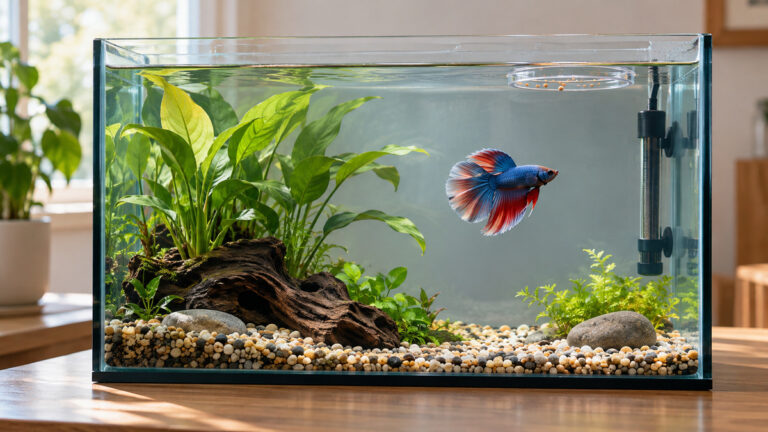
Cover is the most common advice for fry, but the sources opened for this guide do not test it. Treat dense plants, floating plants and breeder boxes as general guidance. They give fry a place out of sight of the adults. The sources do not say how much cover is enough, so watch the fry and adjust.
A practical plan for fry in a community tank
The steps below are general guidance based on the sources above, not a tested protocol.
- Check the adults first. If any fish in the tank is known to eat small fish, plan for a separate container for the fry rather than hoping they survive in the main tank.
- Add cover before the fry arrive. Dense plants, floating plants or a breeder box give fry room to hide. The Merck text notes that decorative objects also help “divide” the aquarium and allow fish to have their own territory.
- Feed small amounts several times a day. The University of Florida text supports small meals for young stock. Remove leftover food so it does not foul the water.
- Test the water if the fry look unwell or the adults change behavior. The EDIS guidance on testing when behavior changes is the reason to test promptly.
- Move new adults in carefully. The Merck text recommends floating the bag “about 20 to 30 minutes” so the water temperature can equalize before release, because adding fish directly “can cause shock and stress.”
The sources do not name a product or brand that improves fry survival, and this guide does not recommend one. For water testing options, see freshwater fish tank water test kits.
When to get help
Fry can decline quickly, and the sources list many signs that need a professional. The Merck routine health care page says that “some general signs of illness include changes in swimming behavior and noticeable changes in the color or condition of the body and fins.” Its list of common signs includes swelling or bloating, weight loss, and “floating, drifting, or swimming erratically in unusual positions.” If you see these signs in several fish, speak with an experienced fish keeper or an aquatic veterinarian. This guide does not give medication doses, and a label on a bottle does not replace a diagnosis.
How we chose
The sources were chosen for the question, not for the product. This guide uses only pages from a veterinary reference and a university extension, both opened on 2026-10-24. Retail pages, forum posts and product listings were not used as sources. A claim appears in the body only when a source states it, or when it is labeled as general guidance. Where a source covers fish in general but not platy fry, the guide says so.
What we could not verify
The sources opened for this guide were written for fish in general, and several are written for aquaculture. Those limits shape the answer.
What the sources do not say
- No source gives a survival rate for platy fry in a community tank.
- No source says whether adult platies eat their own fry.
- No source gives a minimum tank size or temperature range for platies.
- No source names a food or pellet size written for platy fry specifically.
- No source gives a growth timeline for fry raised in a home tank.
Frequently asked questions
Will adult platies eat their own fry?
The sources checked do not say. They do say that more aggressive species might attack or eat other fish. If you cannot confirm how the adults behave, a separate container is the safer choice.
Do platy fry need a separate tank?
The sources do not require one. A separate breeder container or a second tank is a practical way to lower the risk from adults, and it lets you feed and watch the fry more closely. The choice depends on the tank and the fish already living in it.
What kills platy fry in a community tank?
The Merck disorders chapter names parasites as a cause of death in fry, and the providing-a-home page links poor water quality to disease in fish generally. Predation by more aggressive adults is the other risk the sources name directly.
How can I tell if fry are sick?
Watch for changes in swimming, color or body condition, and for fish that float, drift or hang near the surface. The Merck list of signs is a starting point, not a diagnosis. Test the water and speak with an experienced fish keeper or an aquatic veterinarian if the signs continue.
When should I contact a vet about fry?
Contact an aquatic veterinarian when several fish show the same signs, when the signs get worse quickly, or when you are considering a medication. The sources note that some parasite diagnoses need microscopic examination of tissue, so a diagnosis usually cannot be made from appearance alone.
Sources
- Merck Veterinary Manual, “Introduction to Fish,” All Other Pets, https://www.merckvetmanual.com/all-other-pets/fish/introduction-to-fish (opened 2026-10-24).
- Merck Veterinary Manual, “Providing a Home for Fish,” https://www.merckvetmanual.com/all-other-pets/fish/providing-a-home-for-fish (opened 2026-10-24).
- Merck Veterinary Manual, “Disorders and Diseases of Fish,” https://www.merckvetmanual.com/all-other-pets/fish/disorders-and-diseases-of-fish (opened 2026-10-24).
- Merck Veterinary Manual, “Routine Health Care of Fish,” https://www.merckvetmanual.com/all-other-pets/fish/routine-health-care-of-fish (opened 2026-10-24).
- UF/IFAS Extension, “Fish Nutrition” (FA096), https://edis.ifas.ufl.edu/publication/FA096 (opened 2026-10-24).
- UF/IFAS Extension, “Ammonia in Aquatic Systems” (FA031), https://edis.ifas.ufl.edu/publication/FA031 (opened 2026-10-24).