What Dropsy Looks Like in Betta Fish
As an Amazon Associate we earn from qualifying purchases.
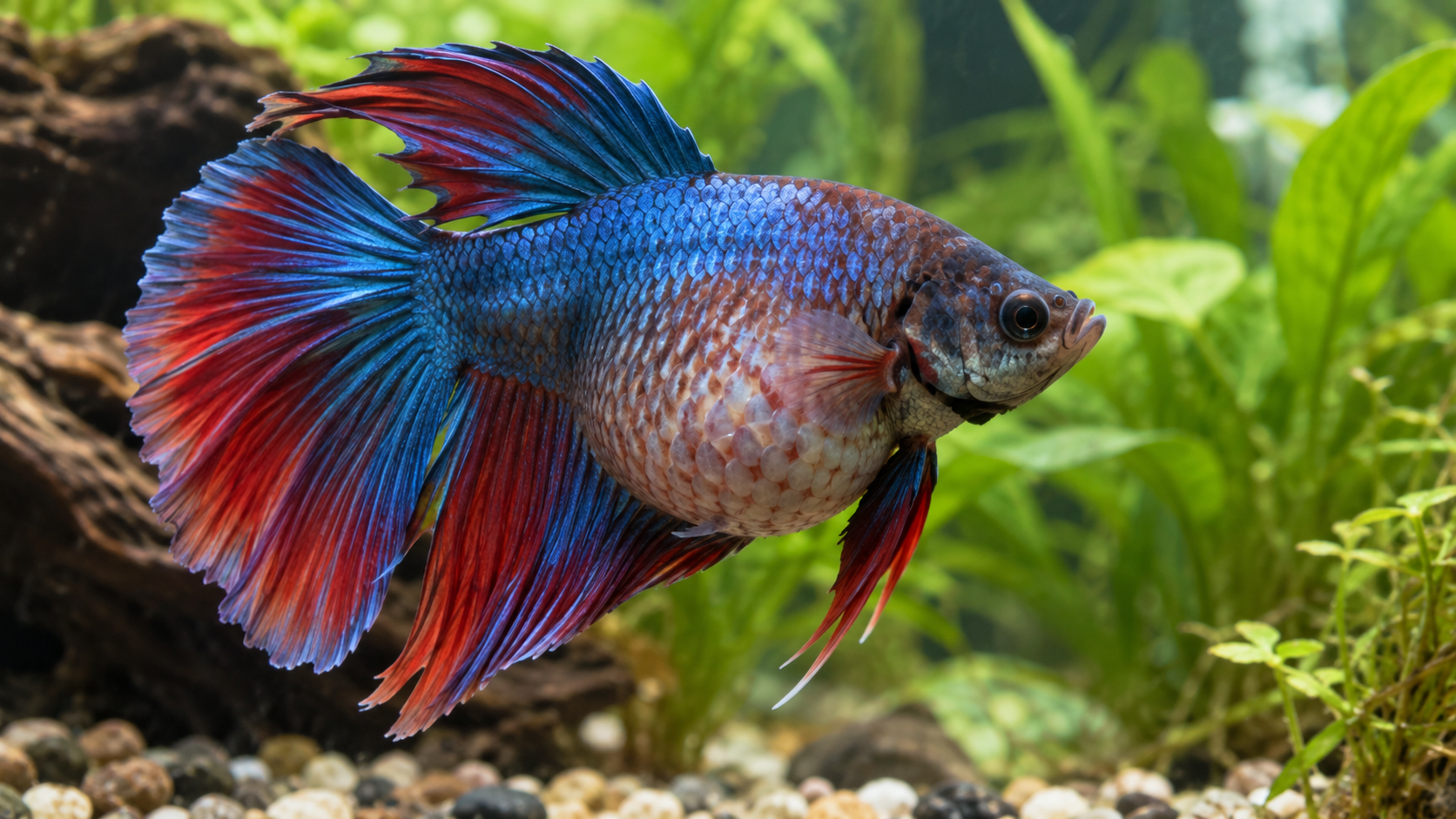
What does dropsy look like in betta fish? The sources opened for this guide describe dropsy as fluid building up in the abdomen, so the most visible sign is a swollen or bloated belly. Other signs in the same sources include raised scales, lethargy and loss of appetite. Because these signs can come from several problems, a vet or an experienced fish keeper should examine the fish.
Quick answer
- Dropsy is described as fluid accumulation in the abdomen, so look first for a swollen or bloated body.
- Merck lists “Scales sticking out or standing up” and “Swelling or bloating” among signs of illness in fish.
- Merck links this fluid sign to Aeromonas bacterial infection, and a bacterial diagnosis requires laboratory testing.
- Contact a vet for a diagnosis. This guide does not give medication doses.
What the sources describe
The Merck Veterinary Manual discusses dropsy within its section on bacterial infections. It says that Aeromonas infection “is the most common bacterial infection of freshwater aquarium fish.” Fish with this infection may show “bloody spots or ulcers on the body, fluid accumulation in the abdomen (“dropsy” and “pinecone disease”), ragged fins, or enlarged eyes.”
That sentence is the closest the sources come to a visual description. The same section shows that a swollen belly is not always the same condition. Merck describes a parasite that “causes renal dropsy” in pond-raised goldfish, which can produce enlarged kidneys and “bloated-looking fish.” That is a different cause from the bacterial one, and it is a reason to leave the diagnosis to an expert.
The swelling is in the abdomen, which is why the belly is the first place to check. The same page lists the other signs above, so a swollen belly alone does not settle the question of cause.
Signs that can appear alongside dropsy
The Merck page on common signs of illness opens with a general point: “Fish show signs of illness in a variety of ways.” Its checklist is useful for a first look. Several items on it overlap with dropsy:
- “Swelling or bloating”
- “Scales sticking out or standing up”
- “Lethargy”
- “Not eating”
- “Weight loss”
- “Floating, drifting, or swimming erratically in unusual positions”
The page also notes that “Some general signs of illness include changes in swimming behavior and noticeable changes in the color or condition of the body and fins.” A betta that is swollen and also showing “Loss of color” or refusing food is showing more than one sign, and that combination is a reason to call a vet sooner rather than later.
The Aeromonas section adds other signs that can appear with the bacterial infection: bloody spots or ulcers on the body, ragged fins and enlarged eyes. These are not present in every fish with a swollen belly, and their absence does not rule out a problem.
Why a swollen belly is not a home diagnosis
Bloating and fluid buildup are general signs. Several conditions can produce them, and the sources treat a diagnosis as a job for a veterinarian. The Merck page states: “Diagnosis of a bacterial infection requires laboratory testing.” It also says that “Many bacterial infections can be treated with antibiotics, but laboratory testing is necessary to determine which antibiotics will work against the particular bacteria causing the problem.”
That is why this guide does not name a treatment or give doses. Choosing a drug without knowing the cause can waste time and may not help. The Merck routine care page explains the routes: “Some of these (such as injections or surgery) need to be performed by your veterinarian, whereas others can be done at home.”
Check the tank while you wait
The sources do not describe a cure for dropsy at home, but they do describe the environment that a sick fish lives in. Merck says that “The best preventive care to keep fish and their environment healthy includes providing a good diet, monitoring the water quality, and maintaining a regular schedule of cleanings, water changes, and filter replacements.”
Merck also warns that “Overfeeding can lead to health problems as well as a dirty tank.” A betta that is already swollen should not be fed heavily while you arrange care. Keep feeding small and remove uneaten food, and check the water with a test kit so you can tell a vet what the tank has been doing. The guide on how many gallons a betta fish needs covers tank volume, which affects how quickly water quality changes.
Water checks and a stable heater matter for every betta. The Merck providing-a-home page says that “A heater is necessary for both freshwater and saltwater tropical fish,” and the guide to the best betta heater for a 1 gallon tank covers that equipment.
When to see a vet
Contact a veterinarian who treats fish, or an experienced fish keeper, as soon as a betta shows a swollen or bloated belly, especially with raised scales, lethargy, or refusal to eat. Bring a note of recent feeding, water changes and any tank changes, because the sources say diagnosis depends on laboratory testing and a clear history. Do not start a medication without advice on which drug fits the cause.
How we chose
This guide uses only pages opened with curl on 2026-10-24. It relies on the Merck Veterinary Manual, the most direct source for fish disease signs in the sources available for this topic. Retail pages and product listings were not used for facts. Quotations were checked against the downloaded page text before use.
What we could not verify
The sources opened describe dropsy and its signs in general terms. They do not give a betta-specific picture, a timeline, or a home treatment.
What the sources do not say
- How a dropsy-like swelling looks in a betta specifically, with photographs or measurements.
- How quickly a swollen belly develops, or how fast it progresses.
- Whether a betta with dropsy will recover, and under what conditions.
- Which drug works for which cause, or any dose. This guide does not give medication guidance.
Frequently asked questions
Is a swollen belly always dropsy in a betta?
No. The sources list swelling or bloating as a general sign of illness, and several conditions can cause it. Dropsy is described as fluid in the abdomen. Only a diagnosis, usually with laboratory testing, can confirm the cause.
Are raised scales a sign of dropsy?
Merck lists “Scales sticking out or standing up” among common signs of illness. The sources opened do not say that raised scales always mean dropsy. Treat the combination of signs as the reason to contact a vet.
Can I treat dropsy at home?
The sources opened do not describe a home cure. Merck says bacterial infections need laboratory testing to choose a treatment, and some treatments need a veterinarian. Keep the tank clean and feed lightly, and contact a vet.
Should I feed a betta with dropsy?
The sources do not give feeding advice for a sick fish. Merck does warn that overfeeding can cause health problems and a dirty tank. Ask a vet before changing the diet of a fish that is unwell.
How do I know if my betta has an infection or something else?
The sources say a bacterial diagnosis “requires laboratory testing.” Signs such as bloody spots, ragged fins and enlarged eyes point toward the Aeromonas group, but only a vet can confirm which cause applies.
Sources
- Merck Veterinary Manual, “Disorders and Diseases of Fish,” https://www.merckvetmanual.com/all-other-pets/fish/disorders-and-diseases-of-fish, opened 2026-10-24.
- Merck Veterinary Manual, “Routine Health Care of Fish,” https://www.merckvetmanual.com/all-other-pets/fish/routine-health-care-of-fish, opened 2026-10-24.
- Merck Veterinary Manual, “Providing a Home for Fish,” https://www.merckvetmanual.com/all-other-pets/fish/providing-a-home-for-fish, opened 2026-10-24.