Why Is My Betta Hiding So Much?
As an Amazon Associate we earn from qualifying purchases.
Why is my betta hiding so much? A betta that stays out of sight is often reacting to something in its tank, but the sources we opened do not describe hiding as a sign of illness by itself. They do say that a change in fish behavior is a reason to test the water right away. This guide lists the conditions the sources name, the signs that call for a fish vet, and the questions they leave open.
Quick answer
- Hiding alone is not listed as a sign of illness in the sources we opened, but a change in behavior is a reason to check the water.
- Test the water first. The UF/IFAS ammonia publication says ammonia “should also be tested immediately any time fish appearance or behavior changes (including reduced feeding).”
- The sources name poor water quality, crowding, and aggression from tank mates as stressors that affect fish.
- Get help from an aquatic vet or experienced fish keeper if the fish also stops eating, breathes fast, or loses color.
What a change in behavior can mean
The Merck Veterinary Manual gives a short list of common signs of illness in fish. It includes “Lethargy,” “Not eating,” and “Slow or rapid breathing,” along with changes in color and body condition. In its general discussion, the manual says that “Some general signs of illness include changes in swimming behavior and noticeable changes in the color or condition of the body and fins.”
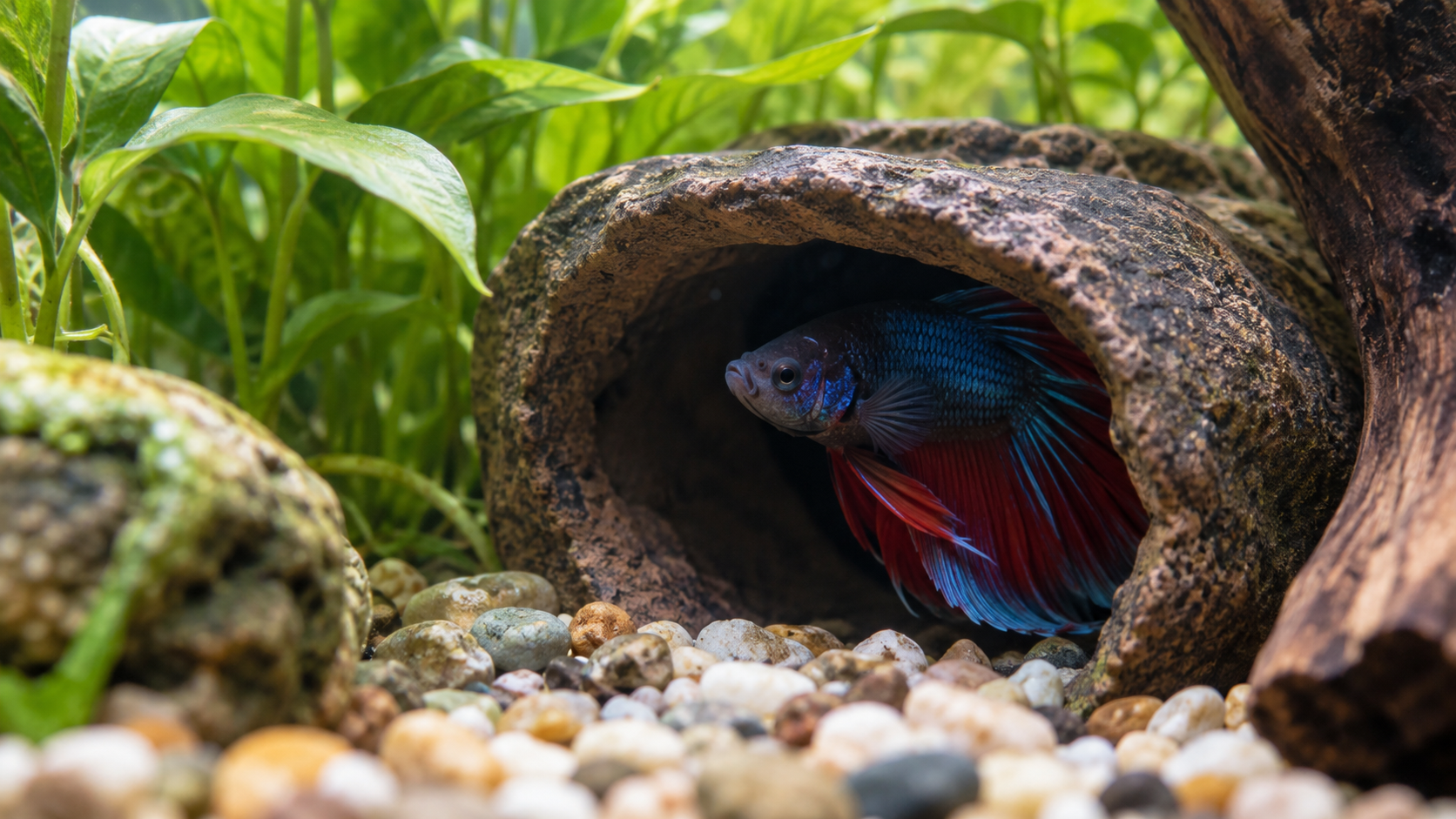
Hiding is a change in behavior, but the list does not name it. That gap matters. A betta that hides for a day after a water change may be reacting to the disturbance. A betta that hides for days, stops eating, and drifts near the bottom is showing a pattern that the sources treat as a reason to get help. The sources do not give a number of hours or days that separates a normal rest from a problem.
Water quality comes first
The UF/IFAS ammonia publication (FA031) explains why water testing matters before any other step. It says that “Ammonia is colorless and, even at levels toxic to fish, odorless. Therefore, the only way for a producer or aquarist to know if ammonia is present is to test the water.” A tank can look clean and still hold ammonia that the fish can feel.
The publication also describes the effect of low levels: “At low concentrations, ammonia causes stress and damages gills and other tissues.” It notes that “Fish exposed to low levels of ammonia over time are more susceptible to bacterial infections, have poor growth, and will not tolerate routine handling as well as they otherwise would.” A stressed betta may hide because it is uncomfortable, and the sources would want the water tested before anyone assumes the cause is something else.
Two other points from the same publication are useful. First, feeding can drive ammonia: “Overfeeding is a major cause of high ammonia concentrations.” Second, a new tank needs time to establish its bacteria. The publication says that “A new biofilter requires six to eight weeks to build up sufficient bacteria to effectively reduce ammonia and nitrite levels.” If the tank is new, hiding may coincide with a water chemistry that is still settling. The publication also warns that “Nitrite is toxic to fish at levels as low as 0.10 mg/L.”
The publication recommends testing after behavior changes, not only on a schedule. The sources do not provide a schedule for a home betta tank. The publication’s general guidance for production systems is that “ammonia should be tested once a week,” which is a starting point for a hobby tank but not a rule the sources give for home aquariums.
Stress from the tank and from other fish
The UF/IFAS stress publication (FA005) lists “poor water quality” and “excessive crowding” among stressors to correct. That publication is written for fish farms, so it does not set home-tank limits, but the stressors it names apply in any tank. A betta that is crowded by another fish, or that is watching a rival from behind decor, may spend more time hidden.
The Merck section on new fish describes that kind of conflict directly. It says that “Aggressive behavior is stressful for all fish in the tank, so it is helpful to reduce aggression toward new fish by using the following techniques.” Those techniques include rearranging decorations to “break up established territorial markers, which may reduce territorial aggression.” If the tank has another fish, check whether the betta is hiding from it.
Flow is a separate stressor. The UF/IFAS betta publication (FA212) says that “Bettas prefer calm water as shown by research using flow as a stressor, so heavy filtration may actually be harmful to a betta’s health and welfare.” A betta that is pushed around by a strong current may choose to stay in a quiet corner. Check the filter output and the placement of any spray bar or outlet.
Temperature and hiding
The betta publication also addresses temperature. It states that “As mentioned, bettas thrive in warmer water and do not do well in cold water.” A cold tank is not the same as a hidden fish, and the sources do not link temperature directly to hiding. Still, a betta in cool water is under a stress the sources describe, so check the thermometer before you assume the cause is elsewhere. For heater options, see Do Betta Fish Need a Heater? and Best Aquarium Heater for Betta Fish.
Hiding places and resting spots
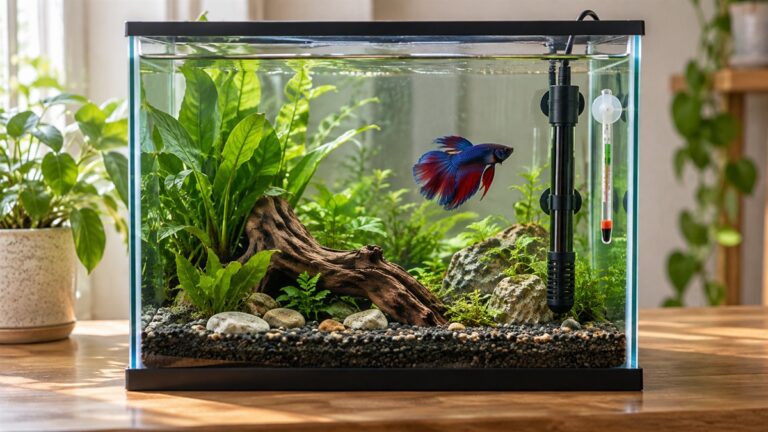
Many owners add plants, caves, or leaves so a betta has cover. The sources we opened do not say whether cover reduces hiding, and they do not name any decoration as a cure. What they do say is that decor can break up territory between fish. A tank with some plants may give a betta a place to rest, but a plant does not fix poor water or a conflict with a tank mate.
If you want to compare cover options, see Best Live Plants for Betta Fish Tank and Best Betta Fish Hammock. Check that any decoration is stable and has no sharp edges before you add it, because the sources do not describe decor safety.
When to get help
The UF/IFAS betta publication says that “If a disease outbreak does occur, proper diagnostics, including working with a fish veterinarian, will be key to successful management.” If a hiding betta also shows lethargy, does not eat, breathes fast, or has spots, scars, or ulcers, contact an aquatic vet or an experienced fish keeper. The Merck list also includes “Floating, drifting, or swimming erratically in unusual positions,” which is a reason to call the same day.
Do not start medication based on this article. The sources warn that “Many drugs and chemicals can do more harm than good if they are used inappropriately.” A fish vet can confirm the cause before any treatment is chosen.
How we chose
The sources were chosen by subject. They are university extension publications on betta care, ammonia, and fish stress, and a veterinary reference on fish housing and health. Retail pages were not used to support any statement in this guide, and no product is recommended. Each quotation was checked against the page text on the date the page was opened. Where a source is written for fish farms or for fish in general, this guide says so.
What we could not verify
The sources we opened do not answer the core question for a specific betta. They describe what can cause stress and what to test, but they do not say what counts as normal hiding for an individual fish.
What the sources do not say
- Whether hiding is normal for a betta, and for how long.
- Whether any particular decoration, plant, or cave reduces hiding.
- Whether a specific water test result causes hiding in a betta.
- How long a betta takes to adjust after a water change or a move to a new tank.
Frequently asked questions
Is a betta that hides all day sick?
The sources we opened do not say that hiding alone is a sign of illness. Check the water first, then look for the signs the Merck manual lists, such as lethargy, not eating, or abnormal breathing. If several of these appear together, contact an aquatic vet or an experienced fish keeper.
How often should I test the water for a hiding betta?
The UF/IFAS publication says ammonia should be tested immediately after a change in behavior, and it describes weekly testing for production systems. For a home tank, the sources do not give a schedule. Testing soon after you notice hiding is the step the sources support.
Can a new tank make my betta hide?
A new tank may still be settling. The UF/IFAS ammonia publication says that “A new biofilter requires six to eight weeks to build up sufficient bacteria to effectively reduce ammonia and nitrite levels.” That is a reason to test regularly during the first weeks, but the sources do not link hiding to the age of a tank directly.
Can other fish make my betta hide?
Yes, according to the Merck section on new fish. It says that “the current residents sometimes respond aggressively, chasing or attacking the new fish.” If a betta is hiding from a tank mate, the sources suggest rearranging decor and, if conflict continues, separating the fish.
When should I call a vet about hiding?
Call an aquatic vet or an experienced fish keeper if hiding comes with lethargy, not eating, rapid or slow breathing, color loss, spots, or swimming in unusual positions. The UF/IFAS publication recommends working with a fish veterinarian for diagnosis.
Sources
- University of Florida IFAS Extension, “FA031: Ammonia in Aquatic Systems”, https://edis.ifas.ufl.edu/publication/FA031 (opened 2026-10-24)
- University of Florida IFAS Extension, “FA212: Evolution, Culture, and Care for Betta splendens”, https://edis.ifas.ufl.edu/publication/FA212 (opened 2026-10-24)
- University of Florida IFAS Extension, “Circular 919/FA005: Stress—Its Role in Fish Disease”, https://edis.ifas.ufl.edu/publication/FA005 (opened 2026-10-24)
- Merck Veterinary Manual, “Providing a Home for Fish”, https://www.merckvetmanual.com/all-other-pets/fish/providing-a-home-for-fish (opened 2026-10-24)
- Merck Veterinary Manual, “Routine Health Care of Fish”, https://www.merckvetmanual.com/all-other-pets/fish/routine-health-care-of-fish (opened 2026-10-24)