Signs of Sick Freshwater Aquarium Fish to Watch For
As an Amazon Associate we earn from qualifying purchases. Details
This is general freshwater aquarium guidance, not betta-specific. The signs of sick freshwater aquarium fish can show up as changes in swimming, breathing, appetite, color, or body and fin condition. Some of these changes can also come from water problems, so a sick-looking fish needs a water check as well as a close look at the fish. This guide explains what to watch for, what the sources say about causes, and when to ask an experienced fish keeper or an aquatic veterinarian for help.
Quick answer
- Watch for lethargy, not eating, fast or slow breathing, loss of color, spots, ulcers, or swelling.
- Watch for unusual swimming, such as circling, drifting, or floating in odd positions.
- Test the water first, because poor water quality is the most common environmental cause of disease in fish.
- Do not treat from a guess. Consult an experienced fish keeper or an aquatic veterinarian, and do not dose medication from this guide.
What a healthy fish looks like
Before you can spot a sick fish, you need a baseline. The Merck Veterinary Manual selection-of-fish page describes healthy fish as having smooth, unblemished scales, fins and skin. Fins should be intact rather than bloody or ragged. Eyes should be bright, not cloudy. A healthy fish swims normally and steadily around the aquarium. The same page notes that diseased fish often swim erratically, circling or drifting around the tank, or appear listless.
Keep a simple mental picture of your fish’s normal behavior, including where it usually feeds and rests. A change from that picture is often the first sign. The Merck providing-a-home page also notes that fish naturally feed at different levels of the water column, which is one more reason to know what is normal for your species.
Behavior changes to watch for
The Merck routine-health-care page says that fish show illness in a variety of ways, and that general signs include changes in swimming behavior along with changes in the color or condition of the body and fins. Behavior changes that the page lists as common signs of illness include lethargy and floating, drifting, or swimming erratically in unusual positions.
Lethargy is the change that is easiest to miss in a busy tank. A fish that sits low, moves less than usual, or hangs in one place for long periods should be watched closely over the following days. A fish that swims in circles or drifts sideways is showing a change that the selection page links to disease, so it should not be ignored.
Appetite and breathing
Not eating is one of the common signs of illness that the Merck routine-health-care page lists. Breathing is another. The page lists both slow and rapid breathing as signs to watch for. Breathing changes can also be a response to the water itself. The US EPA ammonia document describes decreased respiratory function that causes hyperventilation in fish exposed to elevated ammonia. It also lists damage to gill tissue that can lead to asphyxiation, so fast breathing combined with other changes is a reason to check the water before anything else.
Appetite changes need context. The Merck providing-a-home page explains that feeding rates depend on species, age, system, and water temperature. It gives general maintenance rates of 1 to 2 percent of body weight per day, and it warns that overfeeding can lead to health problems as well as a dirty tank. A fish that eats less after a period of heavy feeding may simply be full. A fish that refuses food for several days, especially with other changes, needs a closer look.
Color, spots, and skin changes
Changes to the body surface are among the most visible signs. The Merck routine-health-care page lists loss of color, discoloration or splotchiness, spots, scars, ulcers or open sores, and loss of scales. It also lists scales that stick out or stand up, as well as puffy or fuzzy growths and tumors or cystic growths.
Writing down the date a change first appears, and whether it is getting larger, gives a fish keeper or aquatic veterinarian something concrete to work from. The sources do not give a timeline for how quickly these changes develop, so the date record is the practical tool.
Swelling, weight loss, and body shape
The Merck page lists swelling or bloating and weight loss among common signs of illness. Those changes can be hard to judge in a small fish, so compare the fish with its tankmates and with how it looked when it arrived. A change in body shape is worth recording even if the fish is still swimming and eating.
The EPA ammonia document describes several effects of elevated ammonia on fish, including reduced growth rate, reduced feeding activity, and increased fin erosion. Fin erosion is one of the changes that the EPA table lists, so a fish with ragged fins should prompt a water check as well as a fish check. The EPA source is written about ammonia in natural waters, so use it as a guide to the kinds of effects that ammonia can cause rather than as a home aquarium diagnosis tool.
Water first: the usual starting point
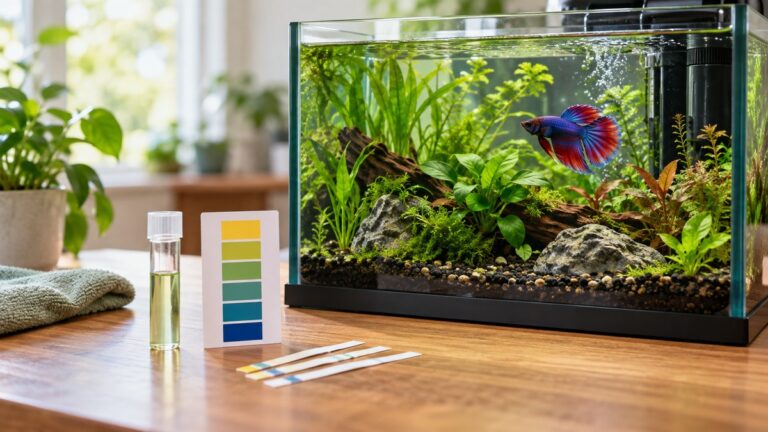
The Merck providing-a-home page says poor water quality is the most common cause of environment-related diseases in fish. It recommends routine testing of chlorine, pH, temperature and salinity, and notes that a home test kit lets you check water quality as part of routine water changes. Testing before you assume the fish is the problem is a sensible first step for any change listed above. For the equipment side of that check, see whether a betta tank needs a heater and filter choices for a 10 gallon betta tank. Both are betta-focused, so apply the general points here before using them for other species.
Ammonia is the most important chemical to check. The EPA document says unionized ammonia is generally the form most toxic to aquatic animals, and that its share increases as pH rises. It also says ammonia toxicity increases as temperature increases. The EPA document also says these effects are shaped by pH and temperature, so the same ammonia reading can carry a different risk in different tanks. The Merck page notes that bacteria that process ammonia and nitrite develop on their own over about 4 to 6 weeks in a home aquarium, and that adding too many fish at once overwhelms them.
The Merck routine-health-care page recommends regular maintenance: a water change on a schedule set by stocking level, a check of ammonia, nitrite, nitrate and pH with a test kit, and a clean filter. Any new water should be dechlorinated before it is added. A tank that has been neglected may show several signs at once, and a water test is a faster way to find the cause than guessing at a single symptom.
Quarantine and new fish
Many sick-fish problems start when new fish are added. The Merck routine-health-care page says that quarantine means keeping new or sick animals in a separate aquarium for a specific amount of time before joining others, and it gives at least 30 to 60 days for valuable pet fish. The same page says a quarantine tank can be set up for new fish or for fish that show signs of disease, which makes observation and treatment easier.
The Merck providing-a-home page explains that adding new fish always carries a risk of introducing disease, and that the risk is significant when new fish have not been carefully quarantined. If a fish you have just bought shows any sign in the list above, separate it right away and call an experienced fish keeper or aquatic veterinarian before you move it back to the main tank.
What to do when you see a sign
Start with the simplest checks. Watch the fish for a day and note what you see. Test the water and compare the results with the recent change in the tank, such as a new fish, a missed water change, or a heavier feeding routine. Check that the fish is still eating and breathing normally. Look at the other fish in the tank, because the Merck selection page notes that other fish in the environment should also appear healthy.
If the signs continue or worsen, contact an experienced fish keeper or an aquatic veterinarian. Bring the water test results, the date the change started, and a short description of the fish’s behavior. The Merck routine-health-care page says medications can be given to fish by several methods, and that some of them must be given by a veterinarian. This guide does not give dosing instructions.
How we chose
This is general freshwater aquarium guidance, not betta-specific. The sources were chosen because they are written by veterinary and government authorities rather than by sellers, and because they describe fish health and water chemistry in terms that apply across many freshwater species. Retail product pages, prices, ratings and review counts were not used as sources. The Merck Veterinary Manual pages cover signs of illness, selection, preventive care and water quality. The EPA document covers ammonia effects, and it is used with a clear caution that it describes natural waters, not home tanks. Each sign and cause above is attributed to the page it came from, and every source was opened on 2026-10-24.
What we could not verify
The sources we opened describe illness in general terms. They do not give a diagnosis guide for any particular disease, and they do not give a list of signs for every freshwater species.
What the sources do not say
- The sources do not give a numeric temperature or pH range for healthy freshwater fish in general.
- They do not give a diagnosis key that links one sign to one disease in home aquariums.
- They do not give dosing, treatment schedules, or specific medications for home tanks.
- The EPA effects table describes ammonia exposure in fish, and it does not state a safe ammonia limit for a home aquarium.
- They do not say how long a sign can persist before it becomes an emergency, so this guide does not give a timeline.
Frequently asked questions
Is a fish that hangs near the surface always sick?
Not always. The sources say that changes in swimming behavior are signs of illness, but they do not say that any one position is a diagnosis. Test the water and watch the fish for a day before deciding what it means.
Should I change the water if a fish looks sick?
Test the water first. The Merck page recommends routine water changes and testing, and the EPA document shows that ammonia toxicity depends on pH and temperature. A water change may help if the test shows a problem, but it is not a diagnosis.
Can I tell a sick fish from a stressed fish?
The sources do not give a way to tell the two apart by appearance alone. Both can show lethargy, reduced feeding, or changed swimming. Testing the water and watching for a few days helps narrow the cause.
Is it safe to add a fish that looks a little off?
No. The Merck selection page describes diseased fish as often swimming erratically or appearing listless, and the routine-health-care page recommends quarantine for new fish. Do not add a fish that shows signs of illness to an established tank.
When should I call a veterinarian about a fish?
Call an experienced fish keeper or an aquatic veterinarian when signs continue, spread to other fish, or include open sores, swelling, or fast breathing. This guide does not give a treatment plan, because the right step depends on the fish and the tank.
Sources
- Merck Veterinary Manual, “Routine Health Care of Fish”: https://www.merckvetmanual.com/all-other-pets/fish/routine-health-care-of-fish (opened 2026-10-24)
- Merck Veterinary Manual, “Selection of Fish”: https://www.merckvetmanual.com/all-other-pets/fish/selection-of-fish (opened 2026-10-24)
- Merck Veterinary Manual, “Providing a Home for Fish”: https://www.merckvetmanual.com/all-other-pets/fish/providing-a-home-for-fish (opened 2026-10-24)
- US EPA, CADDIS Volume 2, “Ammonia”: https://www.epa.gov/caddis-vol2/caddis-volume-2-sources-stressors-and-responses-ammonia (opened 2026-10-24)