Can You Overfeed a Betta Fish? Signs and Fixes
As an Amazon Associate we earn from qualifying purchases.
Can you overfeed a betta fish? Yes, and it is one of the most common ways new owners harm them without meaning to. Food that is not eaten breaks down into waste, and that waste raises ammonia in the water. The University of Florida and Merck Veterinary Manual both describe overfeeding as a major source of poor water quality in home aquariums, and both say it can lead to health problems for the fish. A betta’s stomach is small, and a fish that finishes its meal quickly does not need more. The sections below explain why extra food is harmful, how much to feed, the warning signs, and what to do if you have already overfed.
Quick answer
- Yes. Uneaten food and extra waste from overeating raise ammonia, and ammonia harms fish.
- The sources give feeding amounts as a share of body weight, not as a count of pellets. For maintenance, one source gives 0.5 to 1.0 percent of body weight per day, and another gives 1 to 2 percent.
- Feed only what the betta eats in a short time, and skip a day or two if you are unsure. Test the water for ammonia if food has been sitting in the tank.
- If the fish seems unwell, or the water shows ammonia, ask an experienced fish keeper or an aquatic veterinarian before you try a treatment.
Why overfeeding harms a betta
The main problem is not the extra food itself. It is what happens to food that the fish does not eat. Uneaten food settles on the gravel, decays, and feeds bacteria that produce waste. The University of Florida fact sheet on betta fish states that uneaten feed, along with ammonia and other dissolved wastes, must not be allowed to reach harmful levels in a tank with limited volume and reduced filtration. Its guidance is frequent water changes for that kind of tank.
The ammonia problem is direct. The University of Florida ammonia publication states that overfeeding is a major cause of high ammonia concentrations. Fish exposed to low levels of ammonia over time are more likely to get bacterial infections and grow poorly, and higher levels can kill them. The same publication explains that ammonia is produced by the fish itself, so every extra gram of food that the fish processes adds to the load on the tank.
Merck Veterinary Manual adds a second point. It states that overfeeding can lead to health problems as well as a dirty tank. Its disorders section also notes that improper nutrition is one of the most common contributors to illness in aquarium fish. That makes feeding habits one of the first things to check when a fish seems unwell, before blaming a disease.
How much a betta should eat
The sources do not give a fixed number of pellets for a betta. They describe feeding by body weight, which a home owner cannot measure easily. The University of Florida publication “Fish Nutrition” (FA096) says that for maintenance, 0.5 to 1.0 percent of body weight per day is adequate. Merck gives a higher range, 1 to 2 percent of body weight per day for maintenance diets, and 3 to 5 percent for growth diets. The difference shows that the sources are general guidance for pet and ornamental fish, not betta-specific instructions.
The same University of Florida source says fish should probably be fed at least five days per week, and that one feeding per day is plenty for most pet animals. Young fish that are still growing can take smaller meals more often, but an adult betta on a maintenance diet does not need that schedule. For a practical pellet count, see our guide on how many pellets to feed a betta, and check the feeding directions on the food you use.
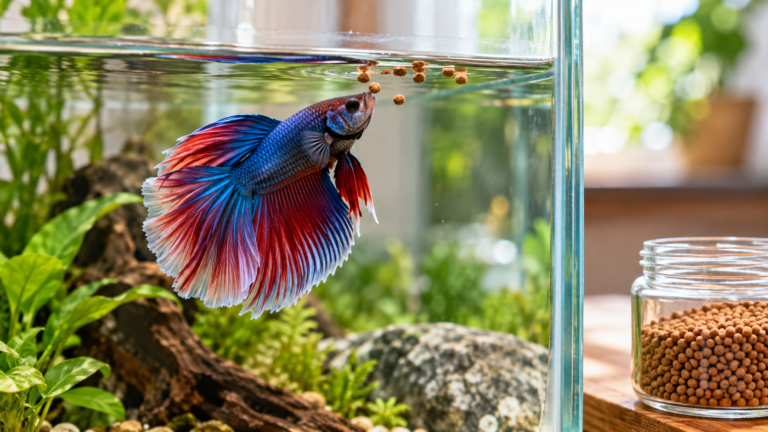
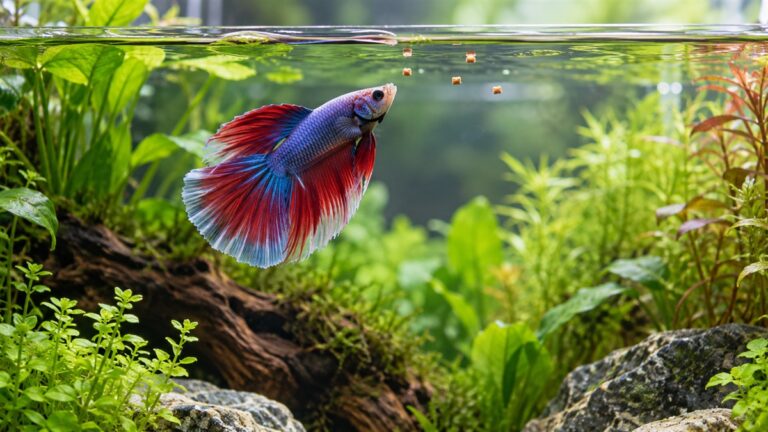
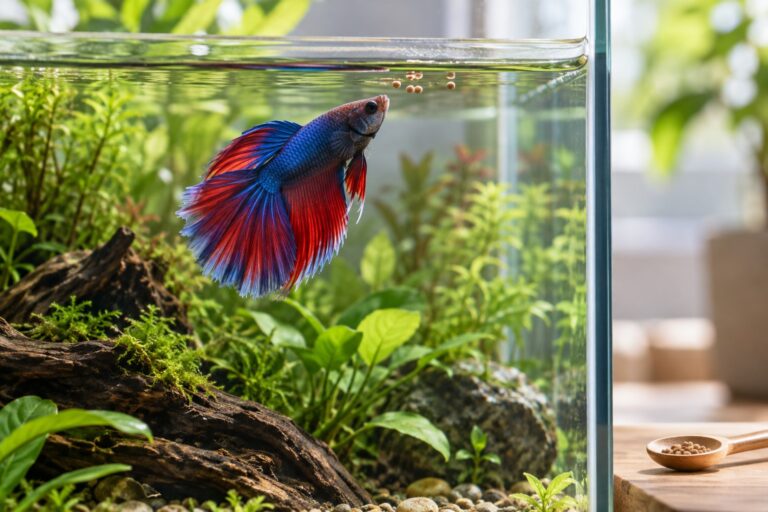
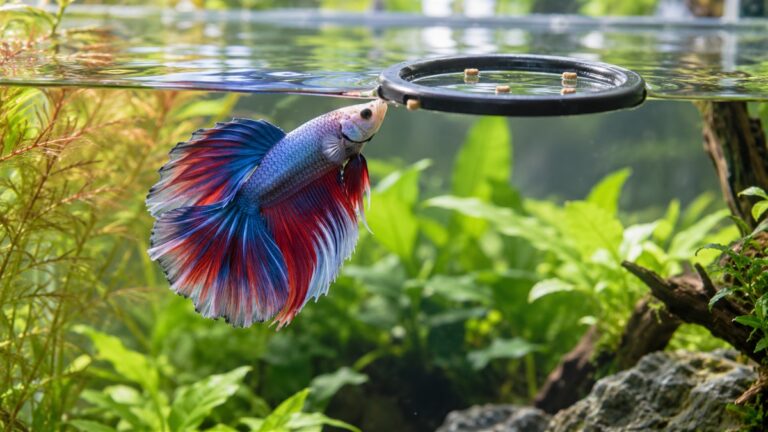
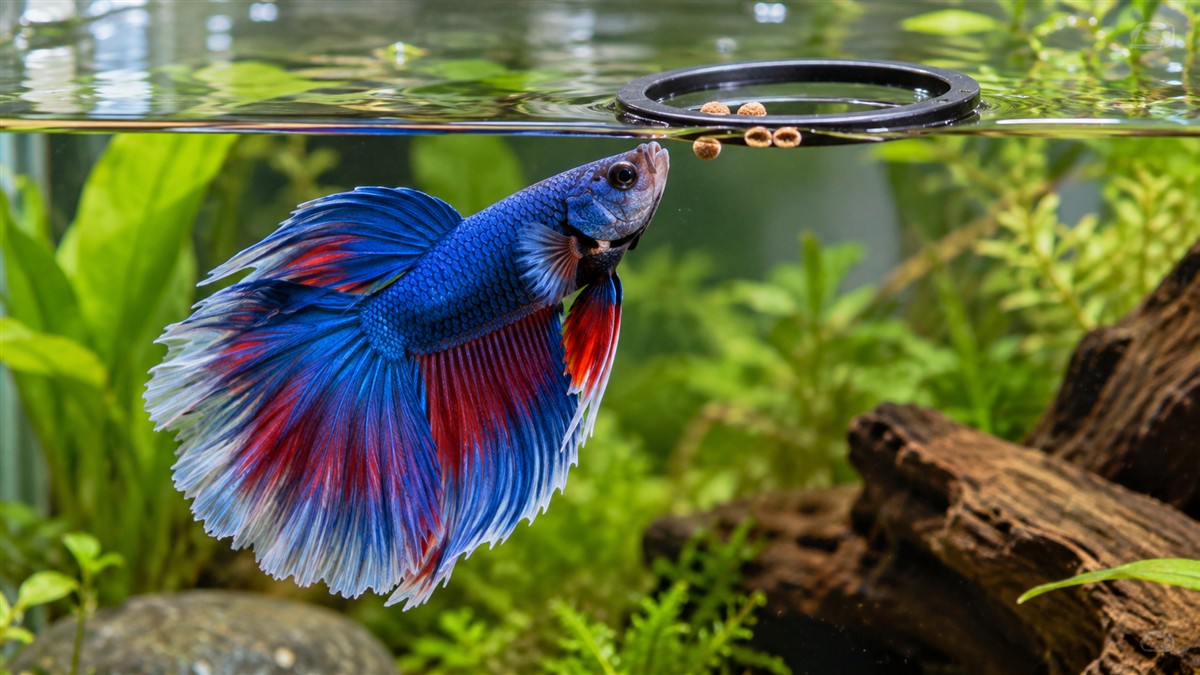
A simple test many owners use is to watch the fish after feeding. If the food is gone within a short time, the amount is likely right. If pieces are still on the bottom or drifting at the surface when the next feeding is due, the portion is too large. Remove what is left, and offer less next time. Feeding a small amount once a day, and adjusting from there, is a safer starting point than feeding heavily.
Signs you are feeding too much
The sources do not list a complete set of signs of overfeeding in a betta, so the list below is limited to what the sources support. The clearest sign is leftover food. Uneaten pellets or flakes on the bottom, or food that stays on the surface, are a warning that the portion is too big. The University of Florida source on ammonia also says the water should be tested regularly, because ammonia is colorless and odorless at levels that harm fish. You cannot tell it is there by looking.
Cloudy water and algae growth can also follow heavy feeding. Merck’s home guide notes that a moderate amount of algae is not harmful, but a buildup makes it harder to spot health problems in the fish. Algae alone does not prove overfeeding, since light and tank setup also matter, so treat it as one clue among others.
Fish behavior can change when water quality declines. A betta that hides, stops eating, or breathes at the surface may be reacting to poor water. A fish that seems unwell should be checked by an experienced fish keeper or an aquatic veterinarian. The University of Florida betta publication recommends working with a fish veterinarian when a disease outbreak occurs, because the cause could be water quality, nutrition, or infection, and each needs a different response.
What to do if you have overfed
The University of Florida ammonia publication gives a clear first step. When ammonia is present, reduce or stop feeding. Uneaten food makes the problem worse, and stopping food lets the tank’s bacteria catch up with the waste already present. The same publication states that a short pause of one to three days will not typically harm adult fish, though it notes that fry, the youngest fish, are different.
Next, test the water for ammonia. The University of Florida publication explains that most home test kits measure total ammonia, and that a kit should also give pH and temperature readings, because the more toxic form of ammonia depends on those values. A water change is the usual way to lower ammonia in a small tank, and the betta publication recommends frequent water changes in tanks with limited filtration. Use a dechlorinator on new water, as the Merck page explains for tap water.
Remove any food that has not been eaten, and clean the gravel surface if debris has collected. Then resume feeding with a smaller portion once the water is stable. If the fish does not improve, or if you see signs that worry you, contact a fish-knowledgeable veterinarian. The sources recommend professional help for disease questions instead of guessing at treatments.
Tank setup and feeding habits
A larger tank with a stable filter does not give a license to overfeed. The University of Florida betta source states that water quality depends on management and husbandry more than on container size, so the feeding habit matters just as much in a big tank as in a small one. Heavy filtration is also not the answer. That same source says bettas prefer calm water, and heavy filtration may be harmful to their welfare. For more on how tank size affects the amount of water and waste, read our guide on how big of a tank do betta fish need.
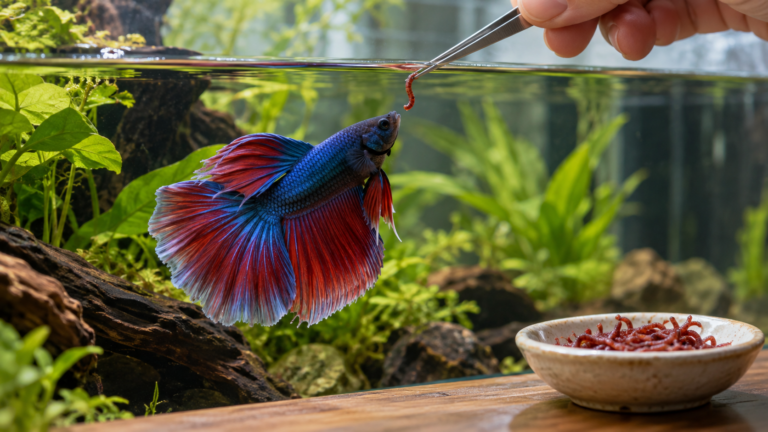
Diet matters as well. Merck notes that a variety of foods should be fed, with one primary food supplemented by others. It also warns that live foods may carry parasites or other harmful organisms, and that they should come from a reputable source. A betta that eats only live food may refuse other foods later. A balanced, pellet-based diet with occasional treats is the simpler approach the sources describe.
How we chose
This guide answers one question: whether a betta can be overfed, what that does to the tank, and how to respond. We chose sources that are university extension publications and a veterinary reference, because they describe fish husbandry with a stated scientific basis. We did not use retail product pages, forum posts, or blog articles as sources. Where a source discussed pet fish or ornamental fish in general rather than betta fish, we say so in the text. We kept feeding amounts as ranges from the sources, not as figures we invented.
What we could not verify
The sources we opened cover ornamental fish in general and betta fish in particular, but they do not give a complete betta feeding schedule. We could not verify a single daily amount for a betta of a given size, because the sources do not state one. The percentage ranges above are general guidance from pet fish and aquaculture sources, and they should be read that way. Product labels for betta food may give their own serving sizes, which should be followed when they are clear and reasonable.
What the sources do not say
The sources we opened do not say how many pellets or flakes an adult betta should eat per meal, how many days a week to skip feeding, or how to judge the body weight of a betta at home. They also do not give a list of symptoms that confirm overfeeding as the cause of a specific illness. Those questions need direct observation and, when a fish is sick, advice from an experienced fish keeper or an aquatic veterinarian. This article does not give medication doses.
Frequently asked questions
How often should I feed a betta fish?
The University of Florida source on pet fish feeding says fish should probably be fed at least five days per week, and that one feeding per day is plenty for most pet animals. Watch the fish after each meal and adjust the portion so that the food is finished within a short time.
What happens if a betta eats too much?
Extra food that the fish does not eat decays and raises ammonia in the water. Merck states that overfeeding can lead to health problems as well as a dirty tank. Reduce feeding, test the water, and perform a water change if ammonia is present.
Is it safe to skip a day of feeding a betta?
The University of Florida ammonia publication states that reducing or stopping feed for one to three days will not typically have a negative effect on adult fish. Fry, which are very young fish, are more sensitive, so the advice differs for them.
Can I tell if my betta is overfed just by looking at it?
Not reliably. The sources point to leftover food and water testing as the most useful checks. Ammonia is colorless and odorless at levels that harm fish, so a clear tank can still have a problem. Test the water instead of relying on how the fish looks.
Should I use live food to feed my betta?
Merck notes that live foods can introduce parasites or diseases into the tank, and that wild-harvested live foods may carry harmful organisms. If you use live food, buy it from a reputable source, and keep it as a small part of the diet rather than the main meal.
Sources
- University of Florida IFAS Extension, “Evolution, Culture, and Care for Betta splendens” (FA212), https://edis.ifas.ufl.edu/publication/FA212, opened 2026-10-24.
- University of Florida IFAS Extension, “Ammonia in Aquatic Systems” (FA031), https://edis.ifas.ufl.edu/publication/FA031, opened 2026-10-24.
- University of Florida IFAS Extension, “Fish Nutrition” (FA096), https://edis.ifas.ufl.edu/publication/FA096, opened 2026-10-24.
- Merck Veterinary Manual, “Providing a Home for Fish,” https://www.merckvetmanual.com/all-other-pets/fish/providing-a-home-for-fish, opened 2026-10-24.
- Merck Veterinary Manual, “Disorders and Diseases of Fish,” https://www.merckvetmanual.com/all-other-pets/fish/disorders-and-diseases-of-fish, opened 2026-10-24.