Can I Use Bottled Water for Betta Fish?
As an Amazon Associate we earn from qualifying purchases.
Can I use bottled water for betta fish? The sources we opened do not address bottled water by name, so there is no sourced yes or no for every brand. What they do explain is what makes a water source suitable: whether it contains chlorine or chloramine, what its pH is, and whether it has enough minerals, or alkalinity, for the beneficial bacteria in the tank to work. Those factors decide whether bottled water is a reasonable choice, and the label rarely answers all of them. This guide walks through the points the sources do cover and the checks you can make at home.
Quick answer
- The sources do not state that bottled water is safe or unsafe for betta fish. Do not treat a bottled water label as a sourced answer.
- Merck Veterinary Manual says tap water is generally acceptable, and that city water is usually treated with chlorine or chloramine, both of which are toxic to fish and to beneficial bacteria.
- Minerals and alkalinity matter. The University of Florida ammonia publication says nitrifying bacteria stop working effectively when total alkalinity falls below 20 mg/L.
- Test pH and ammonia after you change the water source. If the results are unclear, ask an experienced fish keeper or an aquatic veterinarian.
What the sources say about tap water
Merck’s guide to providing a home for fish is the clearest source on water choice. It states that an aquarium can be filled with tap water, filtered water, or reverse-osmosis water. It adds that tap water is the most convenient, the least expensive, and generally acceptable to use. That makes tap water the default in the sources, with treatment as needed. The same page explains that most city water is treated with chlorine, or with chlorine and ammonia combined, which is called chloramine. Both are toxic to fish and to the bacteria that grow in an aquarium.
The fix described in Merck is a dechlorinator, which is available to remove chlorine and chloramine and should be used on any new water added to the tank. Merck also notes that the pH of tap water varies greatly from one well or city to another, so a home test kit or a pet store test can show what your local supply is like. Whether your supply uses chloramine is something you may need to confirm with your water provider, since the sources do not say how to check it at home.
The University of Florida betta publication adds the welfare side. It states that water quality is a critical consideration for the health and longevity of aquarium fish, and that water quality depends on management and husbandry rather than on container size. So the question is not only what the water is made of, but how consistently it is kept clean and stable. For more on treating tap water before it goes in, see our guide on when to add water conditioner to a fish tank.
Why minerals, pH, and alkalinity matter
Bottled water is often very low in dissolved minerals, and that can matter for an aquarium. The University of Florida ammonia publication explains that both groups of nitrifying bacteria need oxygen and alkalinity to function. Alkalinity, mainly from bicarbonate and carbonate, is used by these bacteria. The same publication says that at a total alkalinity less than 20 mg/L, common species of nitrifying bacteria do not function effectively. Once alkalinity is used up, pH can drop quickly, which can kill fish and bacteria alike. The same publication links low alkalinity to naturally low-alkalinity water, so very low-mineral water with no buffering can be a risk.
The University of Florida nutrition publication, titled “Fish Nutrition” (FA096), says that fish absorb minerals from the water they live in, although the mineral requirements of most fish are not well understood. The Merck page on home aquariums also notes that dissolved minerals can contribute to excess algae growth. Taken together, the sources show that water minerals play a real role, but they do not give a target range for a betta tank.
pH also changes how dangerous ammonia is. The University of Florida ammonia publication explains that the portion of un-ionized ammonia increases with rising pH and temperature. That is why a home test for ammonia is more useful when pH and temperature are known too. If you switch to a new water source, measure pH, then test ammonia and nitrite over the following days. A sudden change in pH after a water change is a warning sign to act on, not a detail to ignore.
Filtered and reverse-osmosis water
Merck describes filtered water as passed through media that removes particles, then over activated carbon that removes chlorine and other chemicals and minerals. Reverse-osmosis water is processed in a similar way, but it is forced through a fine membrane and a carbon stage, so it removes even more compounds. That is the main reason some owners consider RO water. The sources do not say how much mineral content is ideal for a betta, so an RO or distilled source needs the same testing and buffering checks as any other source.
The University of Florida betta publication says bettas prefer calm water, and that heavy filtration may be harmful to their welfare. Water source is a separate question from flow. A gentle filter does not fix a water source problem, and a water source change does not replace good routine maintenance.
Practical checks before you use bottled water
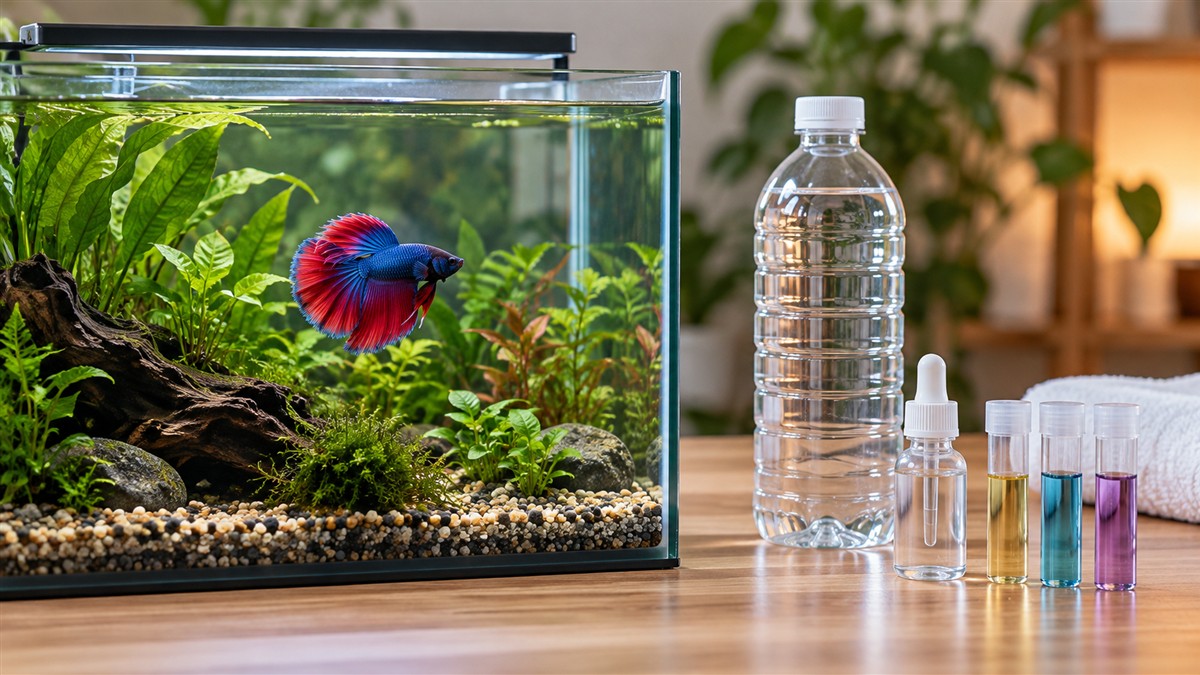
If you are considering bottled water, use the label as a starting point, not as proof. Look for a printed description of what the water contains, including any mineral listing, and check whether the bottle says it is purified, distilled, or spring water. The sources do not say how these labels relate to betta health, so record what you find and compare it with your test results. Then test the water you would actually put in the tank, not only the bottle.
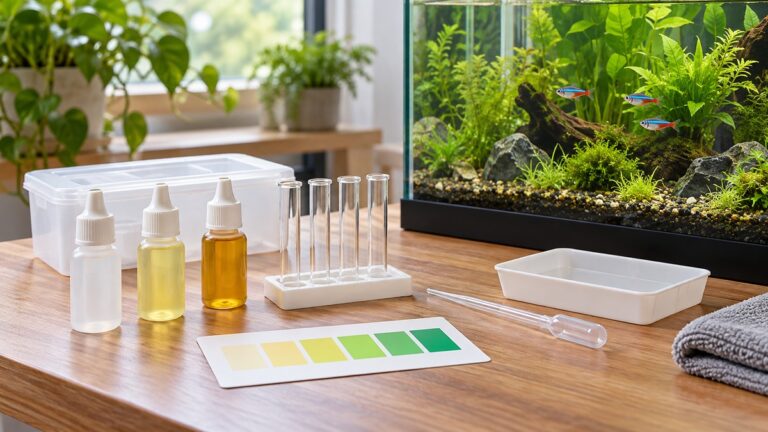
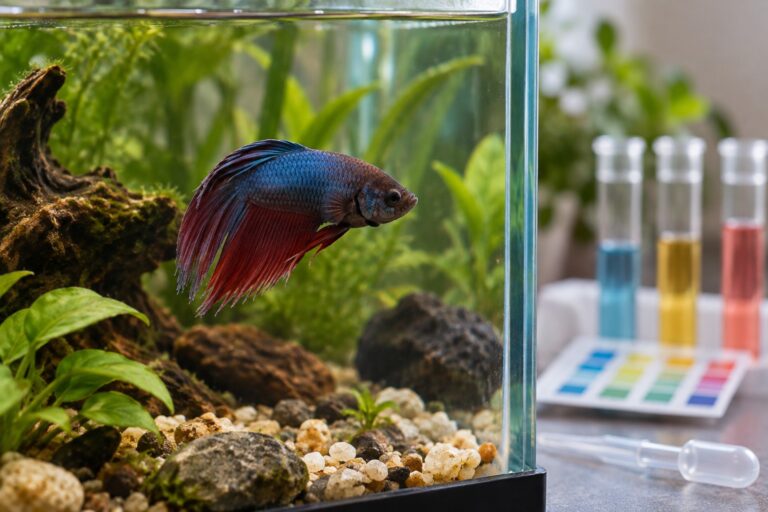
Test pH and ammonia when you first switch sources, and again after a few days. For a pH test option, see our guide to the best aquarium water pH test kit. If your readings change sharply, stop using that water and go back to a source you understand. Keep the new water at a temperature close to the tank’s. The University of Florida betta publication notes that bettas do not do well in cold water. The sources describe temperature equalization for new fish rather than for water changes, so matching temperature is general guidance here.
What we could not verify
The sources we opened do not name bottled water. We could not verify whether any brand, type, or label of bottled water is suitable for betta fish, or what mineral level a betta needs. We also could not verify that bottled water is free of harmful additives, because the sources do not discuss it.
What the sources do not say
The sources do not state a target hardness, alkalinity, or pH for a betta tank. They do not say whether bottled water should be mixed with tap water, how to choose a bottle, or whether distilled water is safe to use alone. Those questions need product-specific information, testing, and advice from an experienced fish keeper or aquatic veterinarian.
How we chose
This guide answers one narrow question about water source, using sources that discuss water chemistry and fish husbandry directly. We chose a veterinary reference and university extension publications. We did not use bottled water brand pages, which are retail sources, and we did not treat label claims as facts. Where the sources discuss general fish rather than betta fish, the text says so.
Frequently asked questions
Is bottled water safe for betta fish?
The sources we opened do not say that bottled water is safe or unsafe for betta fish. Merck says tap water is generally acceptable, and treats chlorine and chloramine as the main concern. For bottled water, test the water you plan to use and watch the fish closely after a change.
Is distilled water good for a betta?
The sources do not give a sourced answer for distilled water. They do say that reverse-osmosis water is processed to remove more compounds than filtered water, and that minerals and alkalinity support the nitrifying bacteria. Test pH and alkalinity before relying on any very low-mineral water.
Do I need to add water conditioner to bottled water?
The sources do not address bottled water conditioning. Merck says a dechlorinator is used to treat chlorine and chloramine in tap water, and that treatment should be used on new water added to the tank. Read the bottle and any product label, and confirm the result with a test.
Why does the water change pH in my tank?
The University of Florida ammonia publication notes that pH can drop quickly when alkalinity is depleted, and that low alkalinity can stop nitrifying bacteria from working. A change in water source can alter pH and buffering, so test after switching.
What is the safest way to change water for a betta?
The sources describe frequent water changes in small or lightly filtered tanks, and say water quality depends on management more than container size. Use a source you understand, treat it as the sources describe, match the temperature, and test the results. A water change should not stress the fish.
Sources
- Merck Veterinary Manual, “Providing a Home for Fish,” https://www.merckvetmanual.com/all-other-pets/fish/providing-a-home-for-fish, opened 2026-10-24.
- University of Florida IFAS Extension, “Ammonia in Aquatic Systems” (FA031), https://edis.ifas.ufl.edu/publication/FA031, opened 2026-10-24.
- University of Florida IFAS Extension, “Evolution, Culture, and Care for Betta splendens” (FA212), https://edis.ifas.ufl.edu/publication/FA212, opened 2026-10-24.
- University of Florida IFAS Extension, “Fish Nutrition” (FA096), https://edis.ifas.ufl.edu/publication/FA096, opened 2026-10-24.