Is Hard Water Bad for Betta Fish? What Sources Say
As an Amazon Associate we earn from qualifying purchases.
Is hard water bad for betta fish? The sources we opened do not say that hard water harms bettas, and they do not give a hardness limit for a betta tank. What they do cover is the water chemistry that hardness is usually tied to: minerals, pH, and alkalinity. Those factors affect fish health and the beneficial bacteria that clear ammonia, so they matter even if the word “hard” is never tested. This guide explains what the University of Florida and Merck sources say, what remains unknown, and how to check your own tap water before you decide whether hardness is a concern.
Quick answer
- The sources we opened do not state that hard water is harmful to betta fish, and they do not give a hardness range for bettas.
- Tap water pH varies greatly from one source to another, according to Merck, so local testing is the practical first step.
- Alkalinity matters for the nitrifying bacteria. The University of Florida ammonia publication says those bacteria do not function effectively below 20 mg/L total alkalinity.
- Test your water before you change anything. If you are unsure what the results mean, ask an experienced fish keeper or an aquatic veterinarian.
What the sources say about minerals and pH
Merck Veterinary Manual states that the pH of tap water varies greatly from well to well or city to city. It says the pH can be checked with home test kits, and that a sample can be taken to a veterinarian or pet store for a fuller analysis. The same page notes that dissolved minerals can lead to excess algae growth. That is a practical sign that minerals in tap water can affect a tank even when the fish seems fine.
The University of Florida nutrition publication, “Fish Nutrition” (FA096), explains that fish absorb minerals from the water they live in, although mineral requirements for most fish are not well understood. It gives two examples from other species. One reports that a calcium concentration below 10 mg/L was linked to calcium deficiency in channel catfish fry. Another reports that water hardness above 100 mg/L was linked to hard eggs in some tetra species, which were not able to hatch. Those examples are about other fish, not bettas, so they show that water minerals can matter for fish in general without setting a limit for a betta.
Taken together, these points mean that minerals and pH are real variables, not myths. They do not show that a given hardness reading harms a betta. The sources do not offer a betta-specific hardness target, so any number you see on a product page or hobby site should be treated as general guidance unless it is traced to a source you can open.
Why alkalinity matters more for the tank
The University of Florida ammonia publication, “Ammonia in Aquatic Systems” (FA031), spends more time on alkalinity than on general hardness. It explains that nitrifying bacteria need oxygen and alkalinity to function, and that alkalinity is mainly bicarbonate and carbonate. The publication says that at a total alkalinity less than 20 mg/L, common species of nitrifying bacteria do not work effectively. It also warns that when alkalinity is depleted, pH can drop significantly and quickly, which can kill fish and bacteria. The publication calls this “old tank syndrome,” and notes it can also occur in newly set up systems with naturally low-alkalinity water.
This matters because a tank’s biofilter depends on those bacteria to turn ammonia into nitrite and then nitrate. If alkalinity is too low, the biofilter can stall, and ammonia or nitrite can build up. Water with very little buffering can cause this problem, while the sources do not tie it to hardness on its own. The sources therefore point to alkalinity and pH stability, rather than to the word “hard,” as the factor to watch.
The same publication explains that ammonia is more toxic at higher pH and temperature, because a larger share becomes the un-ionized form. A tank with unstable pH is harder to manage, whatever its hardness. Test pH with ammonia, not one without the other, when you check a tank that is unstable.
What the betta sources add
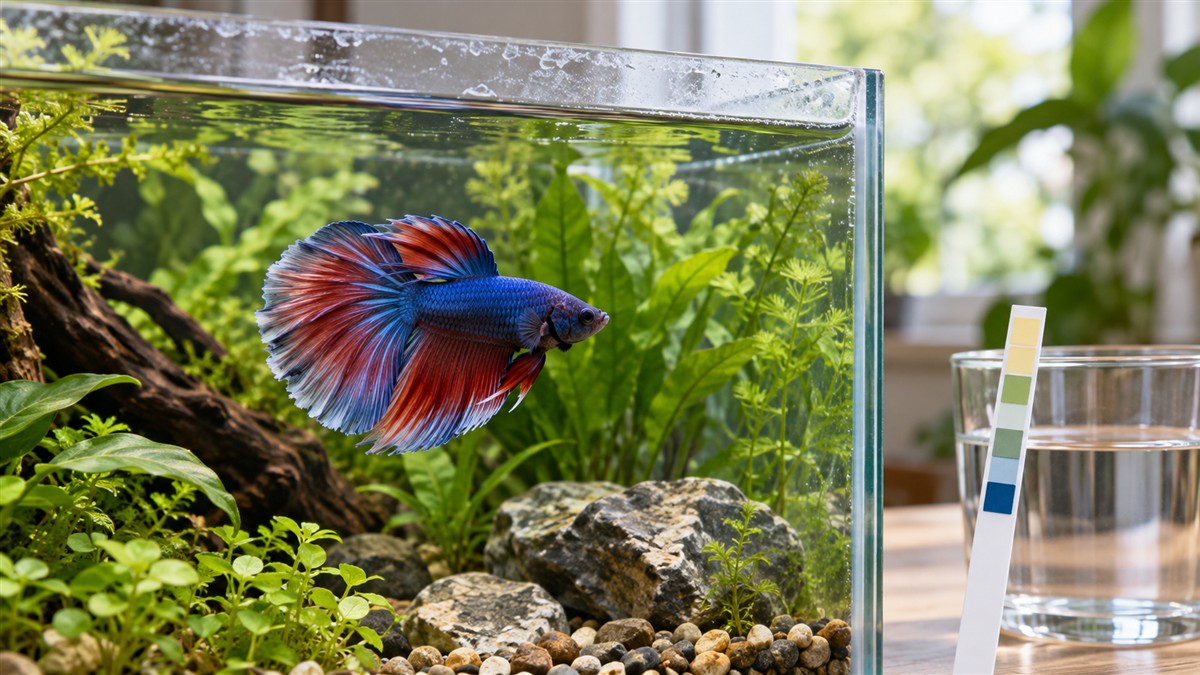
The University of Florida betta publication, “Evolution, Culture, and Care for Betta splendens” (FA212), describes the wild habitat of one Thai betta population. It reports a pH of 5.47, with a range from about 5.28 to 5.80, and a temperature of 29.9°C. That is a description of one wild habitat, not a home tank target. The same publication does not say that bettas need soft or acidic water at home, and it does not say that hard water is unsafe.
The publication does say that water quality is critical for the health and longevity of aquarium fish, and that water quality depends on management and husbandry rather than container size. It also says bettas prefer calm water, and that heavy filtration may be harmful to their welfare. Those statements are about overall water management. They do not separate hardness from the rest of the water chemistry.
How to check your own water
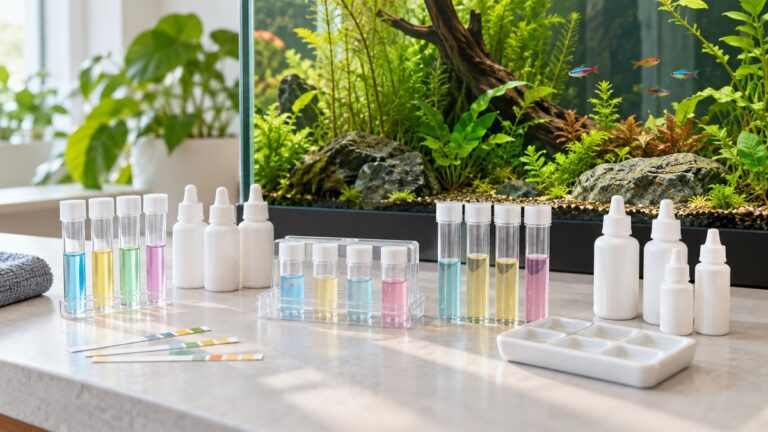
The practical question is what your tap water contains. Merck notes that tap water is the most convenient and least expensive option, and generally acceptable to use, but that it may need treatment. The first step is a pH test from your tap, with a home test kit or a pet store test. Our guide on the best aquarium water pH test kit covers that choice in more detail. Your water utility may also publish a water report, which may list hardness and alkalinity, though the sources we opened do not describe how to read such reports.
Check the tank after you test. If the water is stable, with ammonia and nitrite at zero and pH steady between water changes, the water chemistry is working for the fish. If pH swings, ammonia or nitrite shows up, or the fish looks unwell, act on the readings first and consider a veterinary or expert opinion before making large chemical changes. The University of Florida betta publication recommends working with a fish veterinarian when a disease outbreak occurs, and it warns that many chemicals can do more harm than good when used incorrectly.
If you decide to adjust mineral content, the sources do not give a sourced method. The sources we opened do not describe a method for changing mineral content, so any change should be checked with an expert first. For a deeper look at the alkalinity side of testing, see our guide to KH testing for freshwater aquariums.
What we could not verify
The sources we opened do not say whether hard water causes disease, stress, or shortened life in bettas. We could not verify a hardness limit for a betta tank, a safe range for general hardness, or a betta-specific effect of calcium or magnesium. We also could not verify how a particular brand of water conditioner changes hardness, because those product details are not in the sources.
What the sources do not say
The sources do not give a general hardness reading for betta water, do not explain how to convert hardness into a test result, and do not say whether a betta can adapt to hard water over time. They describe the wild habitat of one population, and they describe hardness effects in other species. Those gaps are real, and this article does not fill them with numbers from retail listings.
How we chose
This article answers one question using university extension publications and a veterinary reference, because they discuss water chemistry and fish husbandry with a stated basis. We did not use product pages or hobby articles as sources. Where a source discusses other species, such as channel catfish or tetras, the text says so, and we did not apply those figures to bettas.
Frequently asked questions
Can betta fish live in hard water?
The sources we opened do not say that bettas cannot live in hard water, and they do not give a hardness limit. Test your water first, watch the pH and ammonia, and ask an experienced fish keeper or a veterinarian if you see problems.
What pH is best for a betta tank?
The sources we opened do not give a pH target for a home betta tank. The University of Florida betta publication reports the pH of one wild habitat, which is not a home setting. The more useful advice from the sources is to keep pH stable, because pH swings can hurt fish and bacteria.
Does hard water cause algae?
Merck states that dissolved minerals can lead to excess algae growth. Algae also depends on light and other factors, so hardness alone does not explain algae in a tank.
Do I need to soften my tap water?
The sources do not say that softening is needed for bettas. Merck describes tap water as generally acceptable to use, with treatment as needed. Decide based on test results, and consult an expert before making big changes to water chemistry.
What does low alkalinity do to a tank?
The University of Florida ammonia publication says that below 20 mg/L of total alkalinity, common nitrifying bacteria do not function effectively, and pH can drop quickly once alkalinity is used up. That can allow ammonia and nitrite to build up, so test both alkalinity and pH if you see problems.
Sources
- University of Florida IFAS Extension, “Evolution, Culture, and Care for Betta splendens” (FA212), https://edis.ifas.ufl.edu/publication/FA212, opened 2026-10-24.
- University of Florida IFAS Extension, “Ammonia in Aquatic Systems” (FA031), https://edis.ifas.ufl.edu/publication/FA031, opened 2026-10-24.
- University of Florida IFAS Extension, “Fish Nutrition” (FA096), https://edis.ifas.ufl.edu/publication/FA096, opened 2026-10-24.
- Merck Veterinary Manual, “Providing a Home for Fish,” https://www.merckvetmanual.com/all-other-pets/fish/providing-a-home-for-fish, opened 2026-10-24.