Why Is My Pleco Not Eating Algae Wafers? What the Sources Say
As an Amazon Associate we earn from qualifying purchases.
Why is my pleco not eating algae wafers? It may simply be feeding at a different time, or it may be getting too many other foods. The sources checked for this guide say plecos feed on algae, but they do not say why a particular fish refuses a wafer. FishBase notes that one common pleco species is nocturnal and feeds on algae, and the Merck Veterinary Manual says fish fed only live food may refuse other foods. If the fish stops eating for a long time, or shows signs of illness, see an aquatic veterinarian.
Quick answer
- FishBase says Hypostomus plecostomus feeds on algae and small crustaceans.
- FishBase says one common pleco species, Pterygoplichthys multiradiatus, is nocturnal and feeds on algae.
- Merck says fish fed only live food from the start may refuse other foods.
- The sources do not explain why a specific pleco refuses algae wafers, so timing, diet and health checks are the practical next steps.
What “pleco” covers and why the species matters
Pleco is a common name for many armored catfish, and the sources do not treat them as one group. FishBase covers at least two species that are often sold under the pleco name. Hypostomus plecostomus has a maximum length of 25.0 cm, measured as standard length. Pterygoplichthys multiradiatus has a maximum length of 50.0 cm, measured as total length. The adult size is one of the most important facts for a tank, because the fish keeps growing for years.
The two FishBase pages also differ in habits. The page for Hypostomus plecostomus says it “Feeds on algae and small crustaceans.” The page for Pterygoplichthys multiradiatus describes the species as nocturnal and says it feeds on algae and will also take worms, insect larvae and other bottom-dwelling animals. Knowing which species you have is the first step, because a fish that is mainly active at night may not come to a wafer during the day.
The Pterygoplichthys multiradiatus page also lists the species as facultative air-breathing. The sources do not say what that means for a home tank beyond the species note. The point is worth noting for tank lids and water levels, but the sources do not give a detailed setup.
Timing: a nocturnal fish may not eat when you watch
For related tank-setup reading, see red algae in a betta tank and whether sand is better than gravel for a fish tank.
The most common reason a pleco ignores a wafer, according to the species note, is timing. The FishBase page for Pterygoplichthys multiradiatus describes the species as nocturnal, which means it is most active after the lights go off. A wafer dropped in the evening, when the tank lights are on and the room is busy, may be missed, and the fish may eat it later at night.
The source does not say that every pleco is nocturnal. The FishBase page for Hypostomus plecostomus gives no daily pattern. General guidance is to try feeding after the tank lights are off or on a dim light, and to check the tank in the morning for uneaten food before adding more.
Merck also says that “Fish need a day/night cycle for optimal health.” It warns that “Leaving the lights on 24 hours a day, 7 days a week stresses fish.” A tank with lights left on all day may not give the fish the rest it needs, and that can affect feeding.
Diet: why variety and live food matter
Merck says “Like all other animals, fish benefit from a well-balanced diet, which is essential for good health.” It advises a variety of foods, with one primary dietary source supplemented with other foods. It also states: “Another consideration is that fish fed only live food from day one may refuse other foods.”
That point matters for plecos that were started on live food, such as worms or small invertebrates, at a shop or from a keeper. Such a fish may not accept a wafer quickly. The source says that if the primary live food becomes unavailable, it may take time to find another source. The sources do not describe how long a switch takes or whether a particular wafer is accepted.
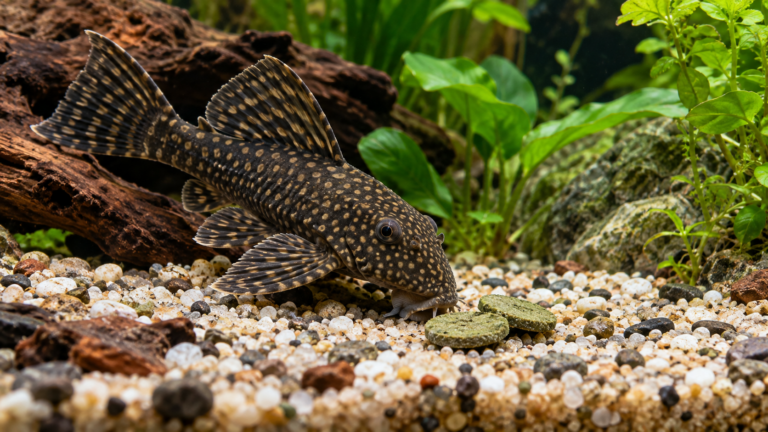
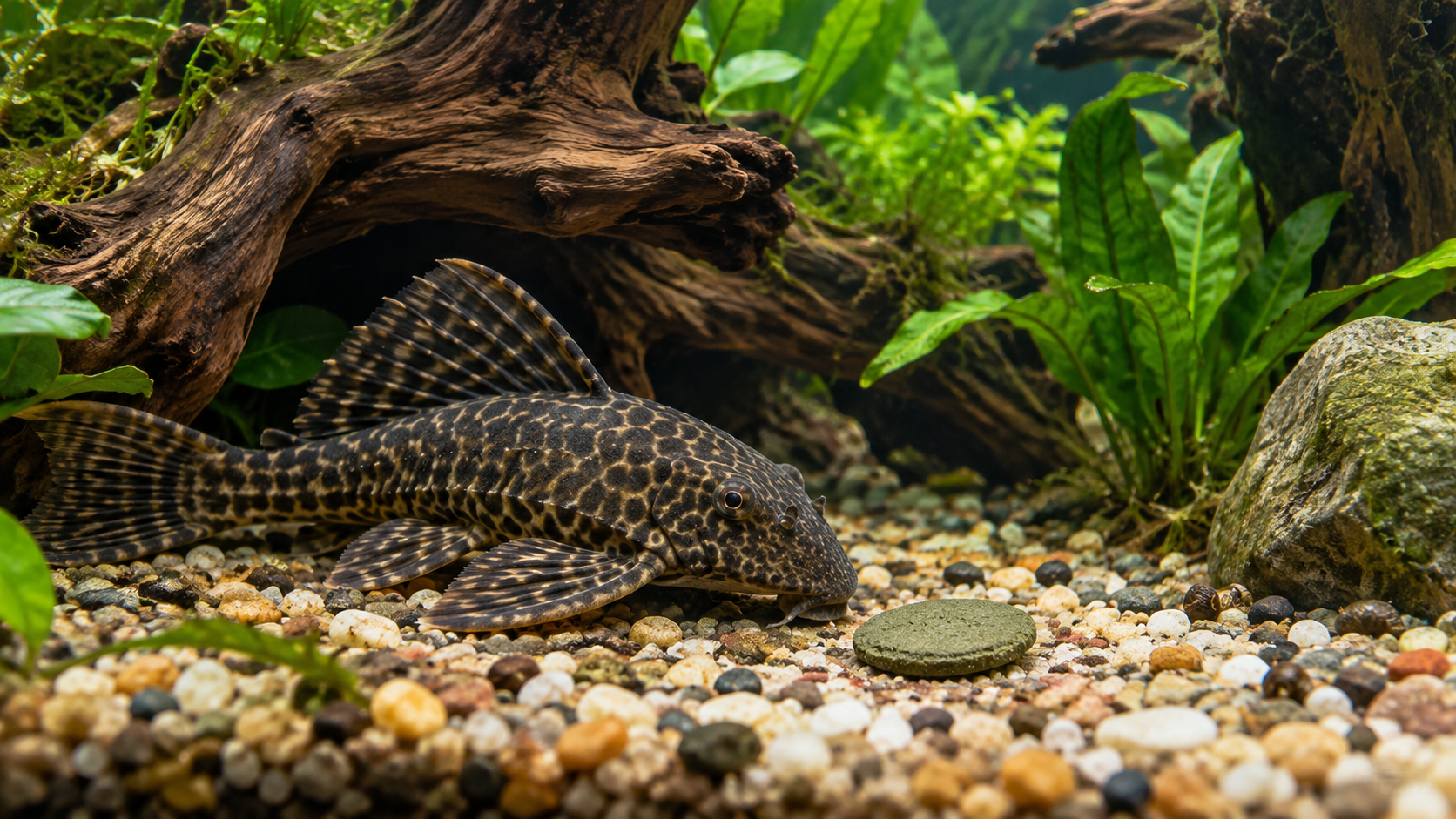
Merck also notes that fish should be fed based on where they naturally feed in the water column, such as at the surface, in mid-water or on the bottom. A pleco is a bottom-dwelling fish, so the wafer should reach the bottom of the tank and not sit on the surface where the fish cannot reach it.
Too much other food can also reduce interest in a wafer. Merck says “Overfeeding can lead to health problems as well as a dirty tank.” If the fish is getting a lot of other food during the day, it may simply not be hungry at the time the wafer is offered.
Feeding amounts from Merck
Merck gives general feeding rates. It says: “In general, maintenance diets are fed at a rate of 1% to 2% of body weight per day, and growth diets at 3% to 5% of body weight per day.” It also says “Feeding methods and rates vary with species, age, system, and water temperature.” The sources do not give a rate for plecos, and they do not say whether an algae wafer should be the main food or a supplement.
The safest reading is to give a wafer as a supplement and remove any uneaten portion. The sources do not give a number of wafers per day or per week for a pleco.
Tank size and water temperature
Tank size can affect feeding indirectly. FishBase lists the Hypostomus plecostomus temperature range as 20 to 28 degrees C, and Pterygoplichthys multiradiatus as 23 to 27 degrees C. Merck says feeding rates vary with water temperature, so a fish held outside its range may eat less. The sources do not say what happens to appetite at a temperature below the listed range.
Merck says direct sunlight can raise the water temperature in a tank, and warm water holds less oxygen. Placing the tank away from direct sunlight helps keep the temperature in range. The Merck text also says “Filters, pumps, heaters, and lights should not be turned on until after the tank is filled with water,” which is a setup point rather than a feeding point.
The adult size matters most. A fish that can reach 25 cm or 50 cm needs far more room than most small tanks offer. The sources do not give a minimum tank size for either species, but the length figures show that a tank meant for a small fish is not the right home for a pleco that keeps growing. This is a welfare point: a fish outgrowing its tank can be stressed and may eat less.
When to see a vet
A pleco that stops eating for a long time, or that shows other changes, should be checked. Merck says that “Preventing disease is always preferable to treating it,” and it recommends a comprehensive fish health program focused on water quality, nutrition, sanitation and quarantine. It also recommends working with a knowledgeable veterinarian for fish health questions.
Signs that should prompt a vet visit include a fish that is not eating for many days, clamped or damaged fins, sores, unusual swimming, or a body that looks thin. This guide does not diagnose illness and does not give medication doses. A vet who treats fish can check the water, the diet and the fish itself.
Water quality should be checked before a vet visit. A test kit for ammonia, nitrite and nitrate gives a useful record. Merck says rising ammonia or nitrite “can be controlled by frequent water changes,” so a poor water reading is a reason to act quickly, not to wait.
How we chose
This guide relies on the sources listed at the end. The species facts, maximum lengths, temperature ranges and feeding habits come from the FishBase species pages for Hypostomus plecostomus and Pterygoplichthys multiradiatus. The diet, feeding-rate, day-night cycle, placement and health-care points come from the Merck Veterinary Manual fish pages. Retail listings and wafer product pages were not used. Each claim in the body either matches a source or is labelled as general guidance.
What we could not verify
The sources do not describe why a particular pleco refuses algae wafers. They do not say which wafer ingredients plecos prefer, how long a fish takes to adjust to a new food, or what a wafer’s protein content should be for a pleco.
What the sources do not say
- The sources do not give a reason for a specific pleco refusing algae wafers.
- The sources do not say how many wafers a pleco should eat per day or per week.
- The sources do not say which pleco species is kept in a given shop tank, or whether that species eats wafers.
- The sources do not give a minimum tank size for either pleco species.
Frequently asked questions
Why won’t my pleco eat algae wafers?
The sources do not give a single cause. Timing matters, because one common pleco species is nocturnal. A fish fed only live food may refuse other foods, and a fish getting plenty of other food may not be hungry. If the fish stops eating for a long time, see a vet.
Do plecos eat algae?
FishBase says Hypostomus plecostomus feeds on algae and small crustaceans. It says Pterygoplichthys multiradiatus feeds on algae and will also eat worms, insect larvae and other bottom-dwelling animals.
Should a pleco be fed at night?
For the nocturnal species described by FishBase, feeding after the lights go off may suit the fish better. The sources do not say that every pleco is nocturnal, so checking the species is the first step.
How much should a pleco be fed?
Merck gives general rates of 1 to 2 percent of body weight per day for maintenance diets, but it does not give a rate for plecos. Remove uneaten food, and treat the wafer as a supplement unless a source says otherwise.
When should a pleco see a vet?
If the fish stops eating for many days, or shows clamped fins, sores, unusual swimming or weight loss, see an aquatic veterinarian. Merck recommends working with a knowledgeable veterinarian for fish health questions.
Sources
- FishBase, species summary for Hypostomus plecostomus: https://www.fishbase.se/summary/Hypostomus-plecostomus.html (opened 2026-10-24)
- FishBase, species summary for Pterygoplichthys multiradiatus: https://www.fishbase.se/summary/Pterygoplichthys-multiradiatus.html (opened 2026-10-24)
- Merck Veterinary Manual, “Providing a Home for Fish”: https://www.merckvetmanual.com/all-other-pets/fish/providing-a-home-for-fish (opened 2026-10-24)
- Merck Veterinary Manual, “Routine Health Care of Fish”: https://www.merckvetmanual.com/all-other-pets/fish/routine-health-care-of-fish (opened 2026-10-24)