Corydoras Fin Rot: Signs, Causes and When to Call a Vet
As an Amazon Associate, this site earns from qualifying purchases. This guide contains no product links.
The person typing “corydoras fin rot” wants to know what it looks like, what causes it, and what to do. The phrase is a common hobby term for fins that look ragged, frayed, or discolored. The sources checked for this guide do not use “fin rot” as a single diagnosis. They describe ragged fins as a sign that can come from bacteria, fungus, parasites, or injury, and they say a fish with that sign needs an exam. This guide explains those signs and the checks to make, and it does not give a home treatment.
Quick answer
- Ragged fins are a sign listed in the UF/IFAS fish health publication, which says “physical signs that should alert producers to potential disease problems” include “ragged fins.”
- Merck says that “Skin and fins should be intact, not bloody or ragged” in a healthy fish, so frayed fins are a reason for a closer look.
- The sources describe several causes, so a diagnosis needs an aquatic vet or a fish health specialist.
- Test the water first, reduce stress and rough handling, and do not add medicine without a diagnosis.
What the signs look like
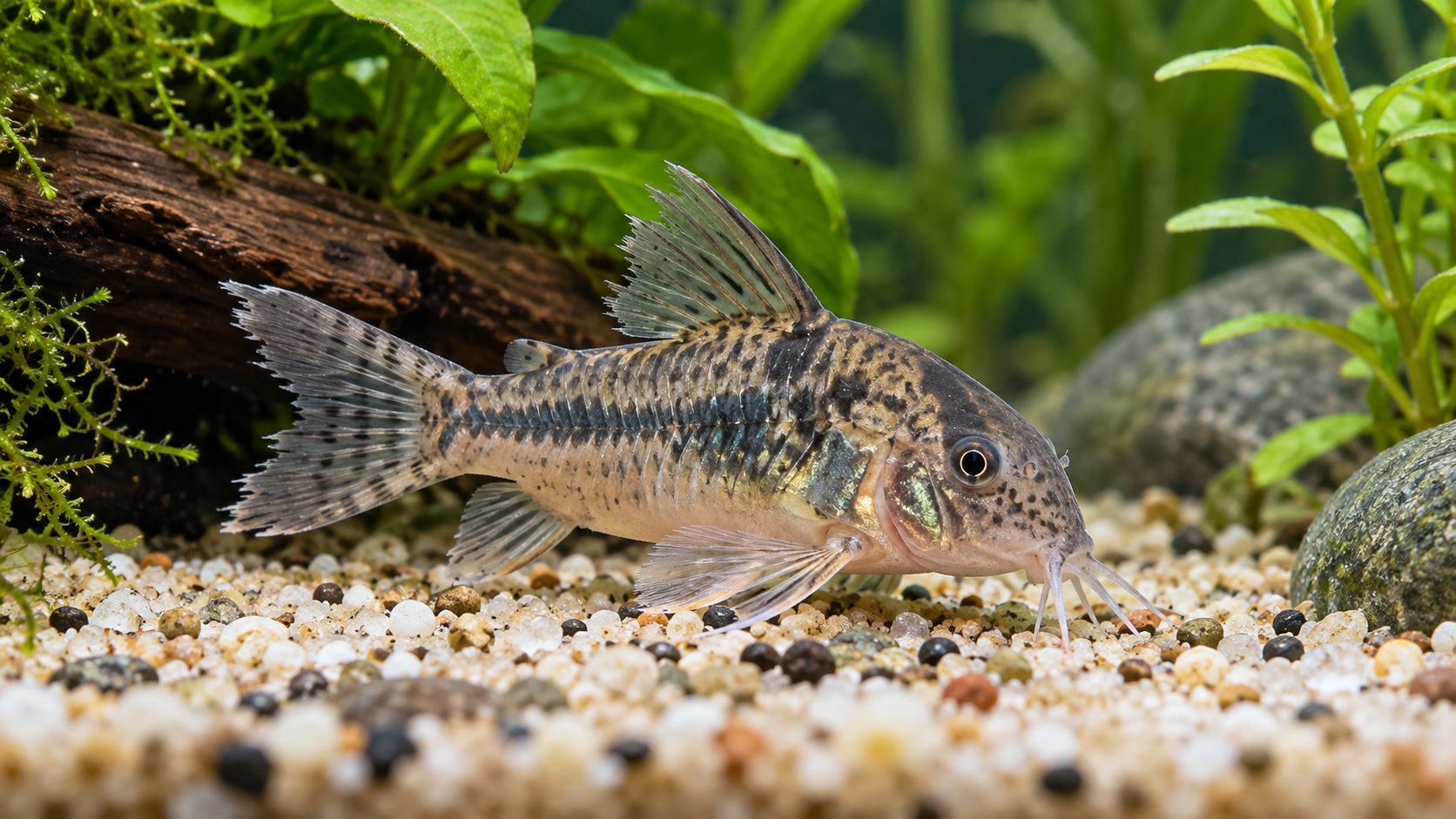
Corydoras are small bottom-dwelling catfish, and their fins are part of how they move and stay in place. The UF/IFAS publication on freshwater ornamental fish describes them as “mostly small species (< 100 mm or 4 in).” A small fish with damaged fins has less margin, so the sign matters more than it would on a larger fish.
The Merck selection chapter gives the healthy baseline. It says “Healthy fish generally have smooth, unblemished scales, fins, and skin surfaces,” and “Skin and fins should be intact, not bloody or ragged.” Compare the fins of the corydoras with that description. Look for fraying at the edges, cloudy or whitish patches, red streaks, and any growth on the fin.
The Merck disorders chapter lists signs that help narrow the cause. For a bacterial infection it describes “bloody spots or ulcers on the body” and “ragged fins” in Aeromonas infection. For a bacterial disease called vibriosis it says “Vibrio bacteria are responsible for causing bleeding and ulceration of the skin, fins, and tail.” For a fungal problem it describes “grayish-white, cotton-like growths on the skin, gills, eyes, or fins.” These signs overlap, which is why a look with a magnifier in good light is not enough to name the cause.
The sources also say that bacterial disease can follow injury. The UF/IFAS publication notes that “Some bacterial diseases can be initiated by rough handling, making the fish more susceptible to skin damage and opportunistic bacteria entering the wounds from the water.” Sharp decor, rough nets, and rough handling during a water change can all create that kind of damage.
Causes the sources describe
Water quality comes first. The Merck home chapter says “Poor water quality is the most common cause of environmental-related diseases in fish.” Ammonia and nitrite are the two water problems the Merck home chapter discusses as toxic. The chapter says “Prolonged ammonia exposure is highly toxic to fish.” A tank with poor water is more likely to produce stressed fish, and stressed fish are more likely to show skin and fin problems.
Stress is the second cause. The UF/IFAS fish health publication says that “Disease is rarely a simple association between a pathogen and a host fish. Other factors are usually needed for active disease to develop in a population.” It calls these circumstances stress. Crowding, rough handling, and sudden changes count as stress in this sense.
The third cause is infection. Merck names several bacterial, fungal, and protozoan causes that can show up on the fins. It also notes that “Skin disorders in fish are especially harmful.” It explains that “The skin and mucus are extremely important protective barriers for fish.” Damage to those barriers opens the door to infection, so the sources treat fin damage as more than a cosmetic problem.
The sources do not say which of these causes is most common in corydoras. They also do not say whether corydoras are more prone to fin problems than other small fish. This guide does not claim either.
| Sign | What the sources describe | Next step |
|---|---|---|
| Ragged or frayed fin edges | Listed as a physical sign of disease in UF/IFAS and Merck | Test the water, then book an exam |
| Bloody spots or ulcers | Merck lists these for Aeromonas and other bacterial infections | See a vet or aquatic specialist |
| Grayish-white, cotton-like growth | Merck describes this for Saprolegnia fungus | See a vet or aquatic specialist |
| Fish hanging listlessly or rubbing | UF/IFAS lists this as a sign something may be wrong | Test the water and call a specialist |
What to check at home
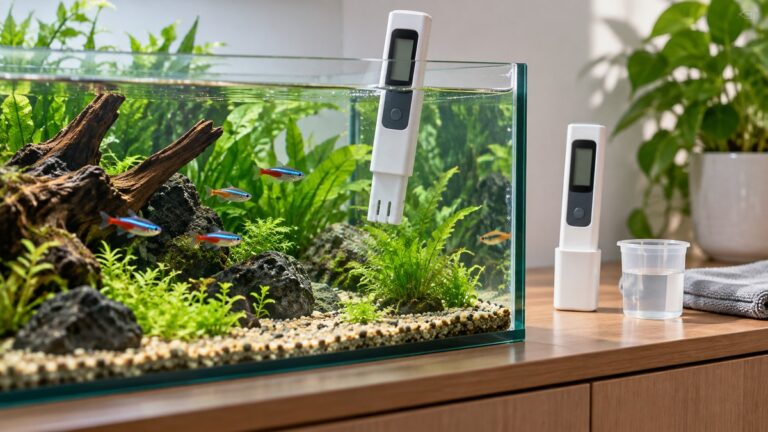
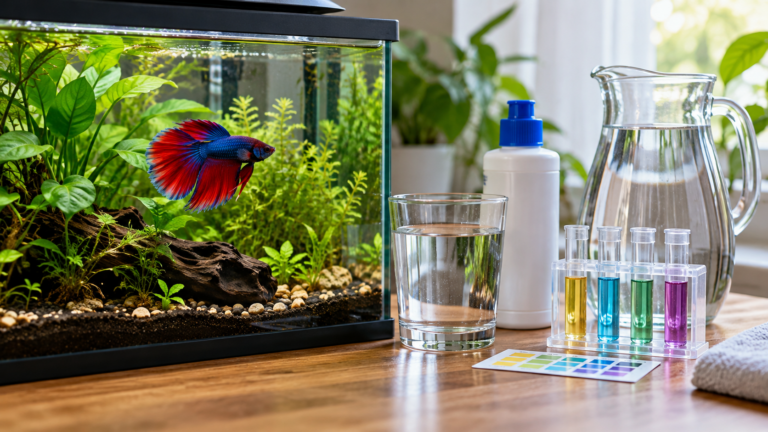
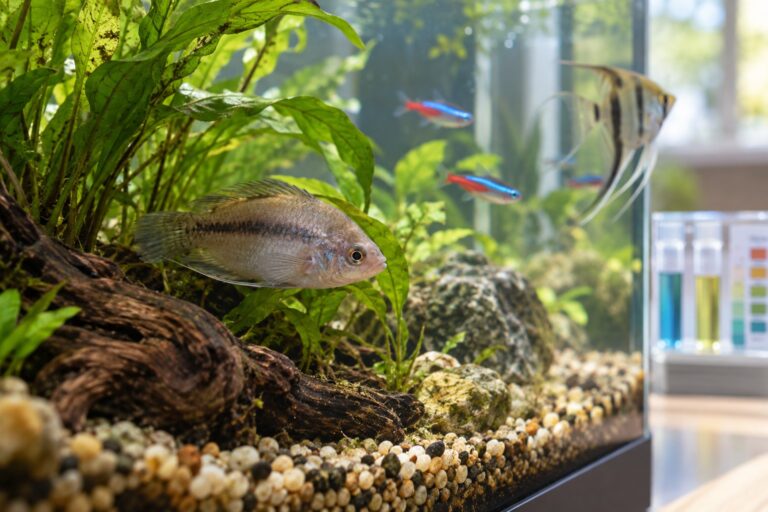
Start with the water. Test ammonia, nitrite, and pH, and note any recent change. A reading that moves suddenly is a reason to act. A guide to test options is in the water quality test strips guide. The sources do not give a safe range for corydoras, so compare the readings with a specialist’s advice rather than a single number.
Next, look at the other fish. Fin damage that appears in one fish only can come from a scrape or a sharp edge. Damage in several fish at once points toward the water or a shared infection. The UF/IFAS guide says that “Daily observation of fish appearance, behavior, and feeding activity allows early detection of problems when they do occur.” A daily look is the most useful habit a keeper can build.
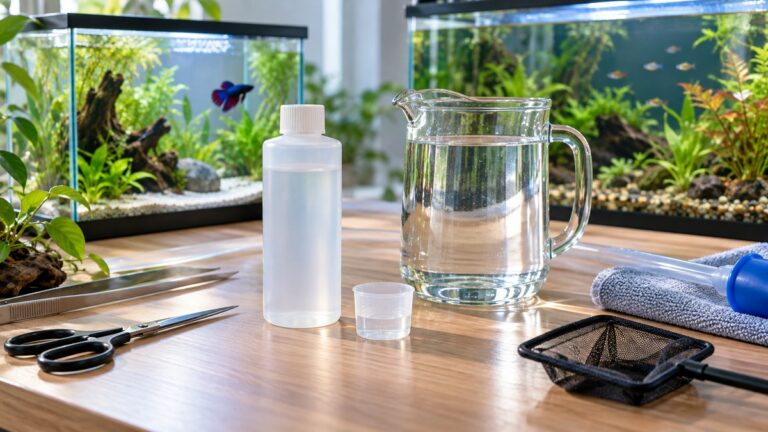
Check the tank for sharp or rough objects. Decorations with rough edges, plastic plants with sharp tips, and nets with torn mesh can all snag fins. Remove or replace anything that can cut. The sources checked do not give a specific material list, so use general judgment.
Keep stress down. Merck notes that “Aggressive behavior is stressful for all fish in the tank,” which applies to bottom fish too. Keep the group size and tank conditions steady, and handle corydoras as little as possible during water changes. A general routine for cleaning is in the tank cleaning guide.
When to call a vet
Call a vet or an aquatic specialist when the fins are getting worse over a few days, when there are ulcers or spots, when a growth appears, or when the fish stops eating or rests in an unusual way. The Merck disorders chapter says that “Antibiotics are useful but laboratory tests are needed to determine which ones will be effective.” That is why this guide does not name a medicine or a dose. The right treatment depends on the diagnosis.
Bring a clear account to the appointment. Note when the fins first changed, the water test results, any recent purchases or additions, and the other fish in the tank. The UF/IFAS guide says that good records and “a description of behavioral and physical signs exhibited by sick fish, and results of water quality test” help the specialist. Clear notes shorten the process.
If a vet is not nearby, the UF/IFAS page lists Florida resources, and the publication says that “If you suspect that fish are getting sick, the first thing to do is check the water quality.” That is a fair first step anywhere, but it does not replace an exam when the fins are visibly damaged.
How we chose
The sources were chosen because they are a veterinary reference and a university extension publication. They were opened with curl on 2026-10-24 and checked as text. The question has no product angle, so no product is recommended. The order of the sections follows the sources: signs first, then causes, then home checks, then when to call a vet.
What we could not verify
Fin rot is a broad term, and the sources checked do not settle which cause applies to a given corydoras. The gaps are listed below.
What the sources do not say
- The sources do not say that “fin rot” is a single disease.
- They do not give corydoras-specific signs of fin disease.
- They do not say how often corydoras fin problems occur.
- They do not name a home treatment or a medicine dose, and this guide does not give one.
Frequently asked questions
Is corydoras fin rot contagious?
Some causes are infectious, and the sources describe bacterial, fungal, and parasitic disease in fish. Whether a given case will spread depends on the cause, which needs a diagnosis. Isolate a sick fish only on a specialist’s advice.
Can poor water cause ragged corydoras fins?
The sources say poor water quality is a common cause of environmental disease in fish, and that stress makes disease more likely. A water test is the first step, but the sources do not say water alone causes fin damage in every case.
Will the fins grow back by themselves?
The sources checked do not say how fast corydoras fins heal. They describe infections that need laboratory tests before treatment, so a fin that keeps worsening should be seen rather than watched.
Do corydoras need a special diet to heal?
The sources do not give a healing diet for corydoras. Merck says that “Overfeeding can lead to health problems as well as a dirty tank,” so keep feeding modest and ask a specialist about diet changes.
What is the first step if corydoras have ragged fins?
Test ammonia, nitrite, and pH, then look at the other fish and the tank for sharp edges. If the fins keep changing, contact an aquatic vet or fish health specialist for an exam.
Sources
- Merck Veterinary Manual, “Disorders and Diseases of Fish,” https://www.merckvetmanual.com/all-other-pets/fish/disorders-and-diseases-of-fish (opened 2026-10-24)
- Merck Veterinary Manual, “Selection of Fish,” https://www.merckvetmanual.com/all-other-pets/fish/selection-of-fish (opened 2026-10-24)
- Merck Veterinary Manual, “Providing a Home for Fish,” https://www.merckvetmanual.com/all-other-pets/fish/providing-a-home-for-fish (opened 2026-10-24)
- UF/IFAS Extension, “Introduction to Fish Health Management,” https://edis.ifas.ufl.edu/publication/fa004 (opened 2026-10-24)
- UF/IFAS Extension, “Freshwater Ornamental Fish Commonly Cultured in Florida,” https://edis.ifas.ufl.edu/publication/FA054 (opened 2026-10-24)