How Often Should You Feed a Betta Fish
As an Amazon Associate we earn from qualifying purchases.
Do you feed betta fish everyday? Many owners do, but the sources we could open do not give a fixed schedule, and we will not invent one. What they do show is how to reason about it: bettas are carnivores, uneaten food turns into ammonia, and a betta in a small tank can foul its water quickly if you give more than it eats. The safe routine is small amounts of a suitable food, any leftovers removed, and a vet’s advice if your fish seems off. This guide covers what a betta eats, why portions matter, and how to build a routine.
Quick answer
- Bettas are carnivorous. They cannot survive on plants alone.
- Uneaten food adds to the ammonia load in the tank, so too much food is a water problem as well as a fish problem.
- No source we opened gives an official number of feedings per day. Follow the label on your food and ask a vet if unsure.
- Loss of appetite can be a sign of ammonia stress or illness; ask a vet rather than guessing.
What bettas eat in the wild
Wild bettas are generalist feeders that eat almost any animal small enough to swallow, including worms, insect larvae and smaller fish. Their diet includes zooplankton, small crustaceans, insect larvae such as mosquito larvae, fallen insects and some algae. They cannot survive on plants or plant roots alone. Juveniles digest carbohydrates poorly, and live moving prey is preferred for fry.
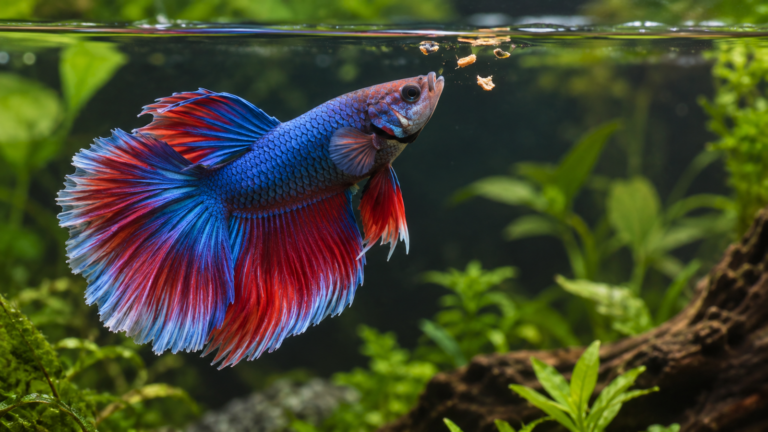
This tells you two things. A betta needs animal-based protein, so a food made mostly of plant material is a poor fit. And a betta is built to eat small meals of live prey as it finds them, not to sit in front of a pile of food. The reference does not translate that into a feeding schedule, so there is no number to quote.
Why portion size matters more than the number of meals
In a closed tank, fish waste, uneaten food and decaying matter contaminate the water. Mechanical filtration traps particles such as uneaten food, but solids must be removed or they decay and dissolve back into the water. Decomposing waste produces ammonia, which is highly toxic to fish. Bacteria convert ammonia to nitrite and then to nitrate, but that cycle takes weeks to establish in a new tank. Accumulated ammonia is the largest cause of fish deaths in new, poorly maintained or overloaded aquaria.
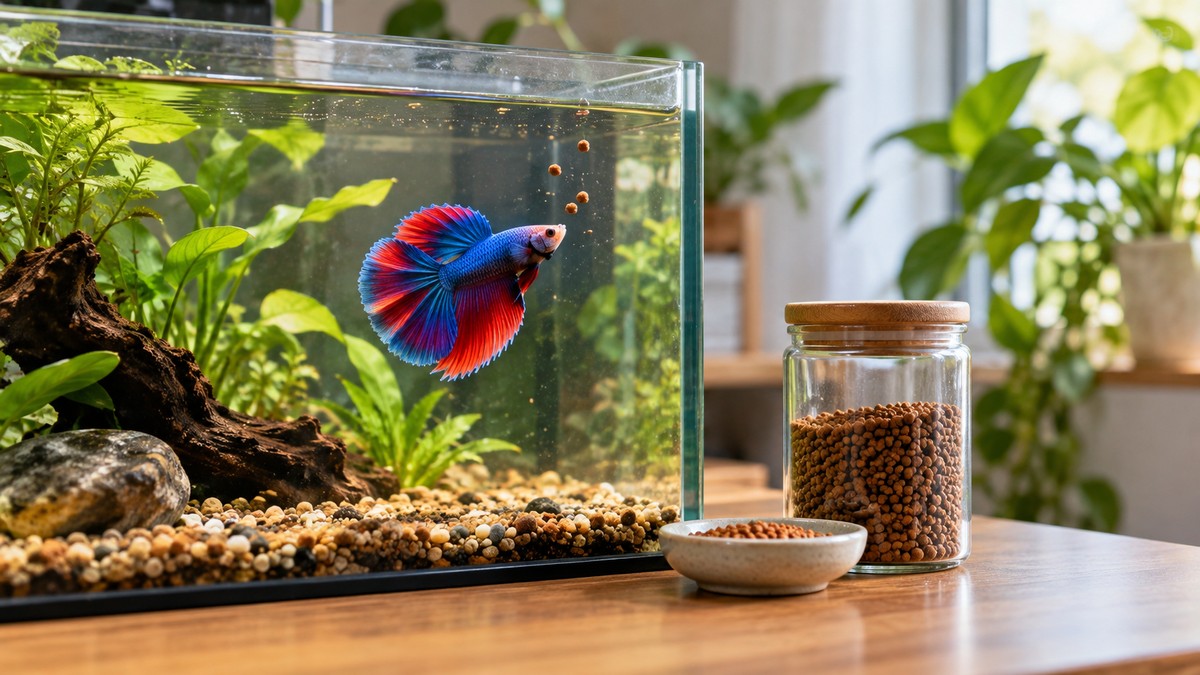
So the useful question is not just “every day?” but “how much of what I put in actually gets eaten?” If food is still on the bottom or floating a few minutes after a meal, you gave too much. Our post on whether you can overfeed a betta fish goes through the signs and fixes.
Signs that feeding is off
Leftover food
Food that sits on the substrate or in the filter is the clearest sign of overfeeding. Remove it with a net or siphon. Leftover food also feeds algae, which is one more reason to avoid it.
Ammonia stress
The fishkeeping reference lists signs of ammonia stress: lethargy, loss of appetite, red or inflamed gills and fins, and gasping at the surface. A betta that stops eating may be reacting to the water rather than refusing food. Check the tank and ask a fish vet if the signs continue.
Changes in behavior
If your betta stops eating altogether, hides, or looks very thin or bloated, do not treat it yourself from a web page. Our post how do you know if a betta fish is dying lists what to watch for. A vet who sees fish is the right person to advise on illness.
Building a feeding routine
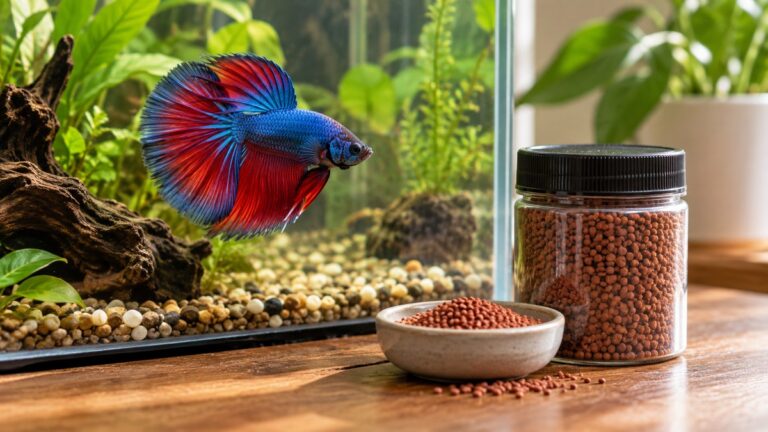
- Choose a food made for carnivores. Look at the ingredient list and the label’s feeding directions. The label is the best guide we can point to, because the product maker knows the formula.
- Start with a small amount. Offer a little, watch how fast it disappears, and adjust.
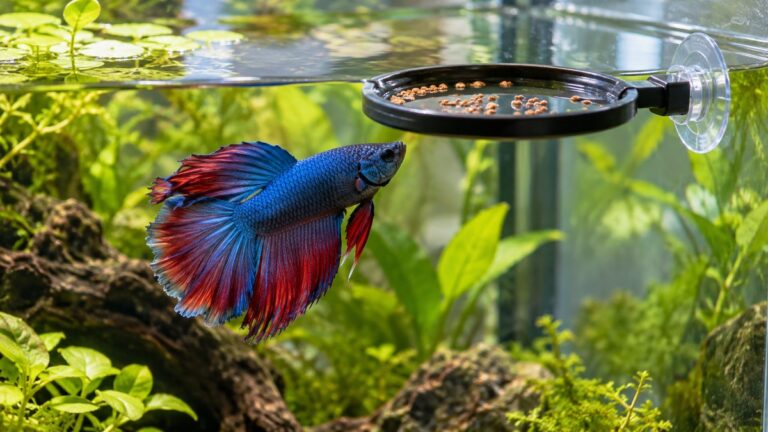
- Remove leftovers. Take out anything not eaten after a few minutes.
- Keep the schedule steady. Feeding at the same time helps you notice when your fish is not interested.
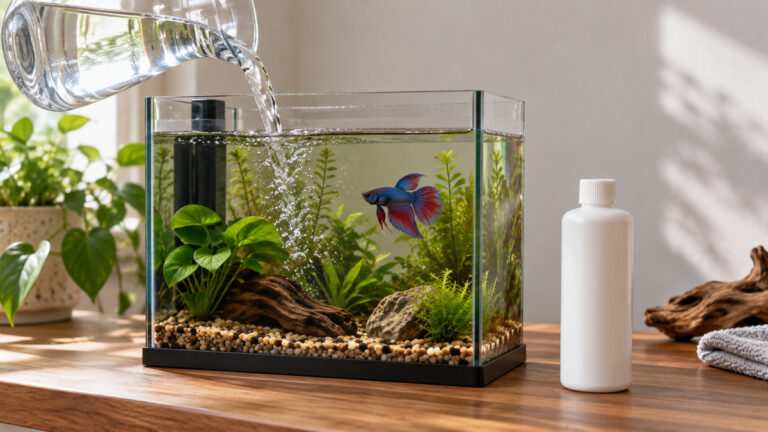
- Do regular water changes. Nitrate builds up, and partial water changes remove it. Basic maintenance should generally be done weekly.
- Keep the water at a stable temperature. Temperature consistency matters, and tropical aquaria commonly run near 25 degrees C (77 degrees F). See what temperature betta fish like.
Our sources do not say whether a day of fasting is good or bad for a betta, so we will not recommend one. If you are interested in skipping meals, ask a vet who knows fish.
Variety of food
Because wild bettas eat worms, insect larvae, small crustaceans and zooplankton, a mix of foods that cover animal protein is reasonable. The reference notes that bettas are carnivorous and need live or pellet food. Check the label of each product for what it actually contains, and do not assume a food is suitable because its box shows a betta. Our sources do not rank specific brands or forms, so any choice is yours and your vet’s.
Tank conditions that affect appetite
A betta that is too cold, too stressed or living in dirty water may eat less. Sudden temperature changes can cause shock and disease. Light and rest also matter: see do betta fish like sunlight for heat and algae facts. A bowl or vase is described by the species reference as harmful to health, life expectancy and behavior, so a proper tank is the starting point for any feeding plan.
Males may also flare at their own reflections, and prolonged exposure can cause stress. A stressed fish may eat poorly, so reduce reflections with plants or a background.
Does feeding affect growth?
Growth and size are a separate question. See do betta fish grow for what the sources say about size. Feeding more does not mean a betta will grow larger; it mostly means more waste.
Common mistakes
- Giving a pinch that is far more than the fish can finish.
- Leaving uneaten food in the tank overnight.
- Choosing a plant-heavy food for a carnivore.
- Feeding more because the fish “begs.” Bettas will take food whenever it is offered.
- Treating a lost appetite with extra food rather than checking the water.
- Skipping water changes because the filter is running.
FAQ
Do you feed betta fish everyday?
Many keepers do, but our sources do not give an official number of feedings. Follow the food label and ask a vet if you are unsure.
What happens if I overfeed my betta?
Uneaten food decays and adds ammonia to the water, which is highly toxic to fish. See can you overfeed a betta fish.
Can bettas eat plant food?
No. Bettas are carnivorous and cannot survive on plants or plant roots alone.
Why won’t my betta eat?
Loss of appetite is listed as a sign of ammonia stress. Check the tank and ask a fish vet if it continues.
What do wild bettas eat?
Worms, insect larvae, small crustaceans, zooplankton, fallen insects, smaller fish and some algae.
Can I pet or handle my betta while feeding?
Handling adds stress. Read can you pet a betta fish for what the sources say.
Bottom line
Feed a carnivore-appropriate food in small amounts, take out what is not eaten, keep the water clean with weekly partial changes, and ask a vet about anything unusual. A daily meal is common, but the amount you can clear in a few minutes matters more than the count.