Betta Fish Home Setup: Tank and Gear Guide Tips
As an Amazon Associate we earn from qualifying purchases.
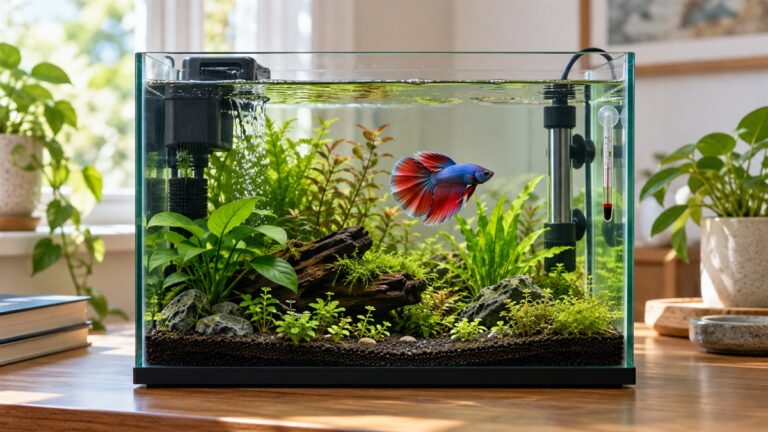
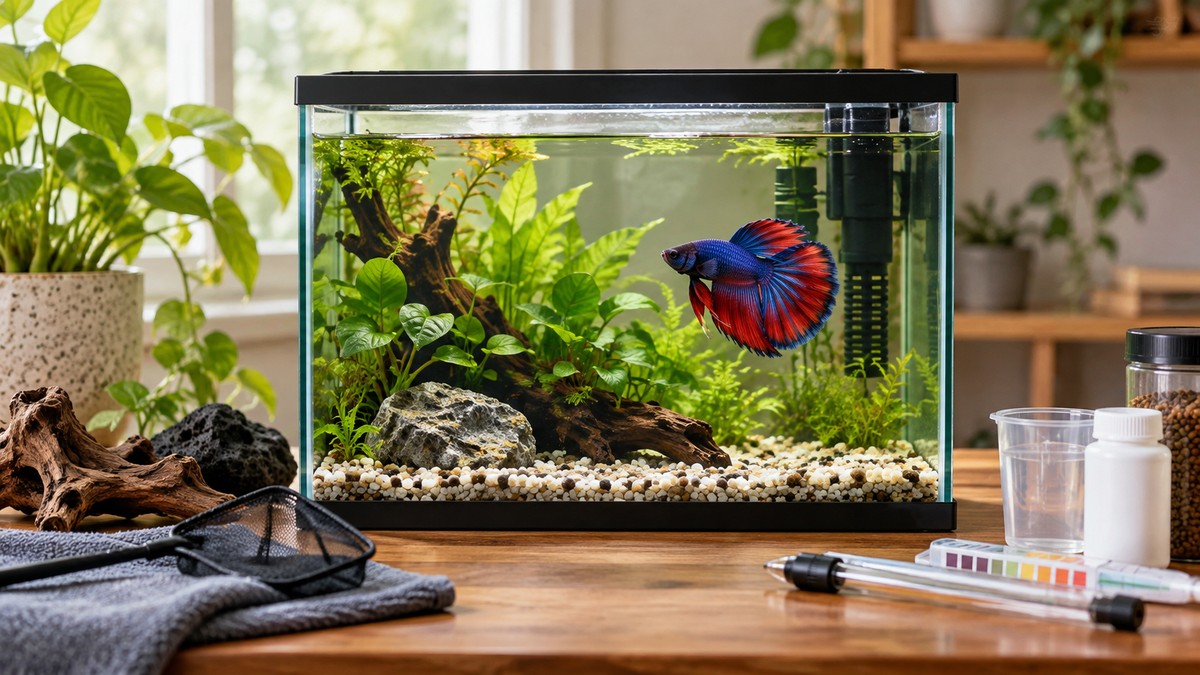
A good betta fish home starts with enough water, steady warmth and a gentle filter. The Aquarium Co-Op care guide recommends at least 5 to 10 gallons, a heater, a sponge filter or an adjustable-flow filter, and treated tap water. Many small starter tanks on Amazon are much smaller than that, so it pays to read the listed volume before you buy.
Quick answer
- Size: the guide recommends 5 to 10 gallons or more and discourages bowls; a 10-gallon tank is its suggested target.
- Warmth: bettas prefer water around 80 degrees Fahrenheit, and the guide says they need a heater.
- Filter: gentle flow, such as a sponge filter or a small filter with adjustable flow.
- Water: always use water conditioner, because some cities use chloramine.
What a betta home needs
Tank size
More water means more swimming room and longer gaps between cleanings, which is the guide’s reasoning for 5 to 10 gallons or more. It names a 10-gallon tank as a good target and says bowls are discouraged. This matters when you read tank listings: a 1-gallon bowl and a 10-gallon aquarium are very different homes, and a listing that calls itself a betta tank is not the same as a recommendation from a care guide.
Heat
The guide says bettas prefer temperatures around 80 degrees Fahrenheit and are much more active when warm. Typical US room temperatures of 67 to 69 degrees can leave them lethargic and stressed. A heater is therefore part of the home, not an extra. Of the four tanks below, none lists a heater in its bullets or specs, so plan to buy one separately.
Filtration and flow
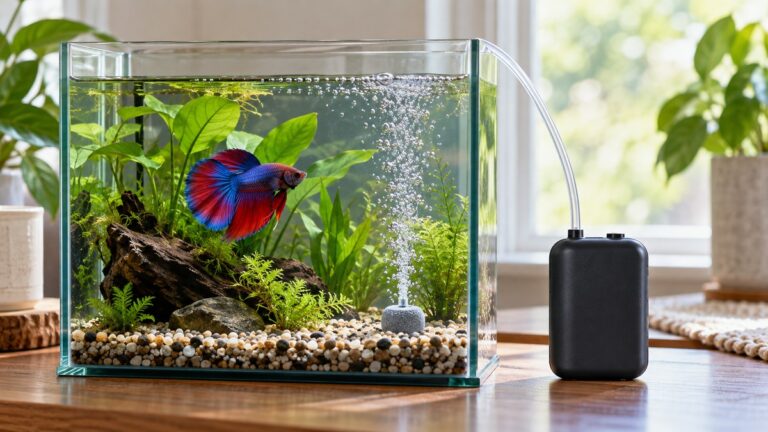
Long fins are easily damaged by strong currents. The guide recommends a sponge filter or a small filter with adjustable flow. It also notes that adequate filtration provides surface agitation, which helps prevent the oily protein film that forms on the water surface. For more on this, see our guide to betta aquarium filters compared by flow.
Water treatment and changes
Treat tap water with a conditioner or dechlorinator. The guide points out that chloramine, used by some cities, does not evaporate overnight. For a 10-gallon tank it suggests changing about 30 percent of the water once or twice a month, and it warns that frequent full changes in small bowls stress fish, while dirty water can make them sick.
Plants and cover
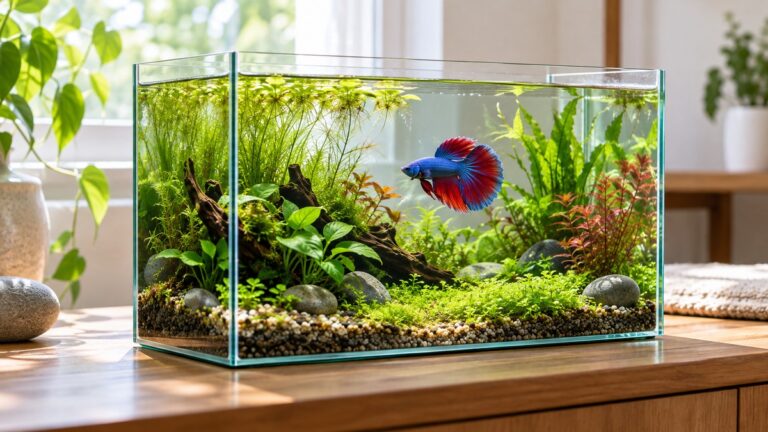
The guide mentions live plants mainly for tanks with tankmates. Even for a single betta, plants and decor give the fish something to explore; see plants that are good for betta fish. The sources do not give specific lighting guidance, so check our post on day and night light setup for a timer approach.
Four listed starter tanks and what they state
These are products from Amazon listings. We are quoting what each listing says about its own size and equipment; we make no claim beyond that. Compare each volume to the 5 to 10 gallon guideline above.
Dimind 1.5-Gallon Betta Fish Tank
The listing gives a 1.5-gallon volume, an oval acrylic body, and an included submersible pump, filter sponge and 7-color LED light. It lists a bottom drain system for waste removal and states the pump runs quietly under 30 dB. It says decorative plants, rocks and statues in the photos are not included. This is a compact kit for a desk; the volume is below the guide’s 5-gallon minimum.
YISITONG 3 Gallon Self Cleaning Fish Tank
This round ABS tank is listed at 3 gallons, 7.9 by 7.9 by 11.8 inches. The bullets describe a wall-mounted filter with reusable filter cotton, a clip-on multi-color LED lamp with a remote, and an acrylic body with over 90 percent light transmittance. The listing names betta, shrimp and small fish. It is the largest volume of the round-style options here but still under the guide’s 5-gallon recommendation.
Oltraman 360 Aquarium, 1 Gallon
This cylindrical plastic tank is listed at 1 gallon, 6.5 inches in diameter and 9.5 inches tall, with a color-changing LED that uses button cells that the listing says are not included. The listing frames cleaning as adding fresh water of a similar temperature each day. That is a daily-change routine, which differs from the guide’s approach of larger tanks and less frequent partial changes. It lists no heater or filter.
HANABASS Desktop Fish Bowl
A small round glass bowl with a wooden lid and bamboo base, listed at about 5.12 by 1.18 by 5.51 inches and 7.04 ounces. The listing says it suits betta fish and hydroponic plants, and does not state a gallon volume, a heater or a filter. The care guide discourages bowls, so treat this as a decorative option and read the listing carefully before deciding.
Side-by-side
| Tank | Stated volume | Material | Equipment listed |
|---|---|---|---|
| Dimind | 1.5 gallons | Acrylic | Pump, filter sponge, LED light |
| YISITONG | 3 gallons | ABS | Filter, LED light |
| Oltraman | 1 gallon | Plastic | LED light |
| HANABASS | Not stated | Glass | Storage holder, wood lid |
Mistakes to avoid
- Choosing by looks alone. A tank that fits a desk may be much smaller than the guide’s range.
- Skipping the heater. Room temperature can leave a betta lethargic.
- Strong flow. Check for adjustable flow or use a sponge filter.
- Using untreated tap water.
- Frequent complete water changes in small containers, which the guide says stress fish.
Setting the home up in order
Place the tank on a stable, level surface away from direct drafts. Rinse the tank and equipment with plain water, add substrate and decor, fill with treated water, then run the filter and heater. Our betta fish tank setup post goes deeper. When the fish arrives, follow the steps in how to introduce a betta fish to a new tank. For any sign of illness, ask a vet who treats fish.
FAQ
How big should a betta home be?
The guide recommends at least 5 to 10 gallons and names 10 gallons as a good target.
Do bettas need a heater?
The guide says yes. They prefer water around 80 degrees Fahrenheit.
Is a bowl okay?
The guide discourages bowls.
Does tap water need treating?
Yes, with a conditioner or dechlorinator, since chloramine does not evaporate overnight.
How often should I change the water?
For a 10-gallon tank, the guide suggests about 30 percent once or twice a month.
Bottom line
Choose water volume first, then add a heater, gentle filtration and conditioned water. Use the listed volume of any small kit as your filter: if it falls below 5 gallons, expect to give it extra care or look at a larger tank.