What Fish Go Good With Bettas? Tankmate Guide
As an Amazon Associate we earn from qualifying purchases.
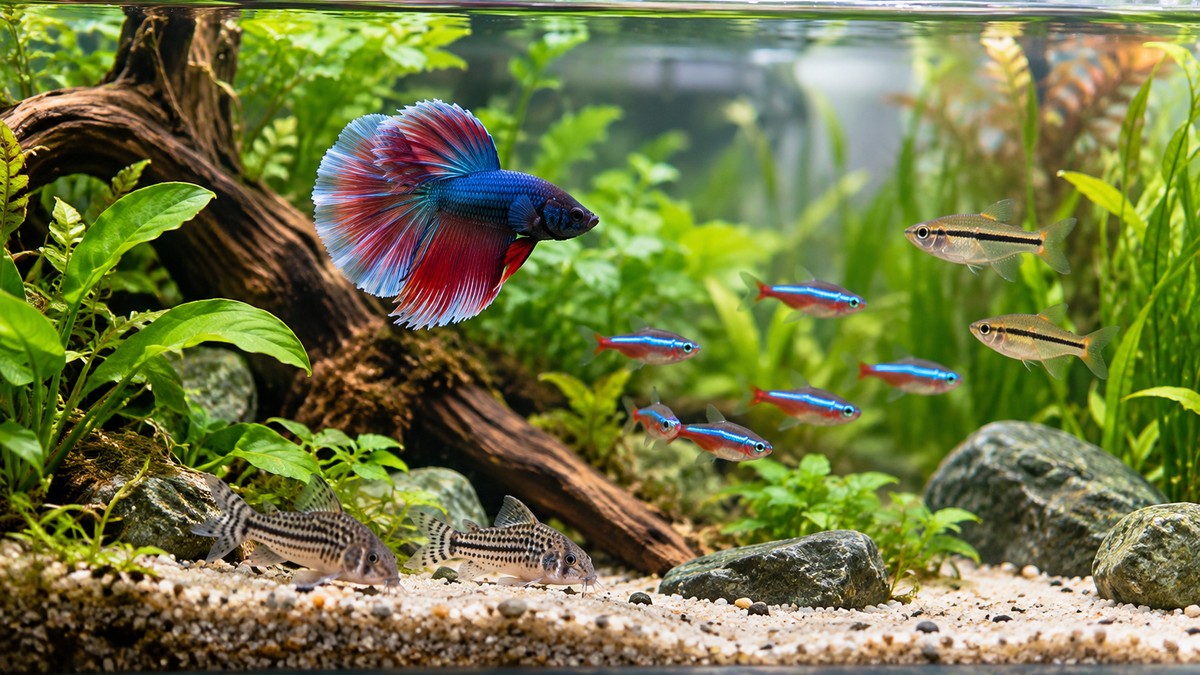
What fish go good with bettas depends less on a magic species list and more on a few conditions: a roomy tank, plenty of plants and hiding places, and tankmates that are not small, slow, or brightly finned like the betta itself. A reference on the species notes that bettas are compatible with many other aquarium species despite the popular belief otherwise, and that they are typically aggressive only toward smaller, slower fish such as guppies. This guide explains how to think about tankmates, which situations to avoid, and how to set up the tank before you add anyone.
Quick answer
- Bettas are described as compatible with many aquarium species, but they tend to attack smaller, slower fish.
- Never house two males together; males are highly territorial and a fight without an escape usually kills one or both.
- If you keep a betta with other fish, the reference says to plan for at least 45 litres (about 10 gallons).
- Dense plants and surface cover matter, because wild bettas live in shallow, vegetated water and claim a territory around a plant or alcove.
Why the answer is “it depends”
Bettas come from mainland Southeast Asia, including Cambodia, Laos, Myanmar, Malaysia, Thailand and Vietnam, where they live in shallow, vegetated water such as marshes, floodplains and paddy fields. Wild bettas prefer dense plants and surface cover like fallen leaves and water lilies, which give protection and territory. All members of the Betta splendens complex have aggressive tendencies in the wild, and the pet-trade fish have been line-bred for aggression. That is why advice about tankmates is mixed: the same fish can be peaceful with one tankmate and violent with another.
The useful way to think about it is to ask three questions. Is the tankmate likely to be seen as a rival or as food? Can it get away from the betta? Does the tank have room for both of them to avoid each other?
Which tankmates tend to cause problems
Other male bettas
Males must be kept apart from other bettas. Housing males together without a way to escape usually kills one or both. Females can also become territorial in confined spaces and form a stable pecking order, so even a group of females needs space and careful watching.
Smaller, slower fish
The reference names guppies as an example of fish a betta may be aggressive toward. Small, slow fish with long, showy tails can trigger the same response, because the betta may read them as rivals or as prey. Wild bettas eat almost any animal small enough to swallow, including worms, insect larvae and smaller fish, and bettas are carnivorous, so very small fish are a risk.
Fish that nip fins
Our sources do not list specific nippy species, so we will not name them. As a general rule, a betta has long, flowing fins, and any fish known for pulling at fins is a poor match. Check the care notes for any species before you buy.
Fish that need cold or fast water
Our sources do not cover temperature ranges for specific tankmates. Whatever you choose, make sure it can live in the same water conditions as your betta. Our post on whether betta fish can live with goldfish looks at one pairing people often ask about.
What makes a tank ready for tankmates
Tank size
The reference gives at least 45 litres, about 10 gallons, if a betta is kept with other fish. Smaller tanks leave little room to separate, and a territorial fish has nowhere to retreat. A betta alone in a small tank is a different situation from a betta in a community, and the numbers in the reference apply to the latter.
Plants and surface cover
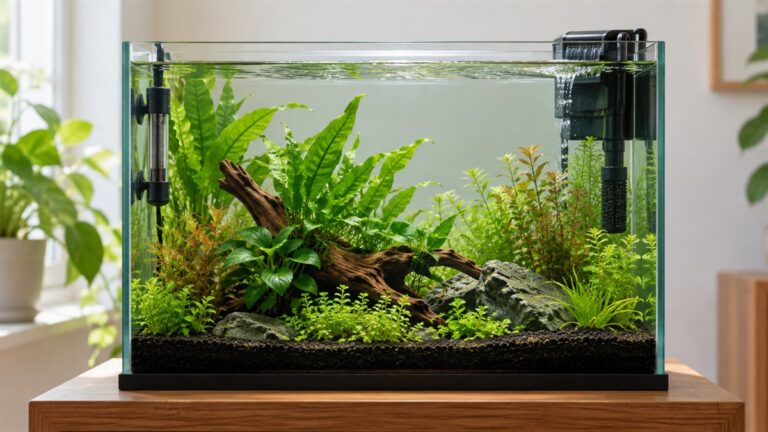
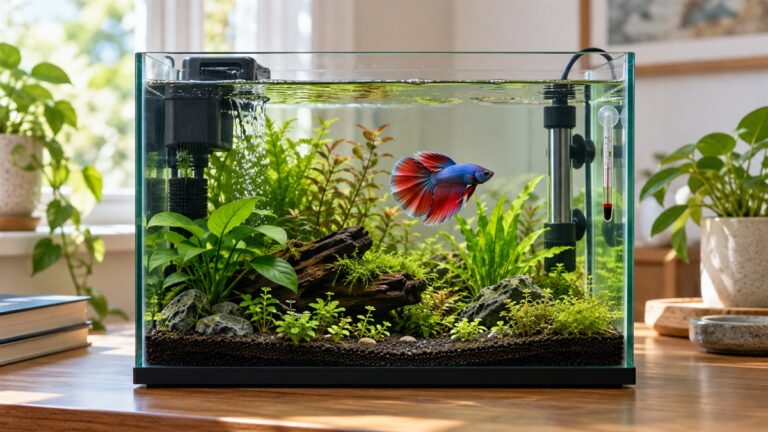
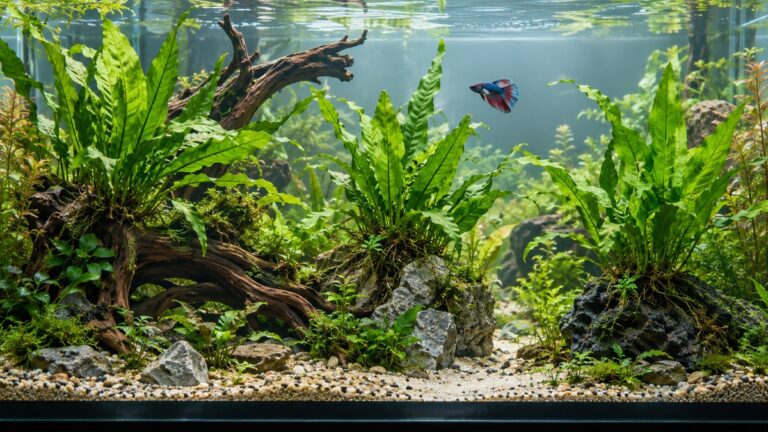
Wild bettas rely on dense plants and surface cover. In a tank, that means live or artificial plants that break up the line of sight, and floating leaves or surface plants where the betta can rest. The labyrinth organ lets the betta breathe air at the surface, and it can rest on objects above the water, so give it access to the top of the tank. Our list of plants that are good for betta fish is a place to start, and good decorations for betta fish covers caves and ornaments.
Territories
Bettas often claim a territory centered on a plant or rocky alcove, even when housed alone. In a community tank, arrange the decor so that the betta can have its spot without controlling the whole tank. Use several hiding places at different heights.
Filtration and flow
Our sources note that power filters can produce excessive flow in small tanks and that sponge filters are considered ideal for small tanks. Strong current is hard on a fish with long fins, so a gentle filter matters more once you add other fish and their waste. Waste from more fish raises the load on the filter, and accumulated ammonia is the largest cause of fish deaths in new, poorly maintained or overloaded aquaria.
How to add tankmates safely
- Cycle the tank first. New tanks often suffer new tank syndrome, and one suggested approach is adding fish slowly over 6 to 8 weeks.
- Decide on the betta first, then the others. Some keepers add the betta last so it does not claim the whole tank before others arrive. That is a common practice, not a rule from our sources, so use your own judgment.
- Add one species at a time. Adding fish too quickly to an immature aquarium can cause many deaths.
- Watch closely. Look for chasing, hiding, torn fins, or a fish that stays in a corner. These signs mean the pairing is not working.
- Have a backup plan. A spare tank or a divider lets you separate a fish quickly. See our guide on how to introduce a betta fish to a new tank.
Water conditions that all tankmates share
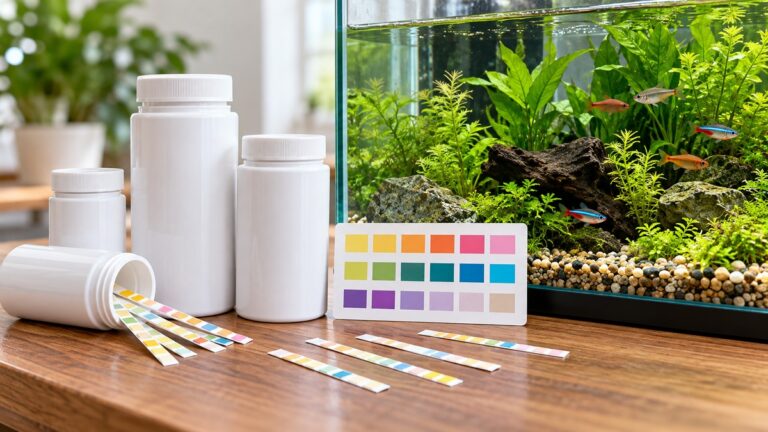
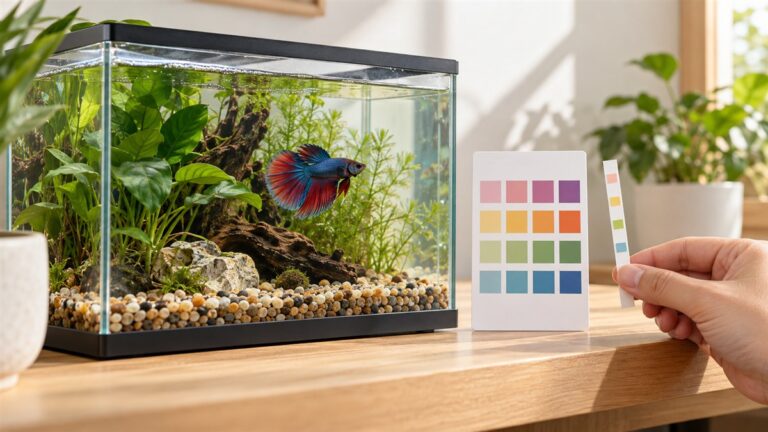
Tap water must be treated for chlorine or chloramine before use, and temperature consistency matters more than the exact range because sudden changes can cause shock and disease. Tropical aquaria commonly run near 25 degrees C (77 degrees F). Two points from our water posts may help: is distilled water good for betta fish explains why plain distilled water is a poor base, and consistent routines keep every fish steadier.
Lighting and rest
Fish need a day and night pattern. A tank that is lit around the clock stresses most fish. If you are unsure, read betta fish light at night and set a schedule with a betta fish light timer.
Mistakes to avoid
- Putting two males in the same tank, even with a divider that lets them see each other constantly.
- Adding small, slow, or brightly finned fish and hoping the betta ignores them.
- Using a tank under the roughly 10 gallon guide when you want a community.
- Leaving bare tanks without plants or caves.
- Overcrowding. Stocking rules of thumb exist, such as 1.5 litres of water per centimeter of fish length, but the source warns against applying them mechanically.
- Ignoring a mismatch because “the store said they get along.”
When to stay with a single betta
Bettas kept alone are common for good reasons. A single betta needs no compatibility testing, no extra filtration load and no monitoring for fights. If your tank is small, if you cannot provide hiding places, or if you want to avoid stress, a single betta in a well-planted tank is a fine choice. The reference states that keeping bettas in vases or bowls is harmful to their health and behavior, so even a solo betta needs a proper tank with filtration and heat. If you notice your fish looks unwell, ask a fish vet rather than guessing.
FAQ
Can bettas live with other fish at all?
Yes. The reference says bettas are compatible with many other aquarium species, despite a popular belief to the contrary. The main trouble is with smaller, slower fish.
Can I keep two male bettas together?
No. Males are highly territorial, and housing them together without a way to escape usually kills one or both.
What tank size do I need for a community?
The reference says at least 45 litres, about 10 gallons, if a betta is kept with other fish.
Why does my betta flare at the glass?
Males may flare at their own reflection, and prolonged exposure can cause stress. Add plants or a background to reduce reflections.
Are female bettas peaceful?
Not always. Females can become territorial in confined spaces and form a stable pecking order.
Can a betta live with a goldfish?
That pairing raises its own questions about water and temperature. Read can betta fish live with goldfish before trying it.
Bottom line
Pick tankmates that are not small, slow or flashy, give the tank at least about 10 gallons with dense plants and hiding places, never house two males together, add fish slowly, and be ready to separate any that do not work out.