Is Algae Bad for Betta Fish?
As an Amazon Associate we earn from qualifying purchases.
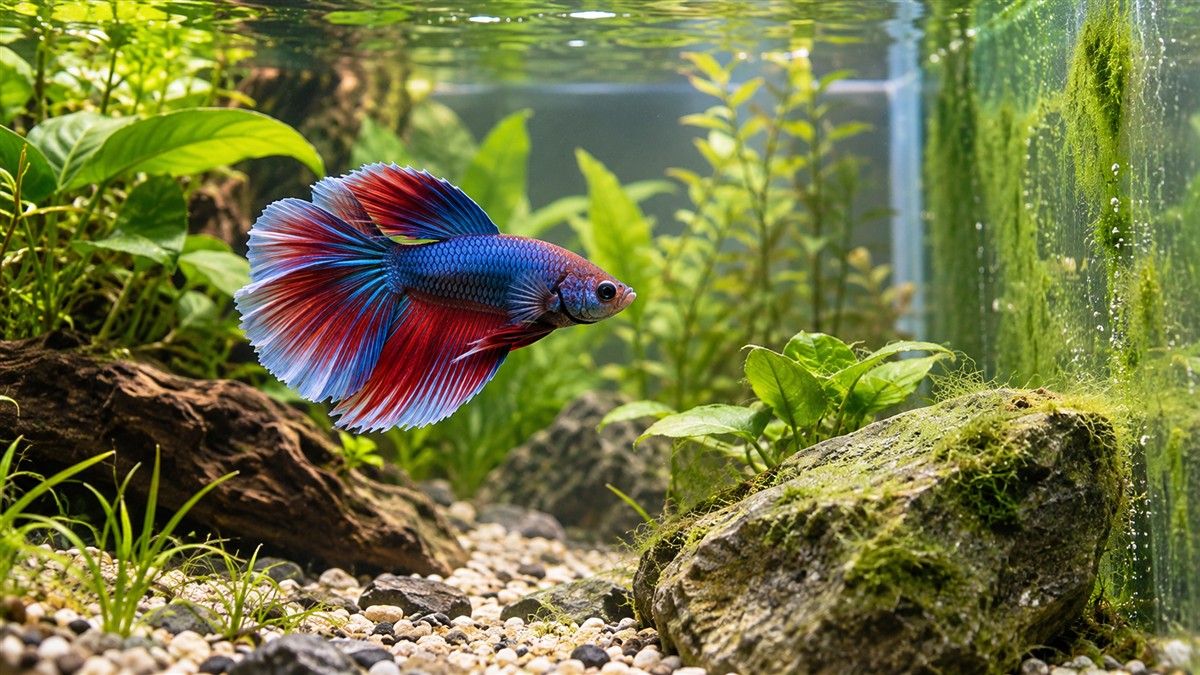
Is algae bad for betta fish? A small amount is not harmful. The Merck Veterinary Manual says that “a moderate amount of algae is not harmful.” The problem is buildup. Thick algae on the glass or floating in the water is unsightly, makes it harder to spot health problems in the fish, and means the tank needs more cleaning. This guide explains what the sources we opened say about algae in a betta tank, what feeds it, and what to check when you see more of it.
Quick answer
- A moderate amount of algae is not harmful, according to the Merck Veterinary Manual.
- Heavy buildup is the real problem. It hides the fish from view, makes the tank harder to read, and adds cleaning.
- Direct sunlight, too many hours of light, and extra nutrients feed algae, so control those first.
- Algae does not tell you the water is safe. Test the water, because poor water quality is a common cause of disease in aquarium fish.
What the sources say about algae
The Merck Veterinary Manual covers algae in its guidance on providing a home for indoor fish. It advises that the tank be placed where direct sunlight does not reach it, and gives the reason: “This helps limit the growth of algae in the tank.” The same passage separates two situations. A small amount is tolerable. A large amount is not, because “a buildup of algae on the glass or in the water is unsightly and makes it harder to spot any health problems with the fish or their environment.” The manual adds that the tank then “requires more cleaning.”
That distinction is the core of the answer. In the sources we opened, algae is treated as a sign of light and nutrients in the water and as a problem for visibility and maintenance. None of the sources we opened describes a common aquarium algae as a direct poison to bettas. That is different from saying algae is always harmless, so the rest of this guide explains where the risk actually comes from.
Why a heavy buildup matters for a betta
Bettas are labyrinth fish. The University of Florida publication on betta evolution and care explains that labyrinth fishes “often do not rely primarily on the gills for respiration,” and that many are “obligate air breathers, meaning they must breathe at the surface to survive.” A betta still needs stable water conditions and a tank where its keeper can see it clearly every day. A film of algae works against both.
Temperature is the first link to watch. The Merck manual says sunlight can “cause the water temperature in the tank to rise. The warmer the water becomes, the less oxygen it will hold. If the water gets too warm, the fish can suffocate and die.”
The second link is observation. A betta that is hard to see behind a green or brown film is harder to check during a normal daily look. Merck’s point is exactly this: a buildup makes it “harder to spot any health problems with the fish or their environment.” If you see a change in your betta’s behavior, appetite, or appearance, do not wait for the glass to clear. Describe what you see to an experienced fish keeper or an aquatic veterinarian.
What feeds algae in a betta tank
The sources name three main drivers of algae growth.
- Light. Merck’s advice to keep the tank out of direct sunlight is aimed at limiting algae growth. Light from a fixed lamp on a timer is a different case, and the sources address it separately, as described below.
- Nutrients. Merck says that aquatic plants “help prevent the growth of algae by absorbing nutrients that would otherwise feed the algae.” This passage appears in the manual’s section on outdoor ponds, so treat it as a general principle rather than a betta-specific rule.
- Nitrates and minerals. Merck describes the nitrogen cycle. Beneficial bacteria turn ammonia into nitrites, and then other bacteria turn nitrites into nitrates. The manual says that “nitrates can be used by plants and algae as food, or they can be removed by water filtration.” It also states that “Dissolved minerals can also lead to excess algae growth.”
Uneaten food and waste are part of the same picture, but the sources frame them around water quality rather than algae directly. The UF/IFAS publication ties regular water changes to keeping “uneaten feed as well as ammonia and other dissolved wastes” from reaching harmful levels. Removing leftover food promptly therefore helps water quality. The sources do not give a figure for how much leftover food is too much.
Lighting and routine care
Light is the easiest factor to control. Merck states that “Fish need a day/night cycle for optimal health. Leaving the lights on 24 hours a day, 7 days a week stresses fish, leaving them more susceptible to disease.” A timer that gives the tank a fixed on-and-off schedule solves the problem of lights left on all day, and it also keeps the tank from being lit at odd hours while you are away.
The manual’s routine care schedule lists a weekly task of “Remove any algae from glass” alongside topping up water that has evaporated and cleaning the glass cover. The schedule is written for aquariums in general, not for bettas, but the task is simple and fits any small tank.
Plants are part of the same routine. The manual’s description of aquatic plants is about nutrient uptake, not decoration. Plant choice for a betta tank is covered in the live plants for betta fish tank guide, and the sources in this article do not rank one plant over another.
Water quality still comes first
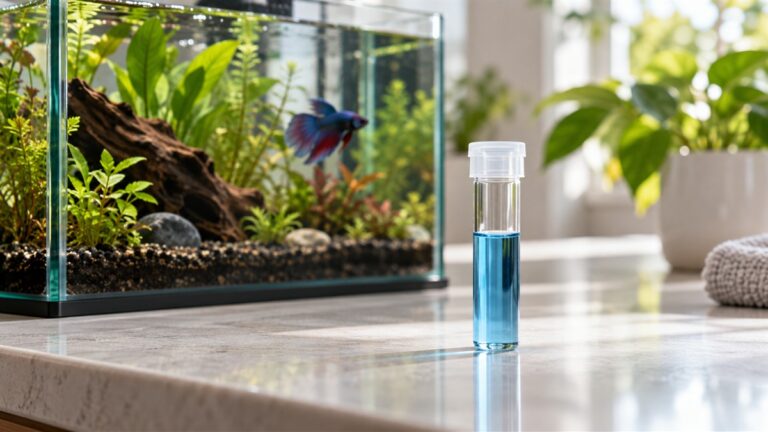
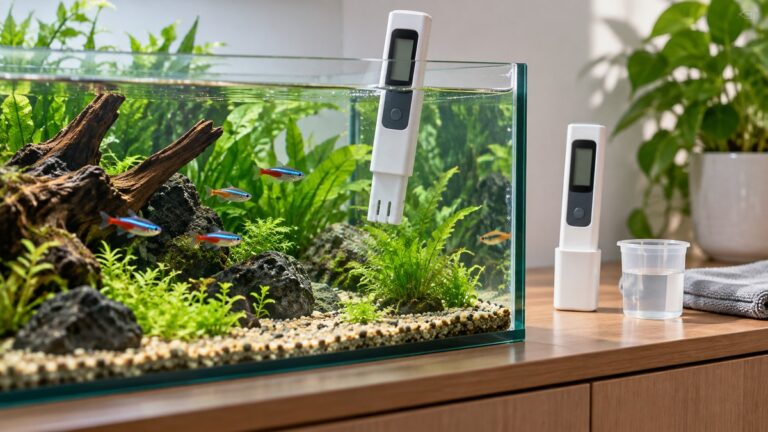
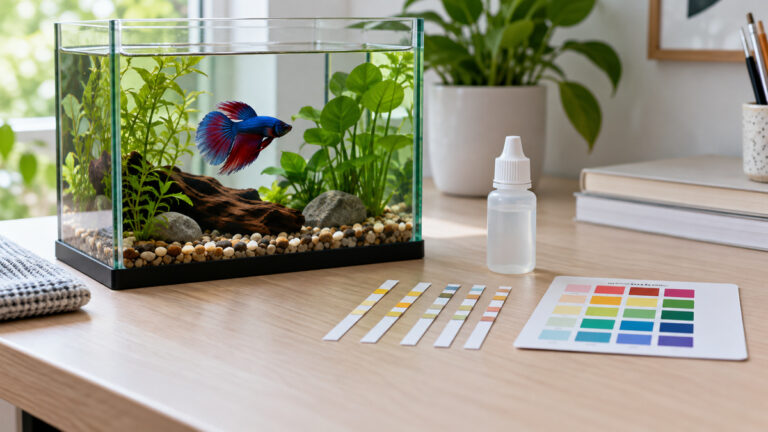
Algae is visible, and water quality is not. Merck says the water should be tested before fish are added, and that a home test kit “lets you include water quality testing as part of routine water changes and cleanings, including filter medium changes.” A clear tank can still have ammonia or nitrite problems, and a green tank can have acceptable water. Algae alone cannot tell you which is true.
Tap water needs treatment before it goes in. Merck explains that most city water is treated with chlorine or chloramine, “both of which are toxic to fish and to the necessary bacteria that grow in your aquarium,” and that dechlorinators “should be used to treat any new water that goes in the aquarium.” Water changes that skip this step can disturb the bacteria that keep the nitrogen cycle working, which is one reason algae and water quality should be checked together.
Filtration needs care too. The UF/IFAS publication says that “Bettas prefer calm water as shown by research using flow as a stressor, so heavy filtration may actually be harmful to a betta’s health and welfare.” A strong filter does not solve algae on its own, and it can add stress. A gentle filter, regular water changes, and a timed light are a more sensible starting point. For tank size and setup, see the betta tank size guide.
Algae types and what to do next
The sources we opened do not sort algae types by risk for bettas. Two betta-specific pages on this site cover common cases in more detail: red algae in a betta tank and brown algae in a betta tank. Check those for the specific growth you see.
The practical sequence is simple. Move the tank out of direct sun. Set a light timer. Clean the glass weekly. Test the water and act on the results. Keep plants healthy. If the fish changes, look at the fish first and the algae second.
How we chose
We chose sources that are veterinary references or university extension publications rather than product listings. The main sources were the Merck Veterinary Manual pages on fish housing and routine care, and the University of Florida IFAS publications on betta biology and care and on fish nutrition. We kept only statements that a source we opened on 2026-10-24 directly supports, and where a sentence could be read more strongly than the source intends, we quote the source wording exactly. No retail page, price, rating, or product listing is used for any claim in this guide.
What we could not verify
The sources we opened do not give a safe threshold for how much algae is too much in a betta tank. They describe the trend, a moderate amount versus a heavy buildup, but they do not put a number on it. They also do not sort algae species by risk, and they do not describe how any common aquarium algae affects a betta’s health directly.
What the sources do not say
- Whether any specific algae species is toxic to bettas.
- Whether a betta eats algae in a home tank in a meaningful amount.
- How many hours of light a betta tank should receive each day.
- What nitrate level is too high for a betta.
- How often a small betta tank needs its glass cleaned beyond the weekly routine.
Frequently asked questions
Is green algae in a betta tank dangerous?
The sources we opened do not single out green algae as dangerous. Merck’s position is that a moderate amount of algae is not harmful, and that a buildup is a problem because it is unsightly, hides health signs, and adds cleaning. If your betta is changing in behavior, appetite, or appearance, look at the fish first and speak with an experienced fish keeper or an aquatic veterinarian.
Can betta fish eat algae?
The sources do not give a clear answer for a home tank. The UF/IFAS nutrition publication notes that in natural systems with algae and phytoplankton, “vitamin supplementation seems to be less important, presumably because of the availability of natural food items.” That statement is about natural systems and vitamin supplementation, not about a betta eating algae in a glass tank. Feed your betta a complete diet and do not rely on algae as food.
Should I remove algae from the tank?
Yes, for the glass and the visible parts of the tank. Merck’s routine schedule lists “Remove any algae from glass” as a weekly task. Keeping the glass clear lets you see the fish, which is the reason the manual gives for keeping the tank clean. The sources do not say that scraping algae removes its underlying cause, so pair the cleaning with light control and water testing.
Does algae mean my betta tank is dirty?
Not necessarily. Merck links algae growth to light, nutrients, and dissolved minerals, and it does not equate algae with dirty water. Algae can be present in a tank with good water quality, and a tank with clear glass can still have a water problem. The only reliable way to know is to test the water. The manual says water quality should be monitored and tested before fish are added.
When should I see a vet about a sick betta?
Take the fish to a vet when you see signs of illness that do not clear after you correct water and light. The UF/IFAS publication says that “If a disease outbreak does occur, proper diagnostics, including working with a fish veterinarian, will be key to successful management.” It also warns that “Many drugs and chemicals can do more harm than good if they are used inappropriately.” Do not treat a sick fish with medication based on an algae article. Ask an aquatic vet.
Sources
- Merck Veterinary Manual, “Providing a Home for Indoor Fish,” Fish section, https://www.merckvetmanual.com/all-other-pets/fish/providing-a-home-for-fish (opened 2026-10-24).
- Merck Veterinary Manual, “Routine Health Care of Fish,” Fish section, https://www.merckvetmanual.com/all-other-pets/fish/routine-health-care-of-fish (opened 2026-10-24).
- University of Florida IFAS Extension, FA212, “Evolution, Culture, and Care for Betta splendens,” https://edis.ifas.ufl.edu/publication/FA212 (opened 2026-10-24).
- University of Florida IFAS Extension, FA096, “Fish Nutrition,” https://edis.ifas.ufl.edu/publication/FA096 (opened 2026-10-24).