How Much Water Does a Betta Fish Need?
As an Amazon Associate we earn from qualifying purchases.
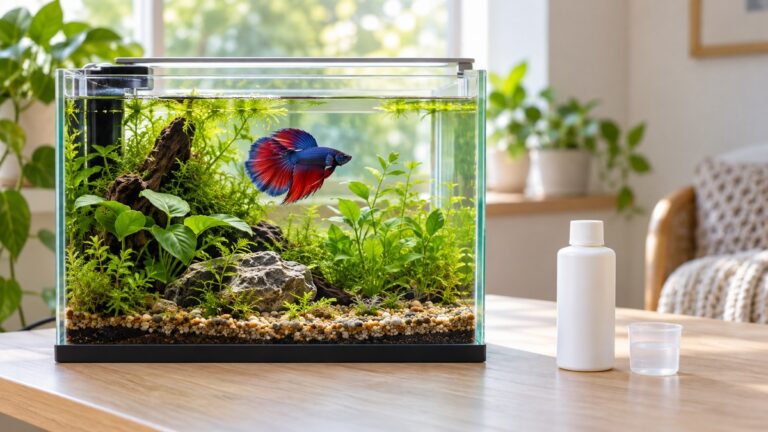
How much water does a betta fish need? The sources we checked point to more than a bowl holds. One general reference says bettas kept with other fish need at least 45 litres, about 10 gallons, and that keeping them in vases or bowls harms their health and life expectancy. The same reference does not give a single “minimum” for a betta housed alone, so this guide explains how to think about volume, what the sources do and do not say, and how to pick a size you can keep steady.
Quick answer
- A source on the species says bettas housed with other fish need at least 45 litres (about 10 gallons).
- The same source says vases and bowls harm a betta’s health and life expectancy.
- A larger volume of water is more stable than a small one, which is why beginners are often advised to start bigger.
- Plan on partial water changes, with a conditioner for tap water, rather than rare full changes.
What the sources actually say about volume
It helps to be clear about how much hard information exists. The species article we read gives one number: at least 45 litres (about 10 gallons) when bettas share a tank with other fish. It does not set a recommended volume for a betta kept alone, and it does not give a recommended water temperature or pH for an aquarium. It does say that keeping bettas in vases or bowls harms their health and life expectancy. That is the strongest statement in the sources, and it is a reason to think of a bowl as a poor starting point rather than a “small but fine” choice.
A second general aquarium reference makes a different point that applies to every tank: larger volumes dilute disturbances. In a big tank, a spike of waste or the loss of a single animal has far less effect than in a small one. For that reason it advises beginners to start with larger tanks, because smaller tanks are harder to keep stable. It also defines “nano” aquariums as generally under 75 litres (20 gallons), so even a 5 or 10 gallon betta tank sits in the nano range, where small mistakes show up fast.
If you want the gallon-by-gallon discussion, we cover it in what gallon tank a betta fish needs. This page is about the water itself: what the volume does for the fish and how to manage it.
Why a bigger volume of water helps
A betta produces waste, and uneaten food breaks down. In a closed tank that waste has nowhere to go except into the water. The filtration reference describes the cycle: bacteria living on porous media convert toxic ammonia to nitrite and then to nitrate, and nitrate is removed through regular partial water changes. The same amount of waste is spread through more water in a bigger tank, so the concentration rises more slowly and the tank has more room for error.
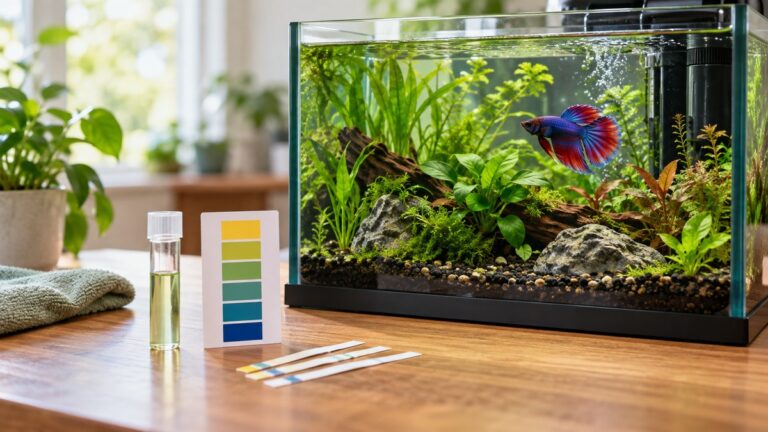
The aquarium reference also notes that live plants absorb nitrate and take up ammonia, which can help keep levels low, though decaying leaves release nutrients back into the water unless you remove them. This is one more reason volume and planting go together: a roomier tank gives you space for plants and a steadier base to work from.
Wild habitat: shallow, but not tiny
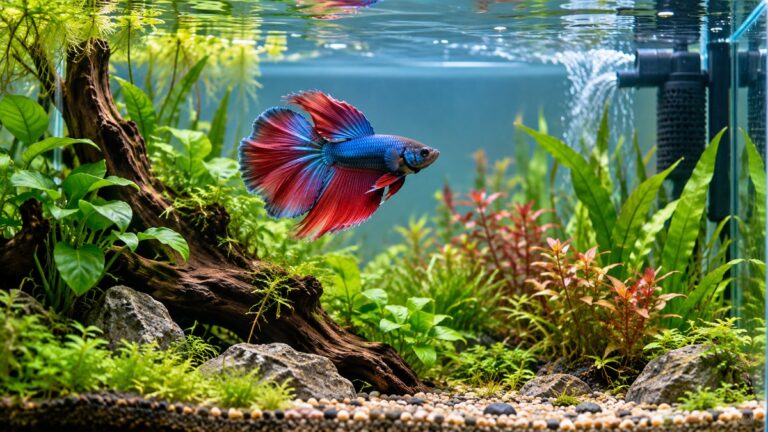
One argument for a small container goes, “bettas come from shallow puddles.” The species source does describe wild bettas living in shallow, densely vegetated water such as marshes, floodplains and paddy fields. But “shallow” describes depth, not size. Those habitats spread out over a large area, and the fish can move through plants, claim territory around plants or rocky alcoves, and use the surface. The source notes that even when housed alone, bettas set up territories around plants or hiding spots. A tank that is wide enough to hold plants and hiding places is closer to that picture than a bowl is.
The source also says bettas have a labyrinth organ that lets them breathe air at the surface, which is why they tolerate low oxygen and poor water quality. That ability is sometimes used to argue that bettas do fine in tiny containers. Tolerating poor water is not the same as doing well in it, and the same source ties bowls and vases to harm. Treat the labyrinth organ as a reason bettas survive mistakes, not as a reason to make them.
Volume, water changes and a simple routine
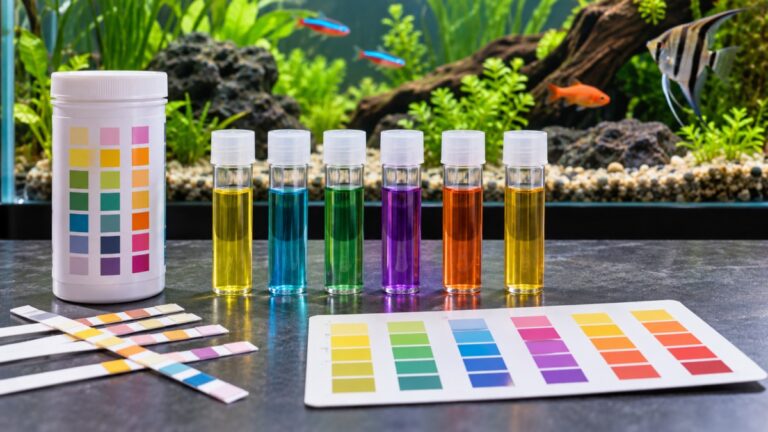
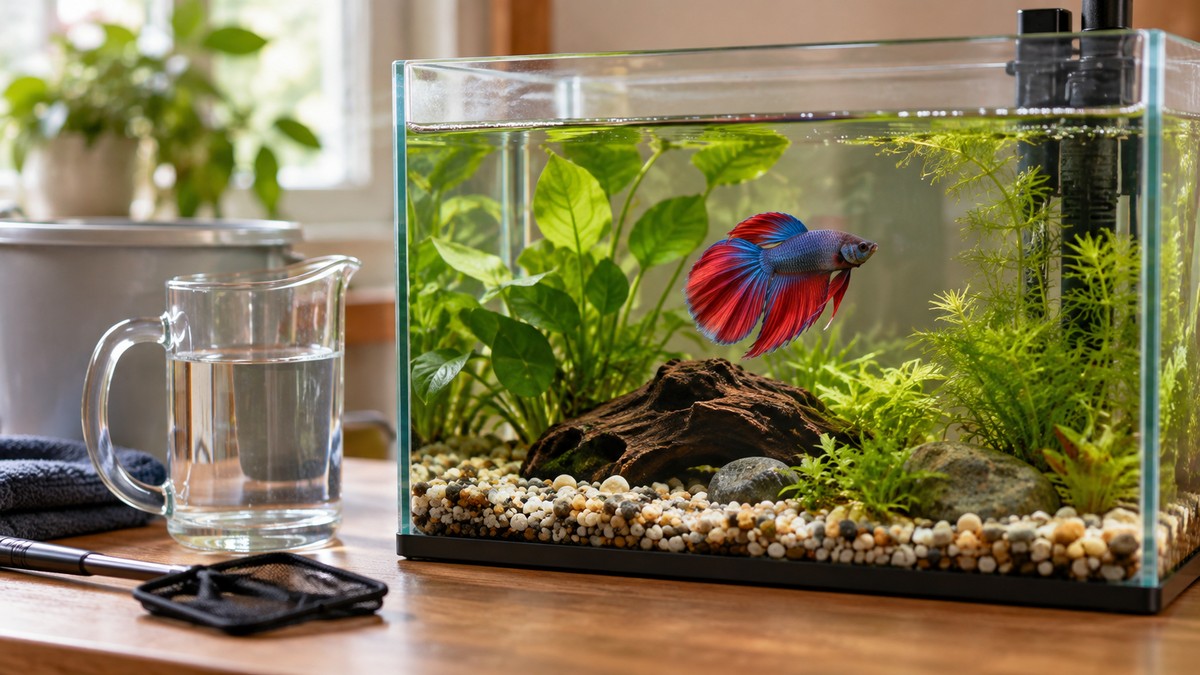
The general aquarium reference says typical weekly maintenance replaces roughly 10 to 30 percent of the water, usually while vacuuming the substrate to remove uneaten food and waste. It also says tap water often needs a conditioner to neutralize chlorine, chloramine and heavy metals, and that water chemistry should be checked in both the tank and the replacement water. Those are general aquarium points, not betta-specific rules, so use them as a starting framework.
- Pick the largest tank that fits your space and budget. More water means slower swings.
- Change part of the water on a schedule. A weekly partial change in the 10 to 30 percent range is the figure the aquarium reference gives.
- Condition new water before it goes in if you use tap water.
- Vacuum the substrate to lift uneaten food and waste during the change.
- Check the replacement water as well as the tank.
A smaller tank usually needs you to stay on this routine more tightly, because there is less water to absorb a missed week. If the sources do not cover a detail, such as the exact temperature to hold, check a betta-specific care guide or ask an aquatic vet rather than guessing.
Common mistakes with water volume
Starting with a bowl because it is cheap
The species source links bowls and vases with harm. A small container may look tidy on a desk, but it gives you the least water to work with and the least margin for error.
Counting the gallon number on the box as usable water
A tank’s listed volume is not always what it holds once substrate, rocks and decor are in. Listings use their own wording for volume. For example, one desktop kit in our catalog lists a 5 gallon tank volume, while a round glass bowl lists 0.6 gallons. Treat listed volume as a ceiling rather than a promise.
Skipping the conditioner
The aquarium reference is explicit that tap water often needs a conditioner for chlorine, chloramine and heavy metals. Fresh tap water poured into a small volume changes the chemistry more than the same pour into a big tank.
Never removing decaying plant matter
Plants help with nitrate and ammonia, but the reference says decaying leaves release nutrients back into the water unless removed. Pick off dead leaves during your regular change.
Water you may be adding
Where your water comes from matters too. If you are wondering whether you can fill a tank with bottled water, see can I use bottled water for betta fish. If your tap water is hard, is hard water bad for betta fish goes through what the sources say. Temperature is a separate question covered in can betta fish live in cold water.
FAQ
Is a bowl enough water for one betta?
The species source we read says keeping bettas in vases or bowls harms their health and life expectancy. It does not set a precise minimum for a betta kept alone, but it clearly points away from bowls.
What is the minimum for a betta with tank mates?
The same source says bettas housed with other fish require at least 45 litres, about 10 gallons. Mixing species brings other questions, so research each tank mate before adding it.
Is a bigger tank always better?
The aquarium reference says larger volumes dilute disturbances and that smaller tanks are harder to keep stable, so a bigger volume gives you more margin. It also notes home aquariums are practically limited by the weight of the water, so choose a size your stand and space can carry.
How often should I change the water?
The general aquarium reference describes weekly maintenance replacing roughly 10 to 30 percent of the water. Betta-specific schedules can differ, so follow a betta care guide for your setup.
Do plants replace water changes?
No. The reference says live plants absorb nitrate and take up ammonia, which helps, but decaying leaves can put nutrients back in, and regular partial changes remain part of normal maintenance.
My betta looks unwell. Is it the water volume?
We cannot diagnose a fish. If a betta looks sick, ask an aquatic vet. For one visible sign people ask about, see what dropsy looks like in betta fish, which also tells you to involve a vet.
Bottom line
Choose the biggest tank you can keep clean, skip the bowl, and commit to regular partial water changes with conditioned water. The sources are firm that bowls and vases harm bettas and that bigger volumes are steadier; beyond that, check a betta-specific guide for the details they do not cover.