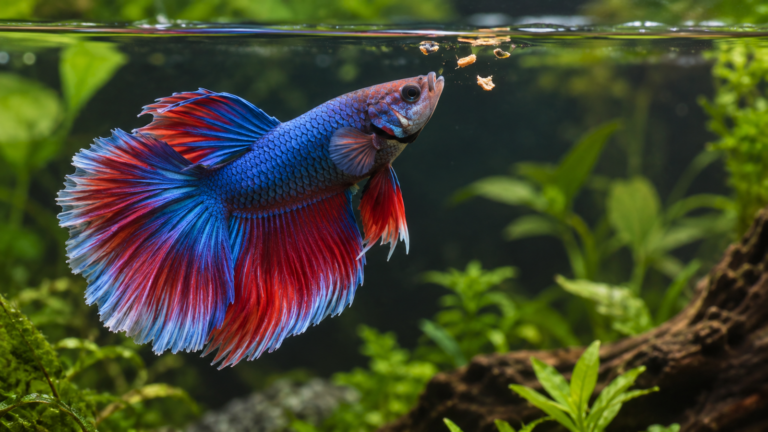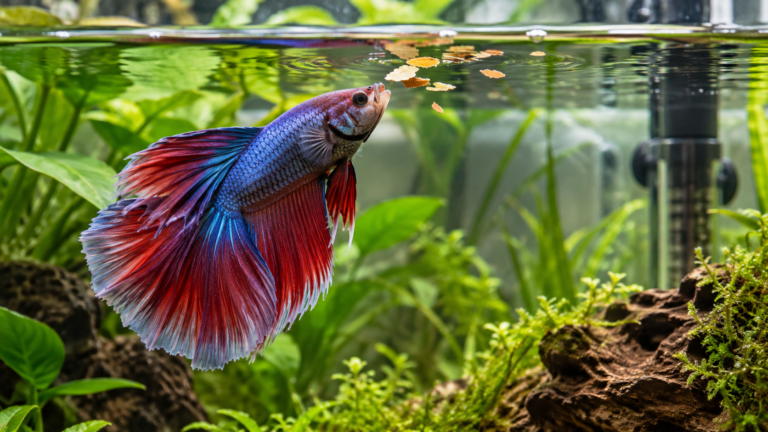
Can Betta Fish Survive Without Food? Feeding Limits
As an Amazon Associate we earn from qualifying purchases.
A betta fish can survive without food for around 12 to 14 days according to one hobby guide, but surviving is not the same as being fine, and most keepers should treat that number as a ceiling and not a plan. Short breaks of three to five days are described by the same guide as comfortable for a healthy adult fish. Beyond that, the risks grow: weaker fish, stress, and possible internal damage. This article explains the limits, what changes the timeline, what to do for a trip, and when to ask a vet.
Quick answer
- A healthy adult betta can go three to five days without food comfortably, per the guide linked at the end.
- Twelve to fourteen days is the survival figure that guide gives, and it warns that prolonged fasting can cause internal damage or organ failure.
- Young, new or sick bettas tolerate fasting less well.
- A betta that refuses food may be ill; ask a vet rather than waiting it out.
How long a betta can really go without food
Hobby sources give a range of numbers, and they do not agree. The Fishkeeping Academy guide says bettas can go 12 to 14 days before becoming lethargic or ill, but calls that non-ideal. Other fishkeeping pages quote shorter windows, from a few days up to about ten. Because these are hobby pages, not veterinary studies, the sensible reading is: a few days is routine, about a week is pushing it, and two weeks is an emergency limit.
The reason numbers differ is that a betta is not a standard animal. A well-fed adult in a healthy, stable tank has more reserves than a juvenile or a fish that is already unwell, and the tank itself matters too.
What changes the timeline
Age
Young bettas need more frequent feeding because they are still growing. A recently acquired fish that does not yet know its routine also tolerates fasting less well, according to the guide.
Health
Illness shortens fasting tolerance. A sick fish may lack the energy to scavenge leftover food, and one that refuses its food may be ill. The guide says it would be unwise to leave such a fish alone. If your betta stops eating, this is a case for a vet or a fish-experienced professional, not for guessing.
Tank size and setup
The guide says bettas need at least 40 liters and that bigger is better, since crowding adds stress. Hiding places and live plants reduce stress and may add a little food in the form of tiny organisms. Water quality needs to stay good, because a fasting fish in poor water is under a double load.
Water temperature
The guide gives 78 to 82 degrees Fahrenheit as the normal range. For absences over about a week it describes cooling the tank to 72 to 76 degrees to slow metabolism, then warming it back gradually on return. If you plan to try that, keep the change small and slow, and check with a fish-experienced vet or shop first.
Is skipping a day or two healthy?
The same guide describes occasional fasting as healthier than overfeeding, which creates waste and ammonia spikes. The author says they fast fish for a couple of days each week and believes it may help digestion and weight control. That is one keeper’s practice, not a veterinary rule, so treat it as an option for a healthy adult, not as advice for every betta. The guide also notes that a betta’s stomach is roughly the size of its eye, which is why overfeeding is a common mistake. Our post on whether you can overfeed a betta fish covers signs and fixes.
What a normal feeding routine looks like
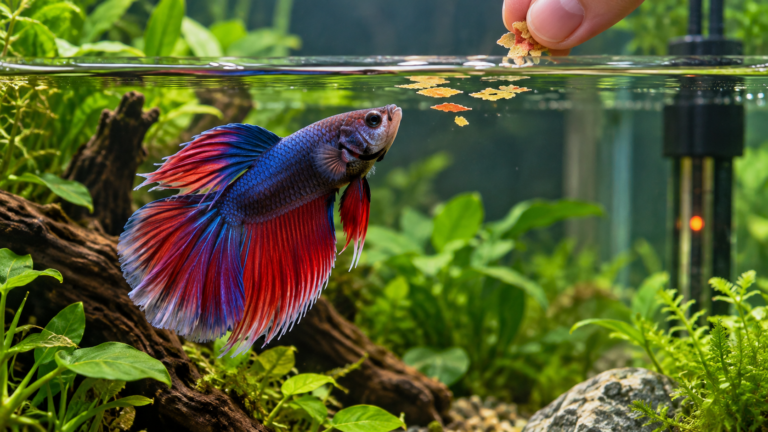
Bettas are carnivores. Suitable foods in the guide include commercial betta food, frozen bloodworms and brine shrimp, with vegetables only occasionally. A small betta needs about one pinch once daily, or two pinches if using betta pellets, and feeding can rise to twice daily as the fish grows. Leftover food after a morning feed is normal, since bettas often pick at food only when it first enters the tank. If food stays in the tank for a long time, remove it so it does not foul the water.
If you are going away
The guide lists several ways to cover a trip. For a few days, a healthy adult may simply be left, if the tank is in good shape. For longer, there are options:
- A trusted friend or neighbor. Give clear instructions on how much and how often. Pre-portioned pinches in labeled containers help avoid overfeeding.
- Automatic feeders. Useful, but clamp-on models often need a lidless tank, which is risky because bettas jump. Placing the feeder outside the tank with a small opening is one workaround.
- Slow-release blocks. These dissolve over time and suit occasional absences, not routine feeding. Quality and consistency matter so the fish is not overfed.
- Live food. Brine shrimp, mysis or freshwater scuds can be added. They do not rot, and the betta has to hunt them.
Before you leave
- Confirm the betta is eating well and looks healthy.
- Do a 30 to 50 percent water change a day or two before leaving, per the guide, and remember to use water conditioner. Our post on when to add water conditioner to a fish tank explains the order.
- Check the heater, filter and other equipment, and keep the tank out of direct sunlight and drafts.
- Do not overfill the tank, since bettas can jump.
Signs it is not just fasting
A betta that hides, floats oddly, will not take food it normally eats, or looks thin and listless may have a problem that has nothing to do with the schedule. The guide itself says it gives no veterinary thresholds, and recommends asking a veterinarian about any pet. This site does not give treatment advice for illness; a vet who treats fish is the right person to ask.
Mistakes to avoid
- Treating the 12 to 14 day figure as a vacation plan.
- Dumping a large amount of food in before leaving, which fouls the water.
- Leaving a fish that is refusing food on its own.
- Making big temperature changes without a plan to restore them.
- Assuming that “survive” means “no harm”.
FAQ
Can a betta go a week without food?
Some hobby guides say yes for a healthy adult, but the guide used here describes only three to five days as comfortable. A week is on the edge, so arrange feeding if you can.
What happens if a betta goes too long without eating?
The guide warns of possible internal damage or organ failure with prolonged fasting, and weaker, lethargic fish. If your fish looks unwell, ask a vet.
Can baby bettas fast?
Young bettas need more frequent feeding because they are growing, so they tolerate gaps less well than adults.
Is it OK to skip a feeding day?
For a healthy adult, the guide’s author does so a couple of days a week and finds it healthier than overfeeding. It is one keeper’s practice, so check with a vet if you are unsure.
Will my betta eat the plants or leftovers while I am away?
The guide says hungry bettas hunt leftover food and snails, and that live plants and hiding places reduce stress. It does not suggest relying on this as a feeding plan.
Bottom line
Plan on three to five days at most for a healthy adult, line up a feeder for anything longer, and never wait out a betta that refuses food.