How to Clean a Betta Fish Tank Without Stressing Your Fish
As an Amazon Associate we earn from qualifying purchases.
How do I clean my betta fish tank without upsetting my fish? Clean a little at a time: remove debris, replace only part of the water with conditioned water, vacuum the substrate, wipe algae from the glass, and rinse the filter media in old tank water instead of tap water. A betta does not need a full teardown, and a full teardown can do harm because most of the helpful bacteria live on surfaces and in the filter. Below is a routine you can repeat, with the reasons behind each step.
Quick answer
- Change roughly 10 to 30 percent of the water each week, and vacuum the substrate while you do it.
- Always treat replacement water with a conditioner that removes chlorine and chloramine.
- Rinse filter sponges or media in a bucket of tank water, never under the tap, and only part of them at a time.
- Do not move your betta out and scrub everything; leave the fish in unless you must remove it.
Why “cleaning” a fish tank is different from cleaning a bathtub
An aquarium is a small biological system. Fish waste, leftover food and rotting plant matter release ammonia, which is toxic to fish at high concentrations. In a healthy tank, bacteria turn ammonia into nitrite and then into nitrate, which is less harmful. Most of those bacteria live in the filter media, which is why the filter is central to the whole process. Nitrate builds up over time, and the way to remove it is to take out some water and replace it with fresh water. Live plants also take up some.
That is why scrubbing everything with soap or replacing all the water at once is a poor idea. You want to remove waste, not the bacteria that process it. The goal of each cleaning session is simple: take out solid waste, dilute dissolved waste, and leave the bacteria alone.
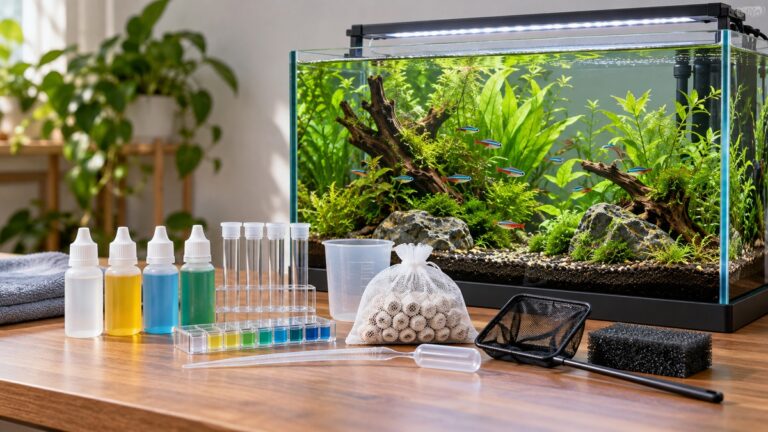
What you need
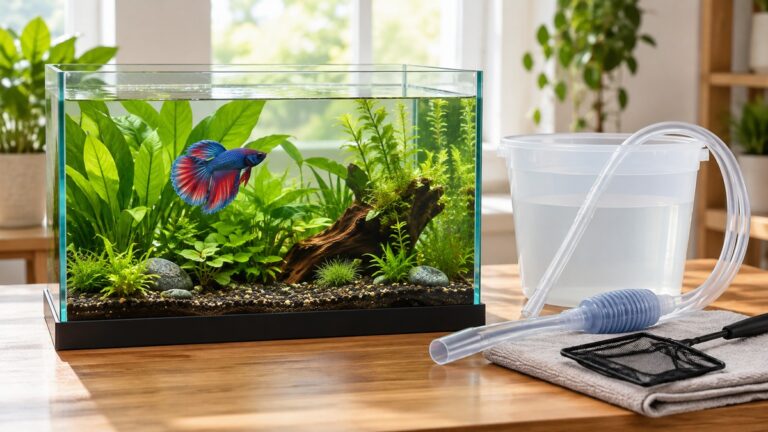
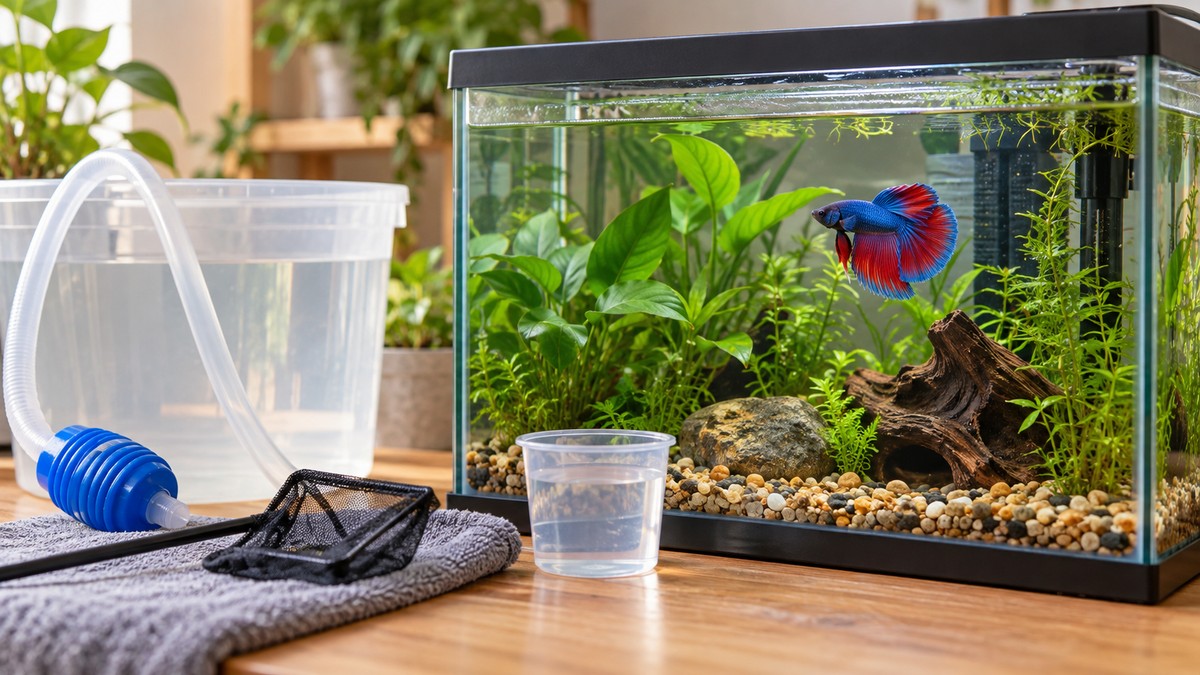
- A clean bucket used only for the aquarium (no soap residue).
- A small siphon or gravel vacuum sized for a small tank.
- A water conditioner that handles chlorine and chloramine.
- A soft algae pad or scraper that will not scratch your tank.
- A small net for removing debris and dead leaves.
- A thermometer so you can match the replacement water to the tank.
If you are still choosing your gear, see our guide on how to set up a tropical fish tank for the basic equipment and what betta fish like in their tank for what to keep in it.
Step-by-step weekly routine
1. Check the fish and the water first
General aquarium guidance suggests a quick look every day for signs of stress or disease, and a check that the water is clear and at a suitable temperature for the species. Do this before you start. If the fish looks unwell, a cleaning session will not fix it; ask a fish-experienced vet instead of adding treatments yourself.
2. Unplug the equipment
Turn off and unplug the heater and filter before the water level drops. A heater left running out of the water can be damaged, and you do not want to splash electrical gear. Leaving the equipment off for a few minutes is fine.
3. Remove debris and uneaten food
Net out dead leaves and any food the betta did not eat. Solid waste that stays in the tank decays and adds to the ammonia, and mechanical filtration does not work well if solid waste is left to rot in the water. Removing it by hand is the simplest step with the biggest effect.
4. Wipe algae from the glass
Algae grows when light, nutrients and plants are out of balance, and one common answer is to reduce the nutrients available to it. Wipe the inside of the glass with a soft pad. Do this before the water change so the loosened algae can be siphoned out. Do not use household cleaners near the tank. Regular water changes and not overfeeding also reduce algae.
5. Siphon the substrate and remove the old water
Push the siphon into the substrate in sections and let it lift the debris that has settled between the grains. This removes uneaten food and other residue while it drains water. Take out roughly 10 to 30 percent of the volume for a routine weekly change. Do not go through the whole tank on one visit; vacuum one area this week and another next week if the substrate is deep.
6. Prepare the replacement water
Tap water in many areas cannot be used straight because of chlorine or chloramine. Treat new water with a conditioner. Letting water stand can dissipate chlorine, but it does not work for chloramine, which is now common, so a conditioner is the safer choice. Match the temperature to the tank by checking both with a thermometer. A sudden temperature swing is stressful for a tropical fish.
If you wonder about bottled water, read can I use bottled water for betta fish first.
7. Refill slowly
Pour the treated water onto a clean plate or your hand so it does not blast the substrate or the fish, or refill with a small cup in a very small tank. Keep the fish in the tank during a partial change unless your siphon or water level makes that unsafe.
8. Clean the filter gently
Do this at a different time than a big water change if you can. The guidance is to rinse mechanical filter media in a bucket of aquarium water rather than tap water, which dislodges waste while preserving the bacteria. Clean only half of the media at a time, or alternate if you have two filters. Vigorous cleaning can upset the biological balance and cause a spike of ammonia. Replace media only when it is falling apart, not on a fixed date.
9. Turn everything back on and check
Plug in the filter and heater, make sure the flow is running, and watch your betta for a few minutes. He or she should be swimming normally. If the fish hides for a while, that can be normal after a disturbance; if you see clamped fins, gasping or a lack of appetite over the next day or two, consult a vet.
How often should you clean?
The general reference figure is a weekly partial change of about 10 to 30 percent along with gravel vacuuming, though some well-balanced tanks need less. Several things change the answer for your tank:
- Tank size. Larger volumes of water are more stable because they dilute waste and shocks, so a small tank needs closer attention. See the size guide at how big of a tank do betta fish need.
- Feeding. Overfeeding is the quickest way to load a small tank with waste.
- Plants and filter. A mature filter and live plants help process waste.
- Stocking. Overstocking raises the ammonia and can cause “nitrogen burn”, which can kill livestock.
The honest answer is to follow the schedule above and adjust to what you see: cloudy water, a smell, a film on the surface or a fish that looks off all call for an earlier change. We do not claim a single universal number. A water test kit would tell you more, and a vet or knowledgeable local fish store can help you read it.
What not to do
- Do not use soap or household cleaners on the tank, decor or equipment.
- Do not change all the water at once unless there is an emergency; it removes the stable conditions your fish has adjusted to.
- Do not scrub every surface the same day. Leave some decor and glass alone so bacteria remain.
- Do not rinse the filter under the tap. Chlorinated tap water can harm the colonies you are trying to keep.
- Do not skip the conditioner on a quick top-off.
- Do not remove the betta to a cup for a routine clean. Moving him around adds stress and the risk of injury to delicate fins.
Full cleanouts: when and how
A full strip-down is for emergencies, such as a contaminated tank or a broken heater. If it comes to that, keep the old filter media in a bucket of old tank water so the bacteria survive, and plan on re-establishing the tank carefully. A new tank takes several weeks for its bacteria colonies to establish, and a tank stocked too quickly can suffer “new tank syndrome”. Moving a fish between tanks follows the steps in how to introduce a betta fish to a new tank. For a shorter version of this routine, there is also the best way to clean a betta fish tank.
Troubleshooting
The water goes cloudy right after a cleaning
Disturbed substrate or an over-cleaned filter can cloud the water. Give it time, avoid another large change, and check whether you overfed. Persistent cloudiness or a bad smell is a reason to test the water.
Algae returns quickly
Algae is a sign that nutrients are not being used up. Reduce feeding, remove decaying plant material, vacuum regularly and review the light period. Some fish and invertebrates eat algae, but do not add animals to a betta tank without checking that they suit him.
The betta looks unwell after a change
A temperature mismatch or untreated tap water are the usual suspects. Check the temperature and that you used a conditioner. For symptoms, ask a vet; this site does not offer treatment advice.
FAQ
Should I take my betta out when I clean the tank?
For routine partial changes, no. Leaving him in reduces handling stress. Work slowly and keep the siphon away from his fins.
How much water should I change?
A common general figure is about 10 to 30 percent weekly with substrate vacuuming. Adjust for tank size, feeding and filter, and avoid replacing nearly all of it at once.
Do I need a water conditioner every time?
Yes, whenever your tap water contains chlorine or chloramine, which cannot be used untreated. Letting it stand does not remove chloramine.
How do I clean the filter without hurting the good bacteria?
Rinse the media in a bucket of tank water you just removed, squeeze it gently, and clean only part of it at a time. Avoid tap water.
Is it okay to clean decorations with soap?
No. Soap residue is a risk for the fish. Rinse decor in clean water and use a soft brush for algae.
Bottom line
Clean little and often: remove debris, change part of the water with conditioned, temperature-matched water, vacuum a section of substrate, rinse filter media in tank water, and leave the fish in. When something looks wrong with the fish, ask a vet instead of guessing.