Do Betta Fish Need Moving Water? Filter Guide
As an Amazon Associate we earn from qualifying purchases.
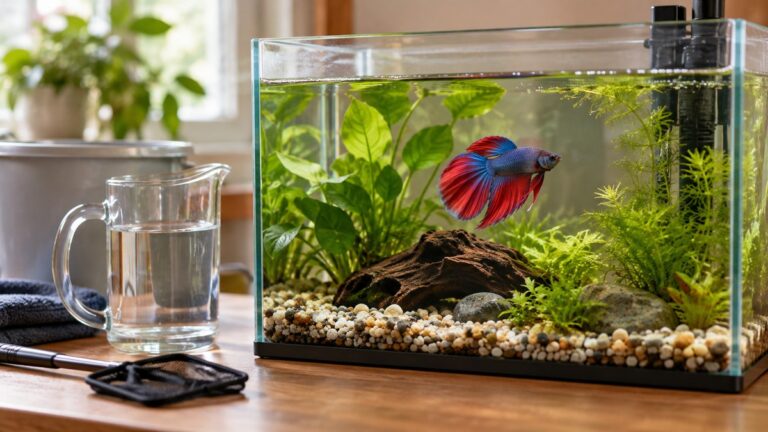
Do betta fish need moving water? They benefit from some gentle water movement, but not a strong current. The source cited here says bettas have long fins and struggle in strong currents, and that filtration should create enough surface agitation to prevent an oily protein film while supporting cleaner water and better oxygenation. So the target is a quiet, adjustable flow: enough to keep the surface from going still and stale, not enough to push your betta around the tank.
Quick answer
- Gentle surface movement is useful; strong flow is a problem for long-finned bettas.
- A gentle sponge filter, or a small filter with adjustable flow, is the type the source suggests.
- A larger tank, at least 5 to 10 gallons, gives you more room to place a filter without creating a current across the whole space.
- Warm water near 80°F is a separate need that a filter does not replace; a heater handles that.
What “moving water” does for a betta tank
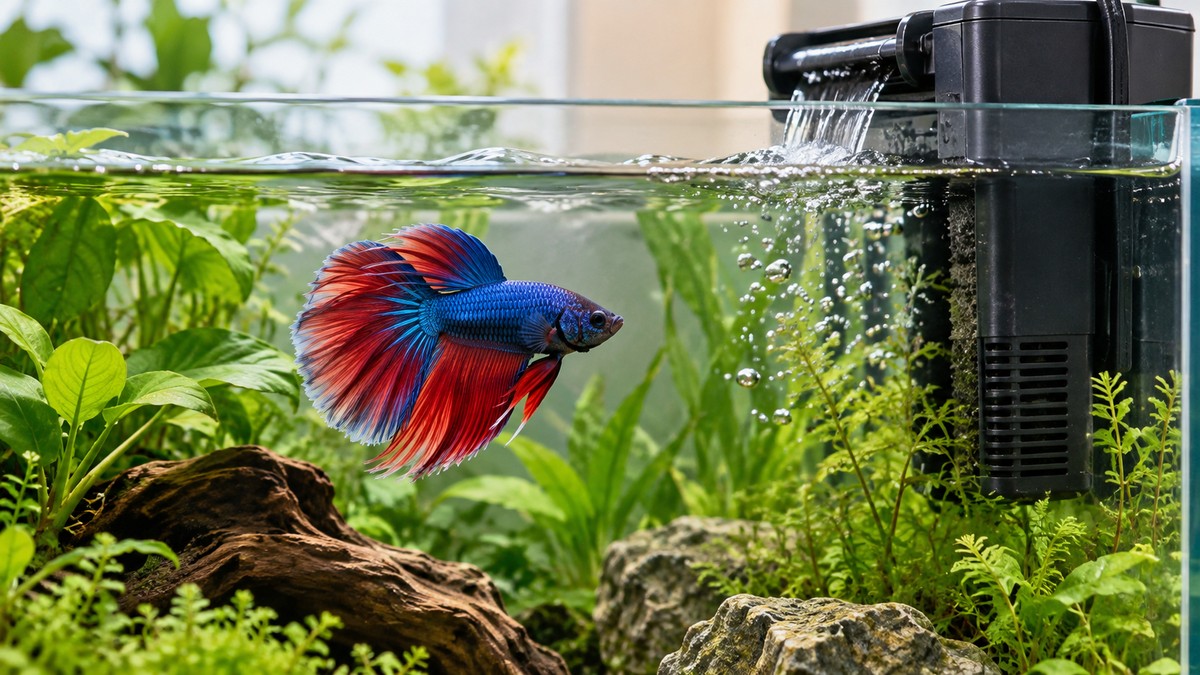
A filter does several jobs at once. According to the Aquarium Co-Op betta care guide, adequate filtration provides surface agitation, cleaner water and better oxygenation, and it helps prevent the oily protein film that can form on the surface. A gently rippled surface exchanges gas with the air more easily than a motionless one, which is where the oxygenation point comes from.
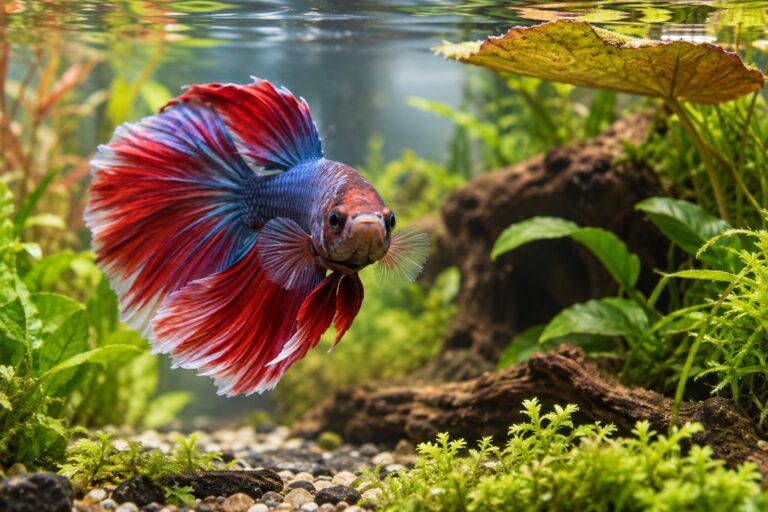
The reverse problem is flow that is too strong. The same guide states that because bettas have long fins, they struggle in strong currents. A fish that keeps getting pushed to the far glass, or that hides behind decor to escape the flow, is telling you that the filter outlet is set too high or pointed the wrong way.
Gentle flow versus strong flow
| Setup | What the source says | What to watch for |
|---|---|---|
| Sponge filter | Suggested as a gentle option | Even, soft movement near the sponge |
| Small filter with adjustable flow | Suggested as another option | Turn the flow down; aim at the glass or a plant, not across the open water |
| Strong filter at high flow | Bettas struggle in strong currents | Fish pushed around, tired, or hiding |
| No filter | Source lists the benefits of filtration, including cleaner water | Not stated; a larger tank lets you go longer between cleanings |
How to tell if the flow is too strong
Look at behavior before you reach for any number. A betta that swims easily across the tank, rests on a leaf and explores is dealing fine with the current. A betta that is dragged along by the outflow, wedged into a corner or constantly struggling at one end is dealing with too much. If you see signs of illness, only a vet can say what is behind them, so ask someone who treats fish.
Practical fixes that need no extra gear include lowering the flow setting, pointing the output at the glass or a decor piece, and placing plants where the fish can step out of the current. If you add an air pump, our page on air pumps and gentle picks for betta tanks has more detail.
Do you need a filter at all?
The source cited here recommends a tank of at least 5 to 10 gallons and says the larger volume lets you go longer between cleanings. In its example, a 10-gallon tank needs a 30% water change once or twice a month, while a 1-gallon bowl would need a complete water change every two to three days, which it calls very stressful. Filtration is one reason the larger setup is easier to keep clean. If you are deciding on size, read how big of a tank betta fish need and how many gallons a betta needs.
Heat, water and flow work together
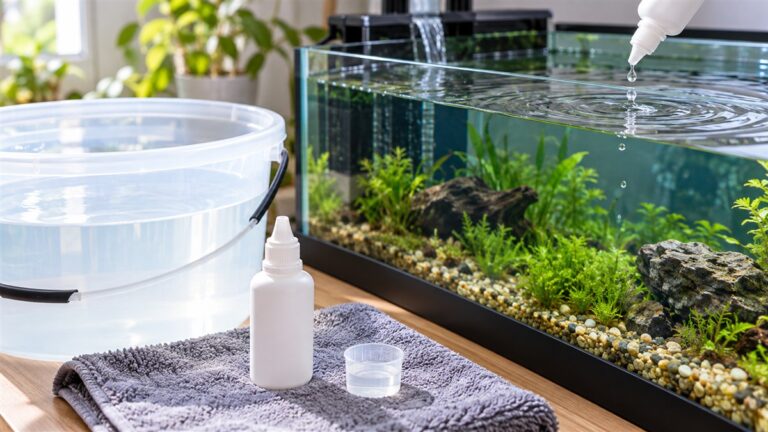
Flow is only one piece. The same guide says bettas prefer about 80°F and are more active in warmer water, while typical US room temperatures of 67°F to 69°F leave them lethargic, so a heater is needed. Our page on whether betta fish need a heater goes into that. Water quality matters too: the guide says to treat tap water with a dechlorinator because chlorine is lethal, and that letting water sit overnight is unreliable if your city uses chloramine. If you are curious about minerals, see hard water and betta fish, and for water sources, bottled water and bettas.
Choosing a gentle setup
- Pick the tank size first. At least 5 to 10 gallons is the guide’s recommendation.
- Choose gentle filtration. A sponge filter, or a small filter whose flow you can adjust, matches the source’s advice.
- Aim the output. Point it toward a wall, plant or decor rather than across the open water.
- Add resting spots. Soft decor gives the fish a place to leave the current.
- Add a heater. Warmth is a separate need from flow.
- Watch the fish. His behavior is the best test.
Common mistakes
- Using a large filter at full speed in a small tank.
- Pointing the outlet down the length of the tank so the current runs through the whole space.
- Assuming a filter replaces water changes; the guide still gives a schedule for water changes.
- Skipping a heater because the water is moving.
- Treating tap water without a dechlorinator.
FAQ
Do betta fish need moving water to survive?
The source describes gentle surface movement as useful for cleaner water and oxygenation, but does not say a betta cannot live without a filter. It recommends a larger tank partly because it lets you go longer between cleanings.
Is a strong current bad for bettas?
Yes, according to the guide, which says bettas have long fins and struggle in strong currents.
What kind of filter is best?
The source suggests a gentle sponge filter or a smaller filter with adjustable flow.
What is the oily film on the surface?
The guide calls it an oily protein film and says surface agitation from filtration helps prevent it.
Does moving water keep a betta warm?
No. Warmth comes from a heater. The source says bettas prefer about 80°F and become lethargic at typical room temperatures of 67°F to 69°F.
Should I use an air pump?
The source used for this post does not cover air pumps. If you use one, keep the bubbling gentle and watch how the fish reacts; our air pump guide has more.
Bottom line
Give your betta quiet, adjustable flow: gentle enough for long fins, steady enough to keep the surface moving. If the fish is fighting the current, turn it down, redirect it or switch to a sponge filter.